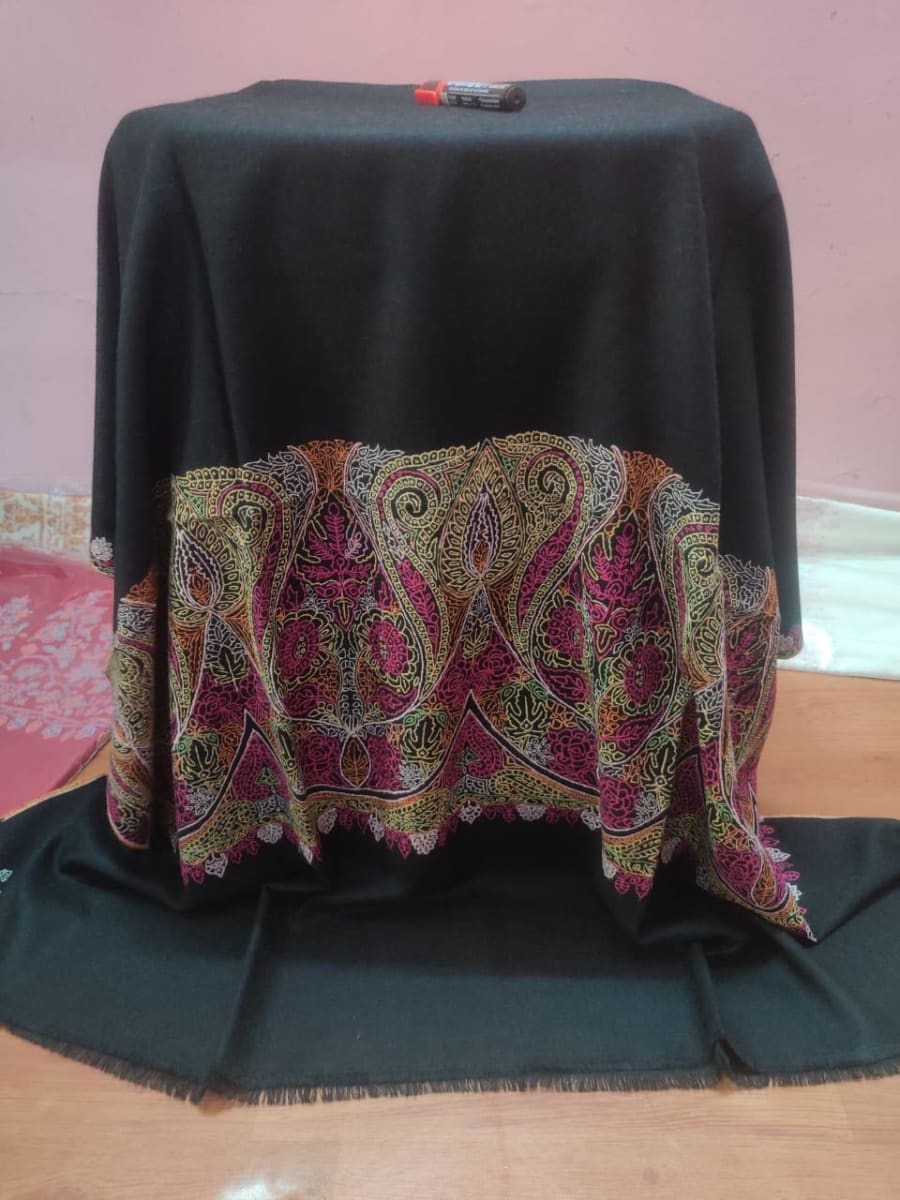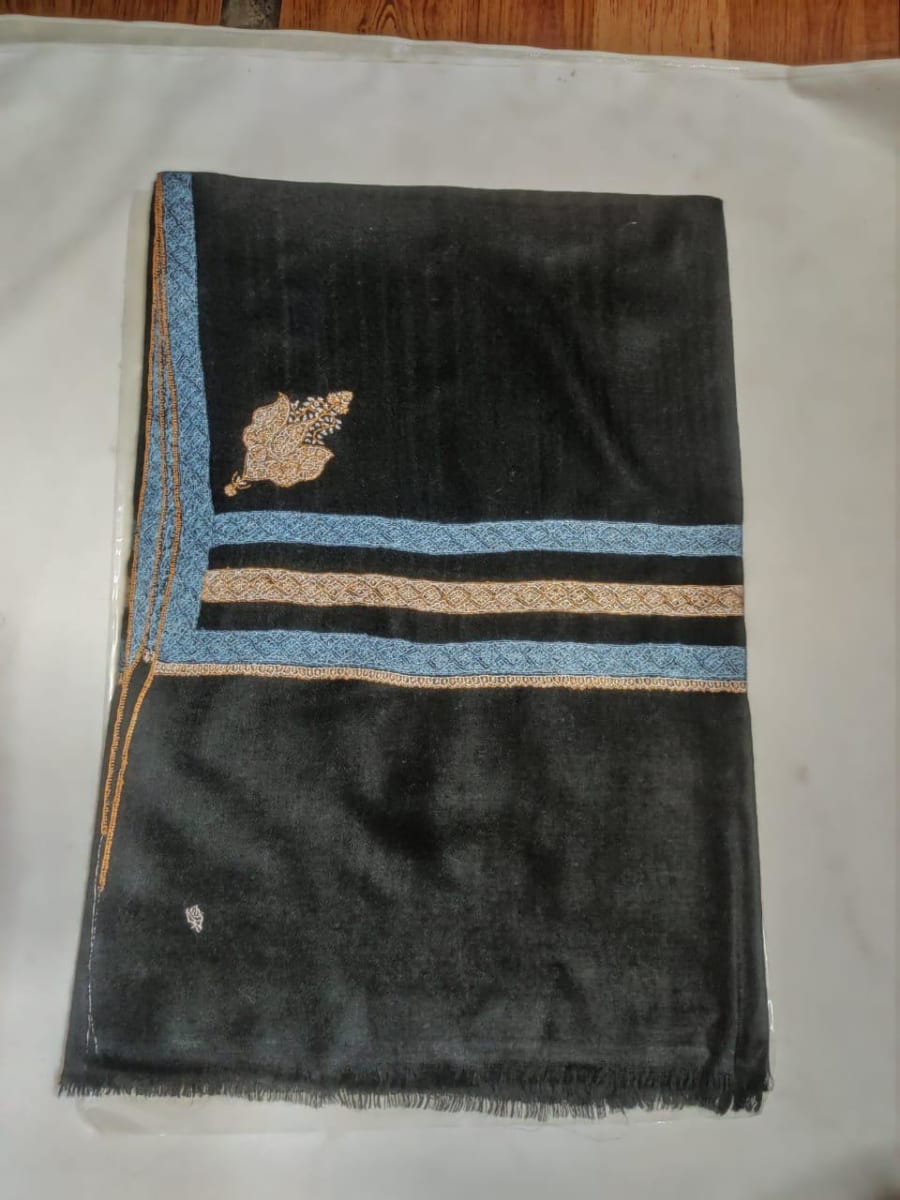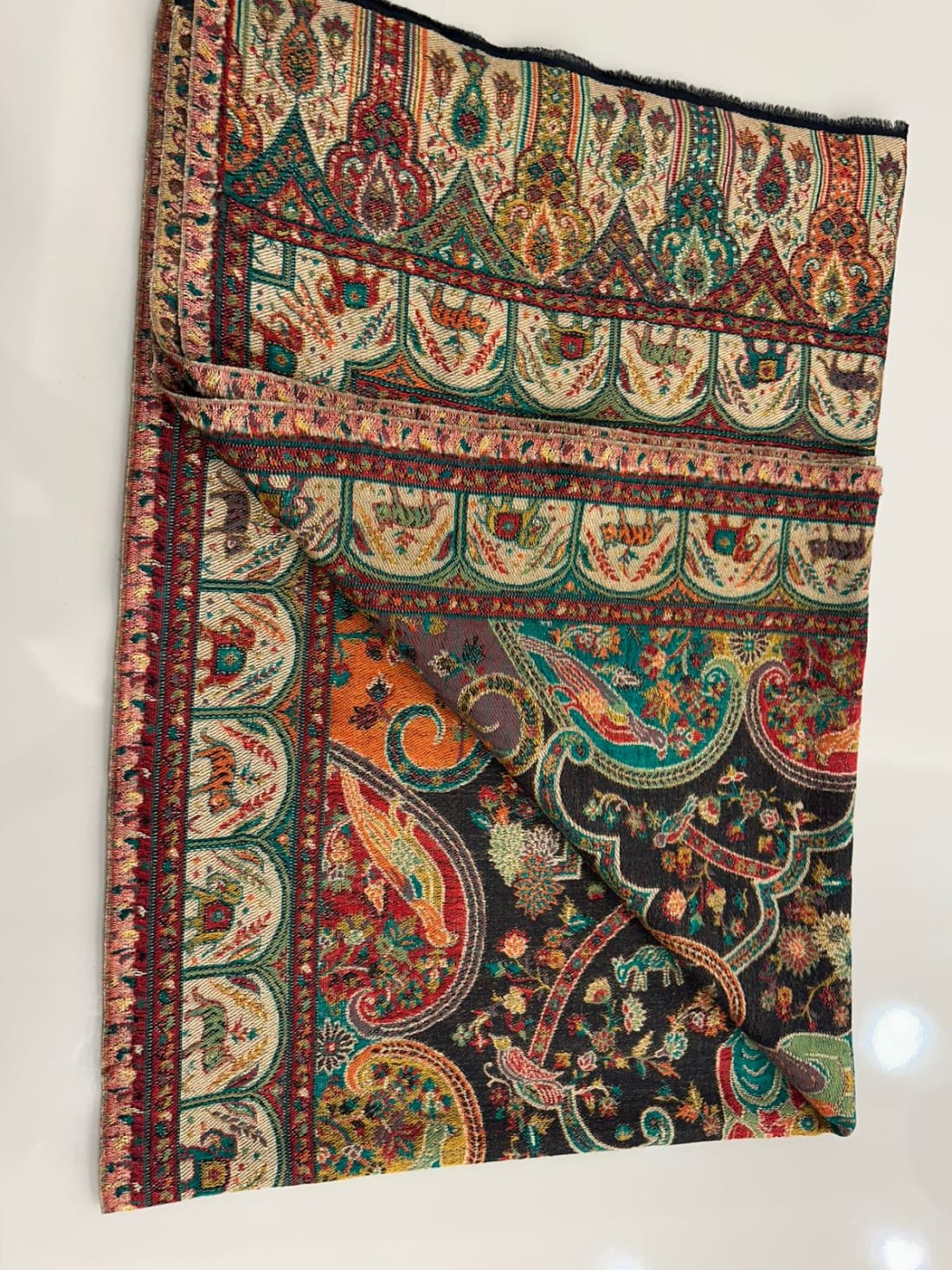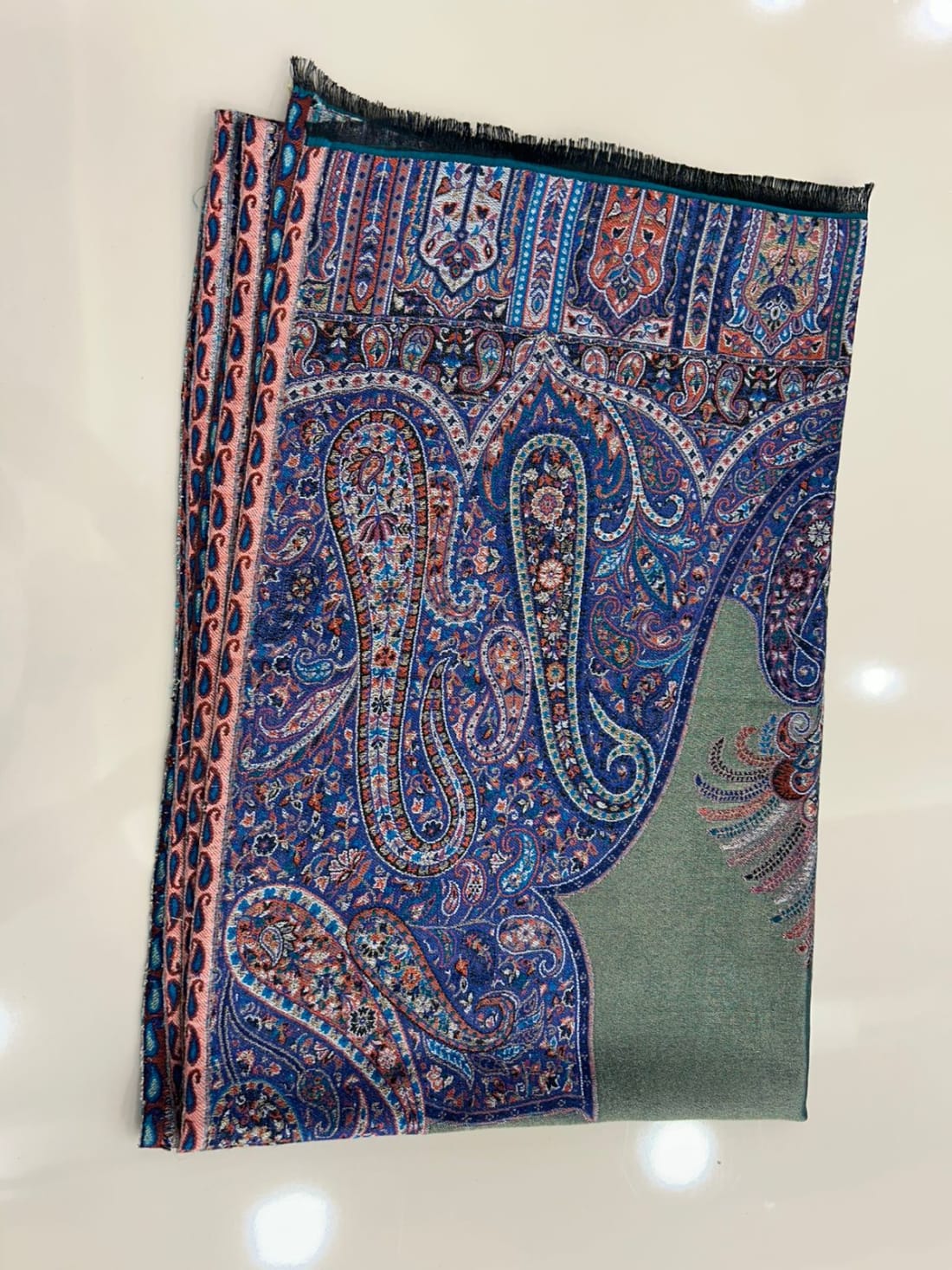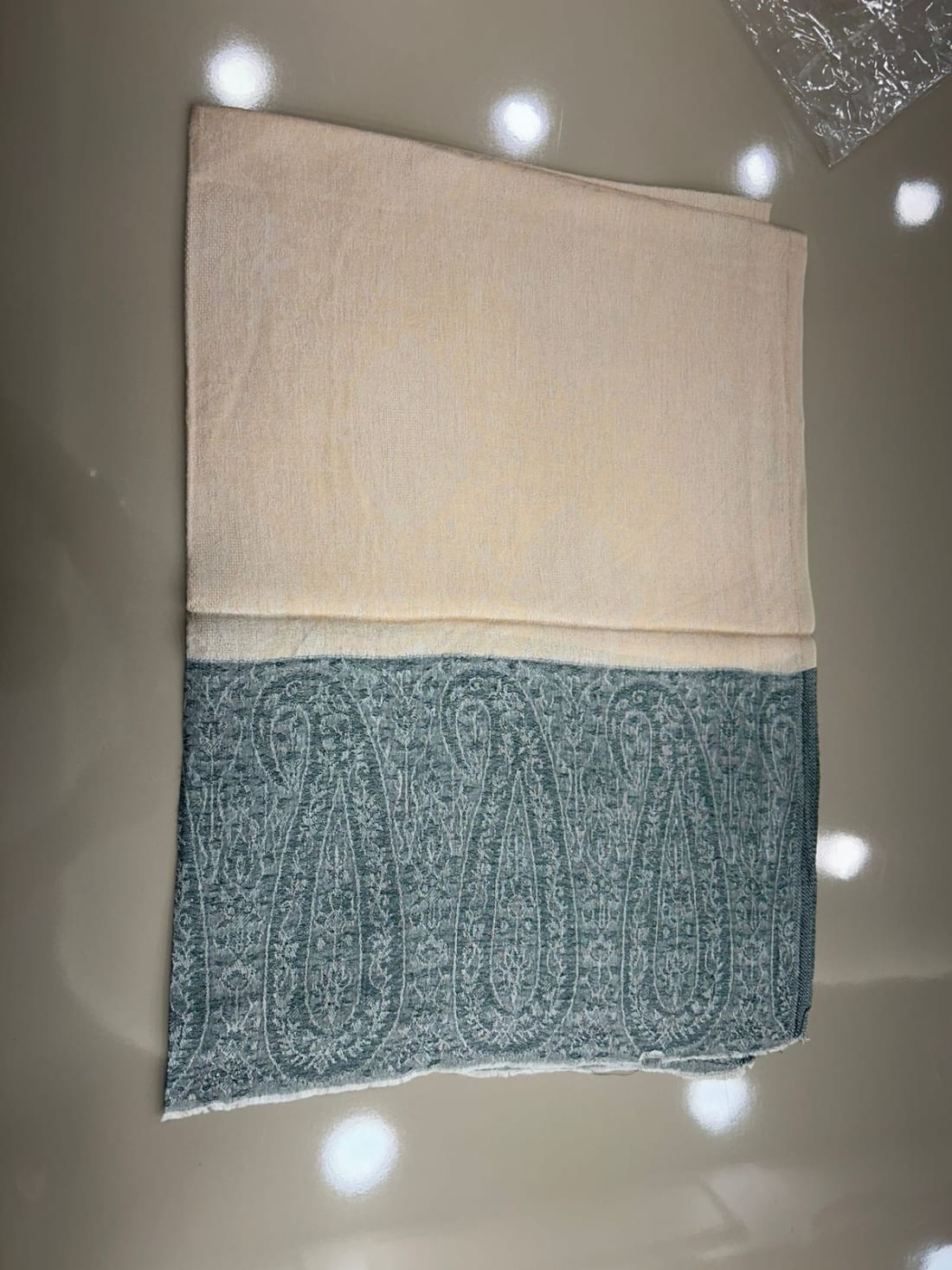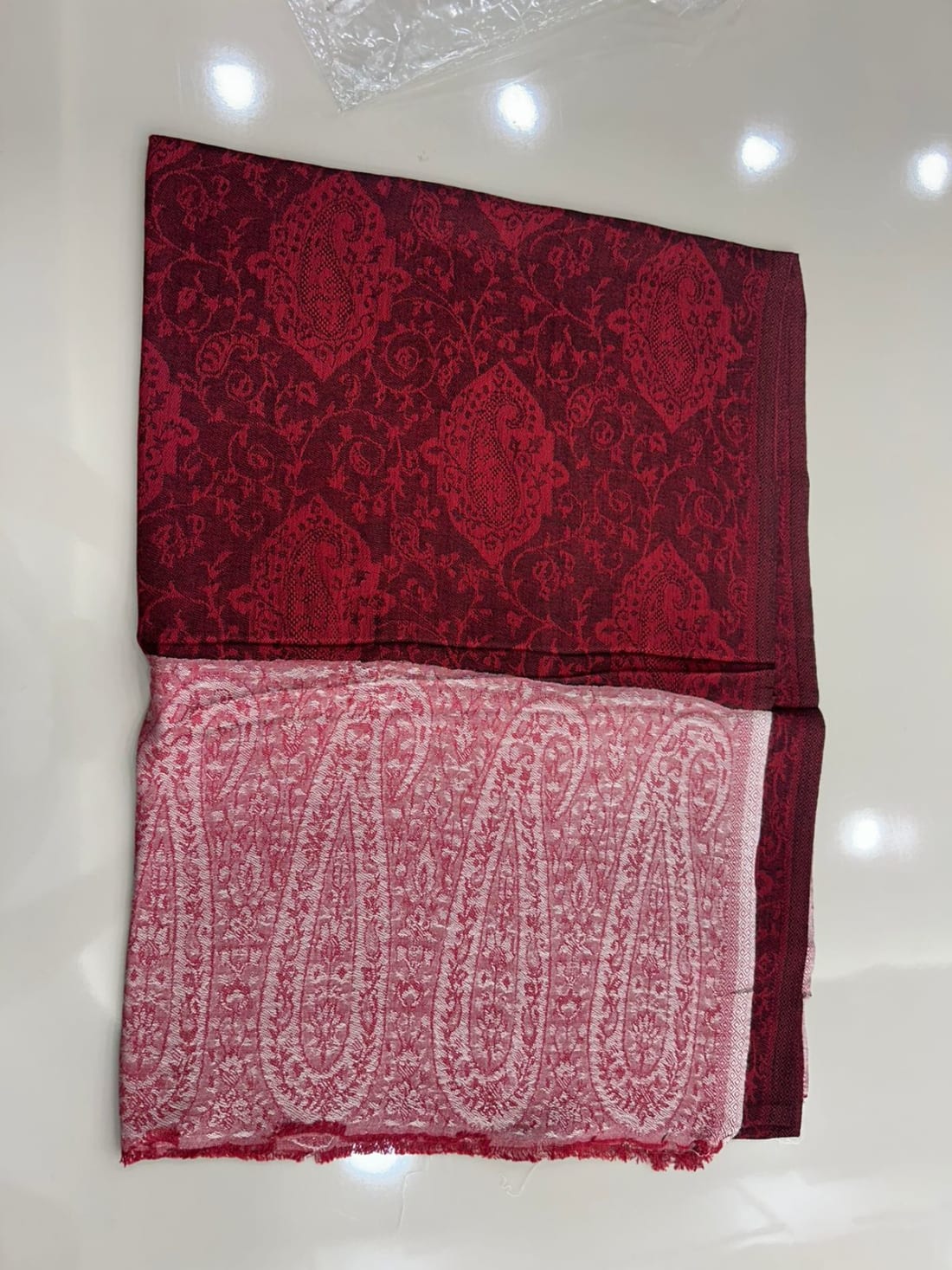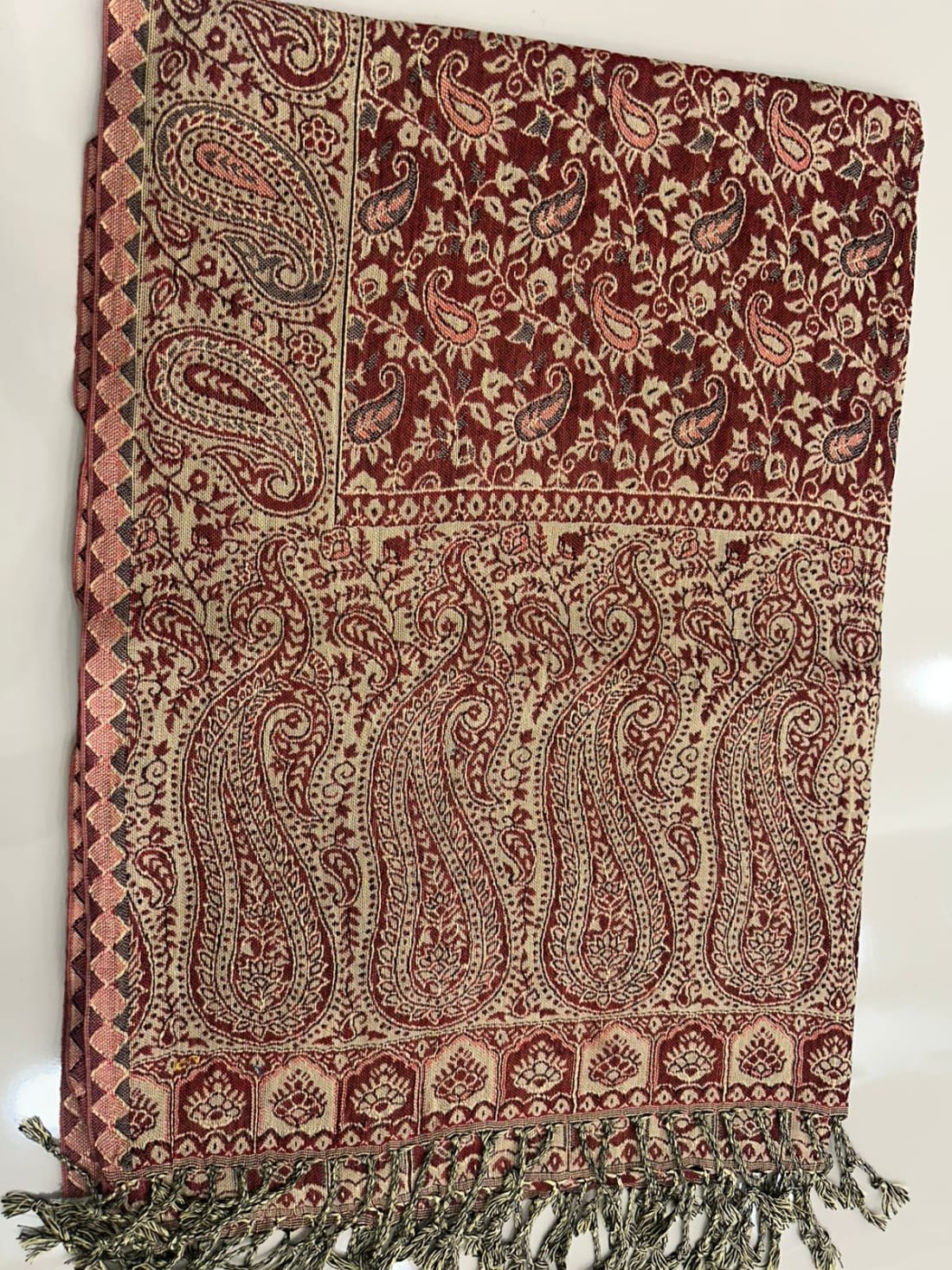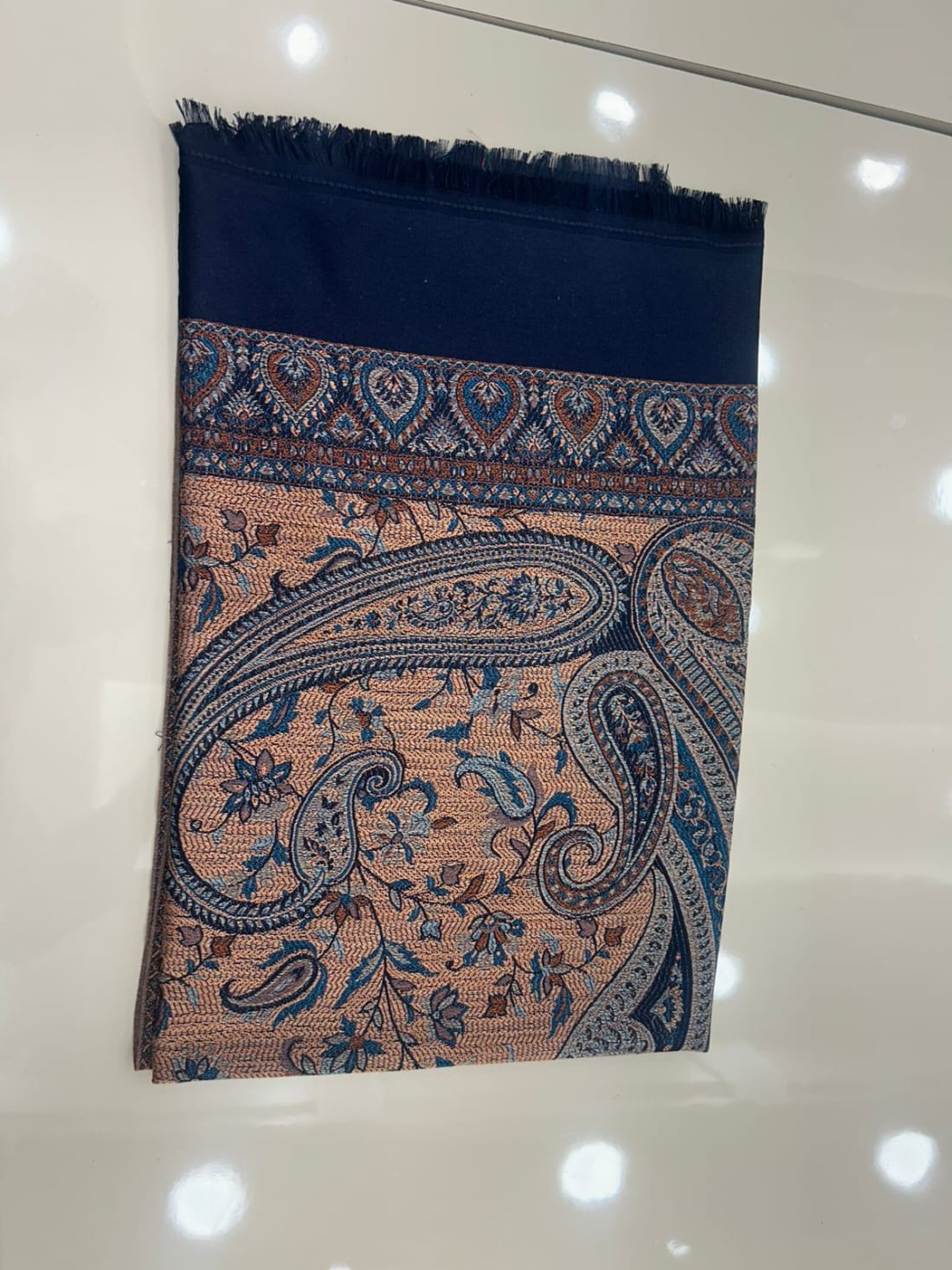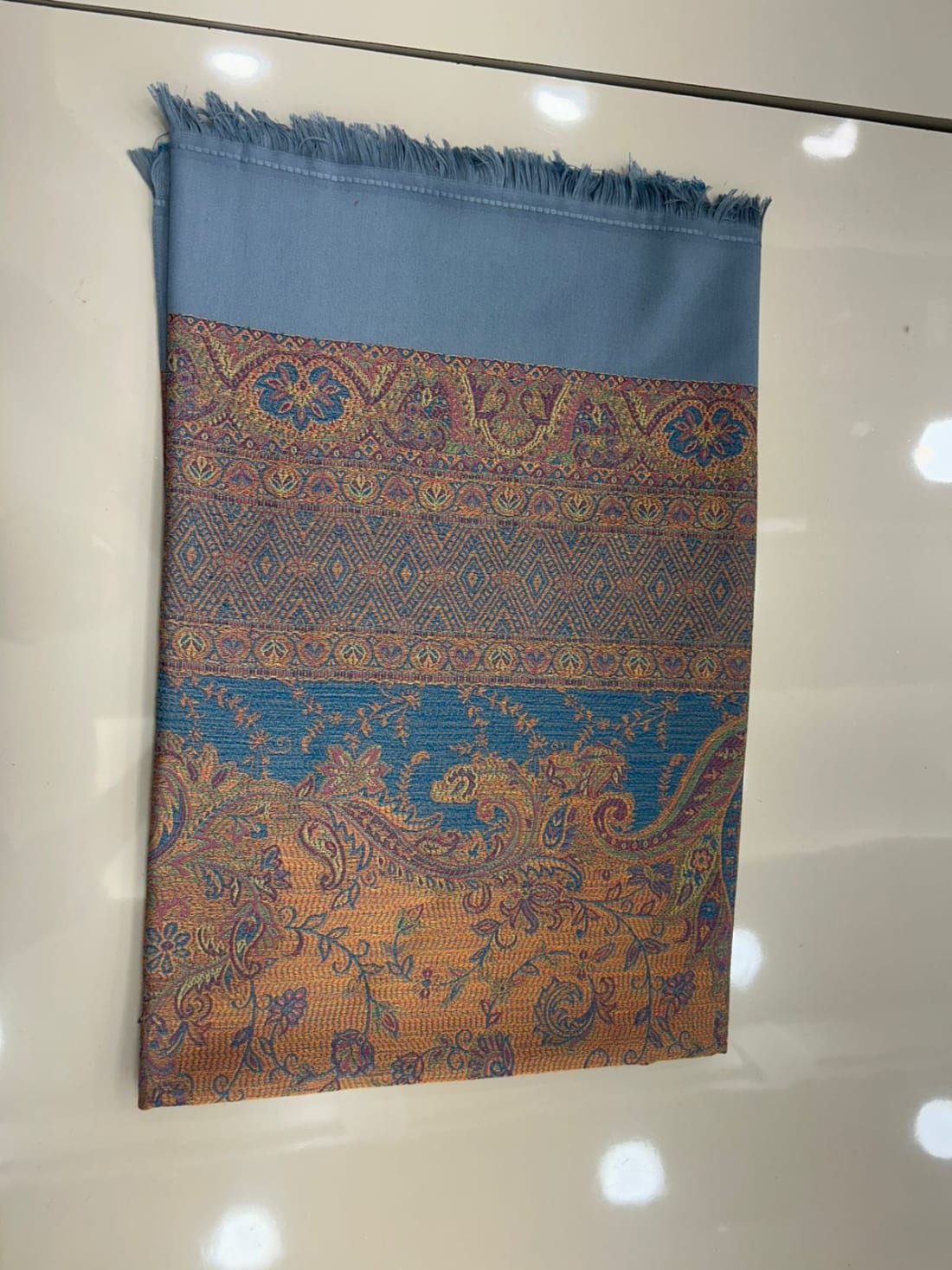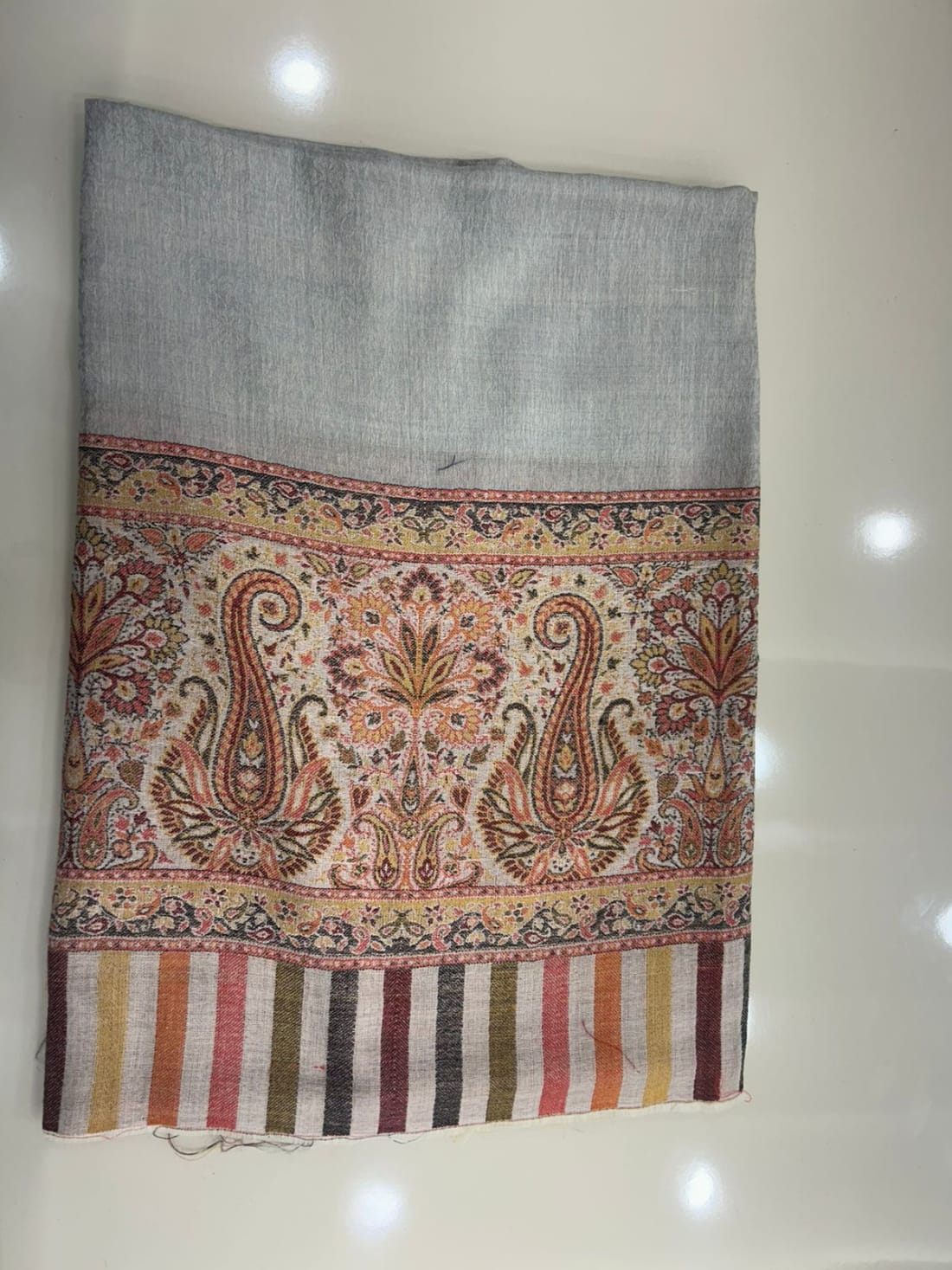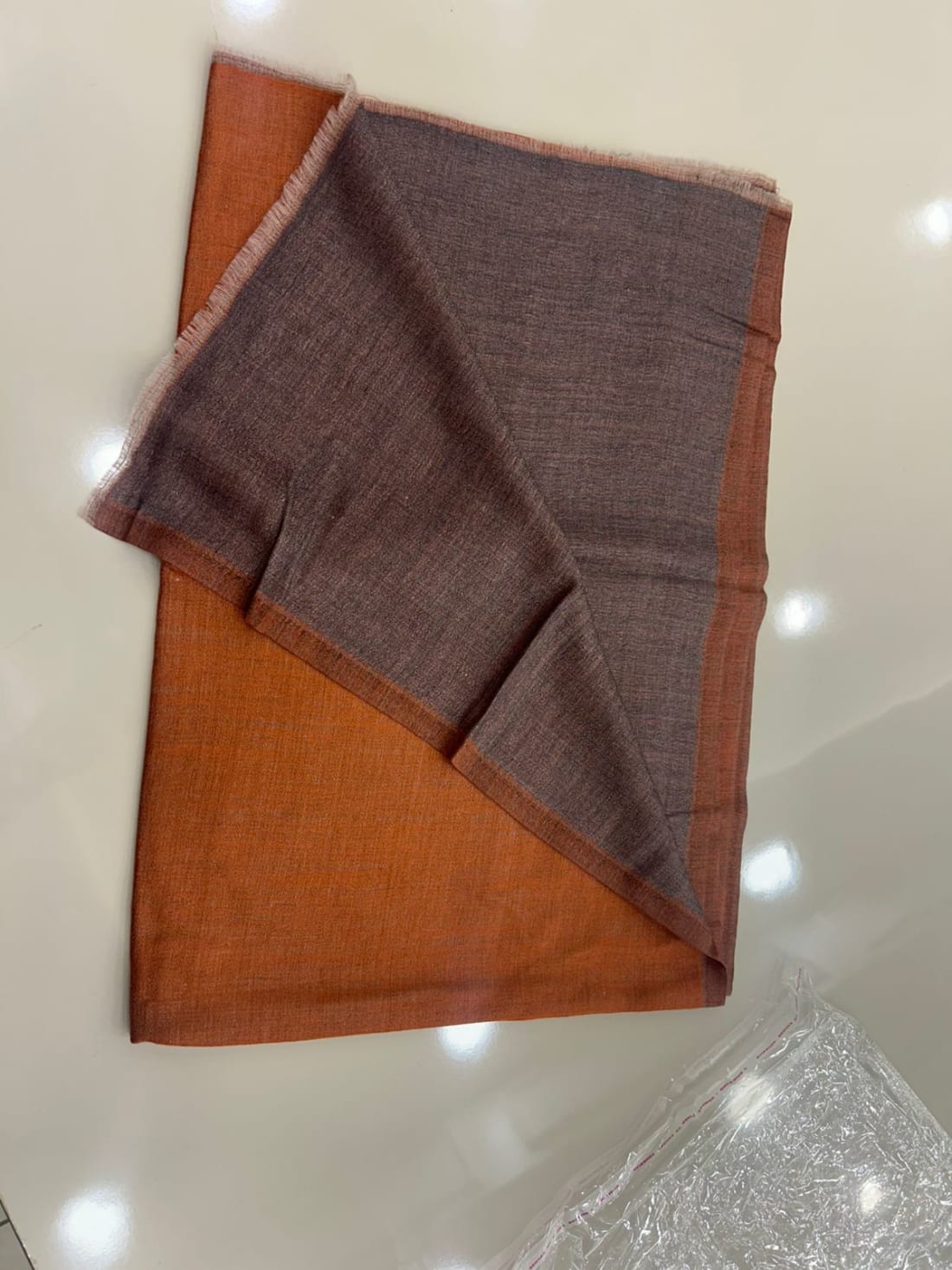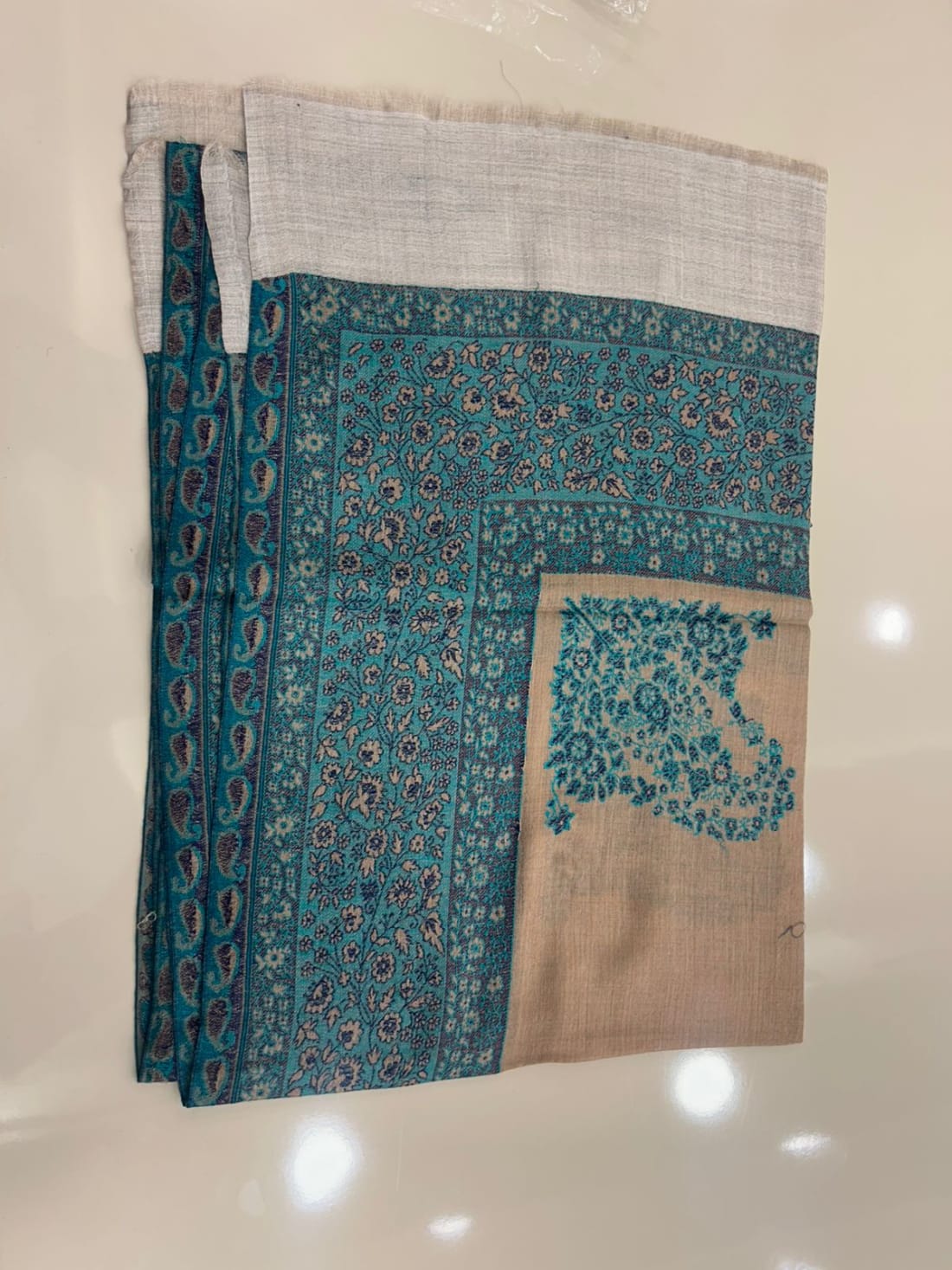
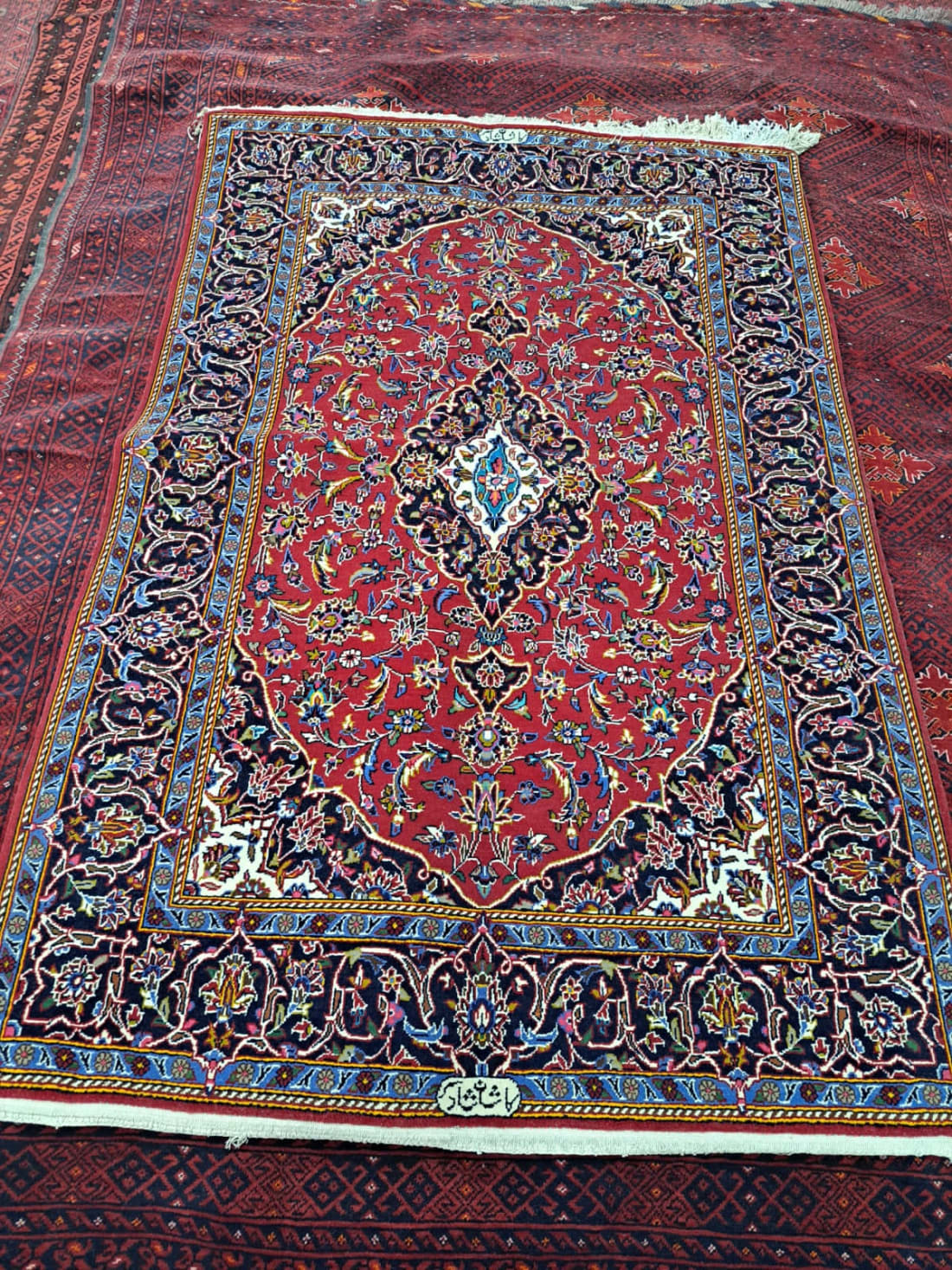
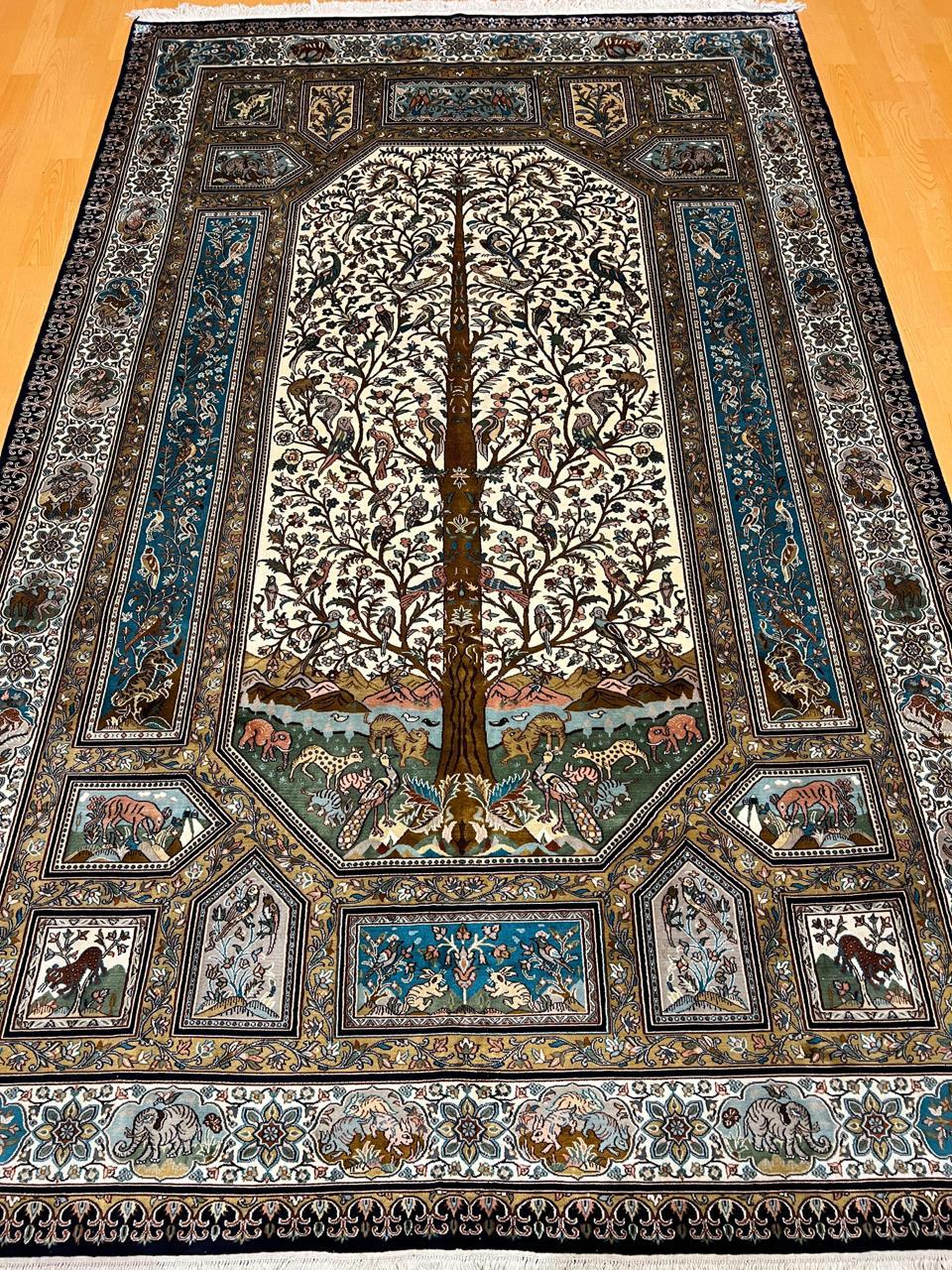
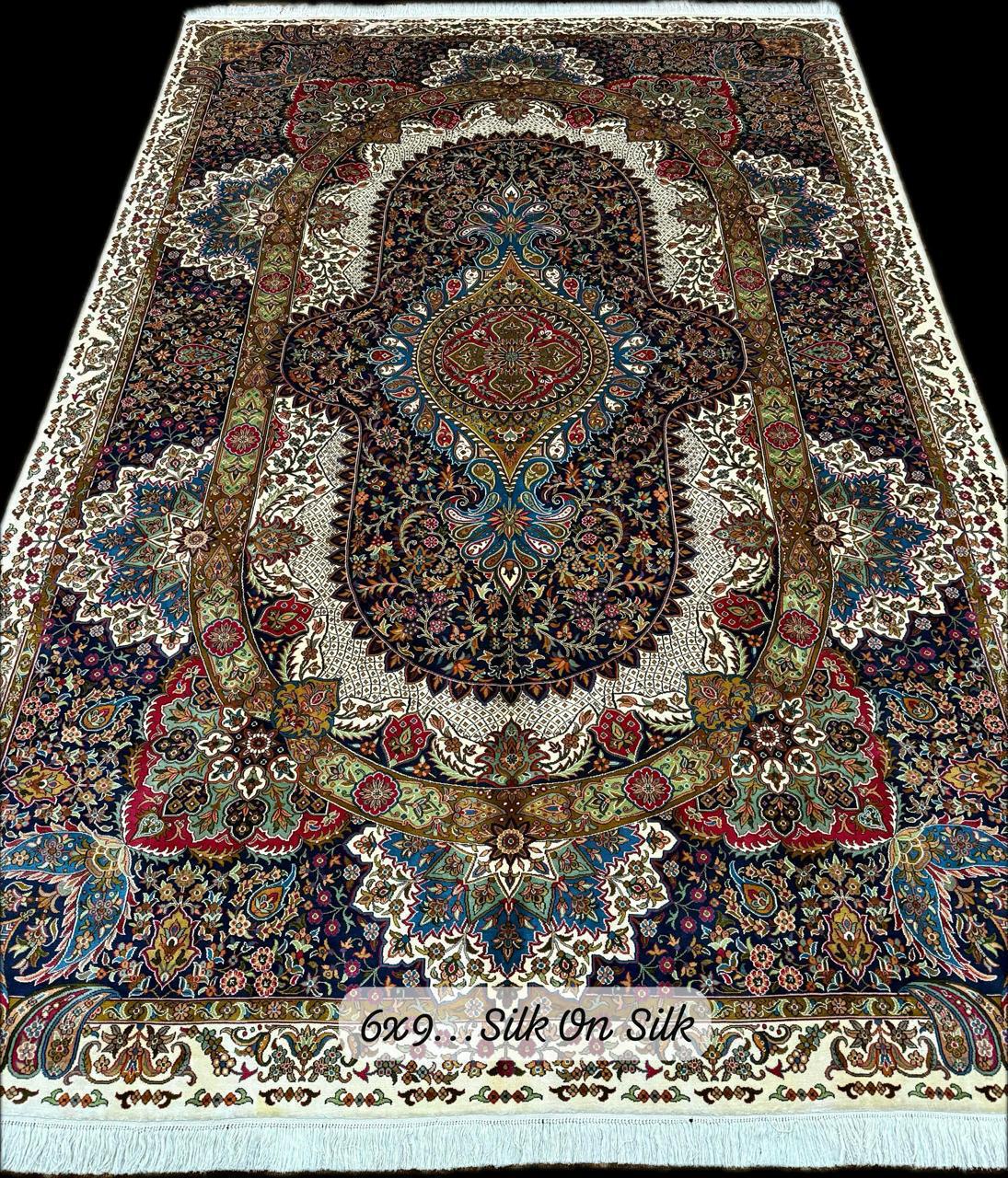
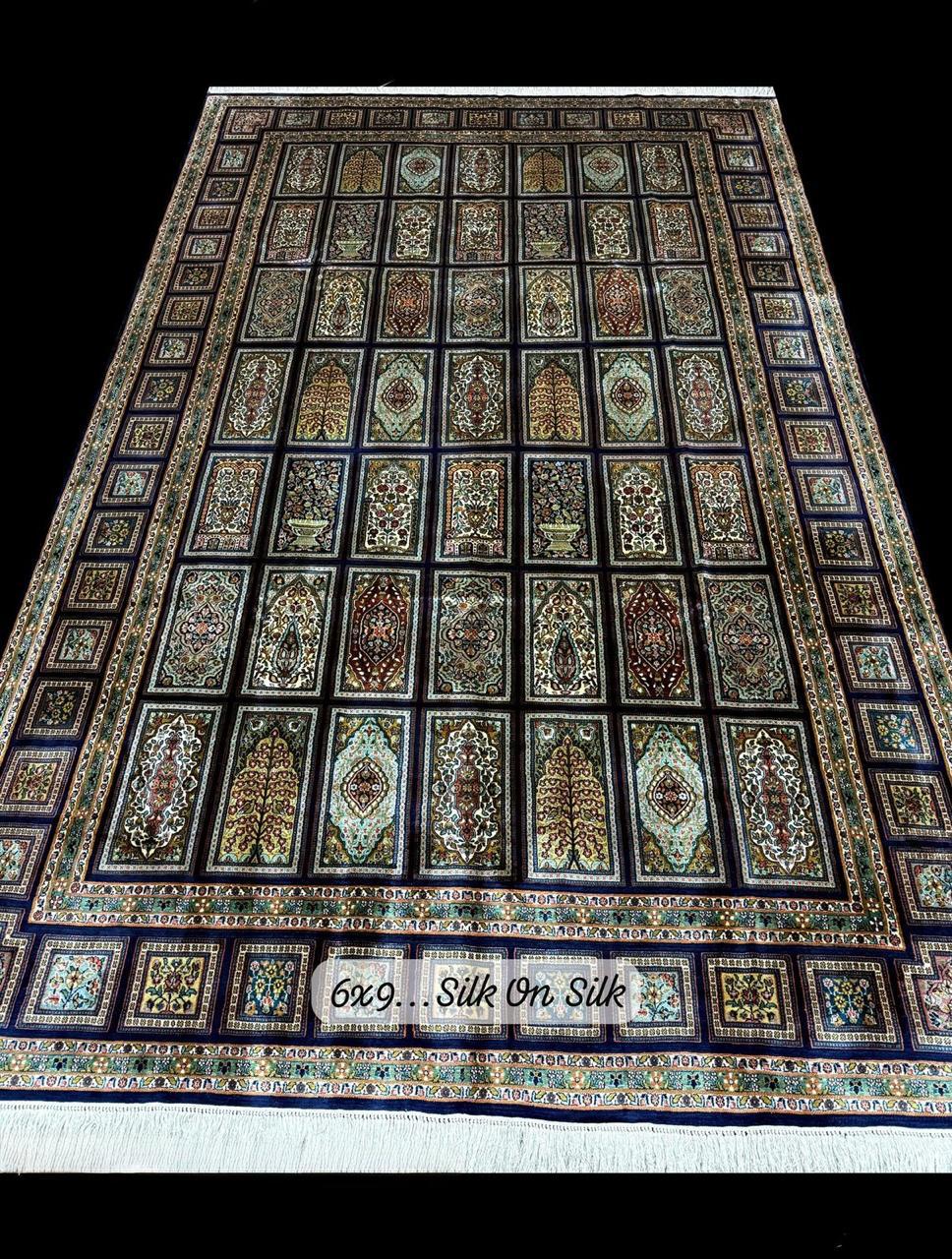
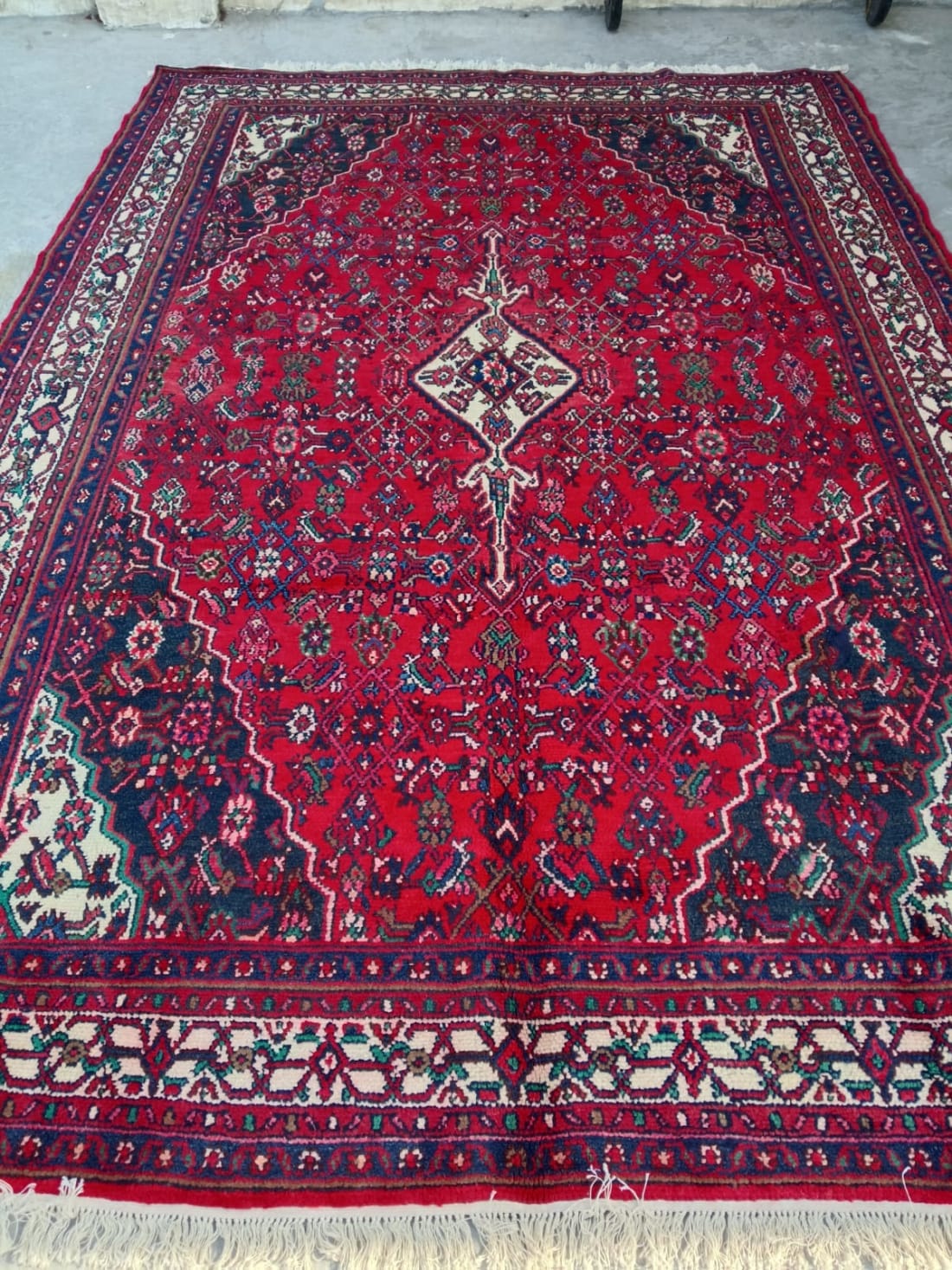
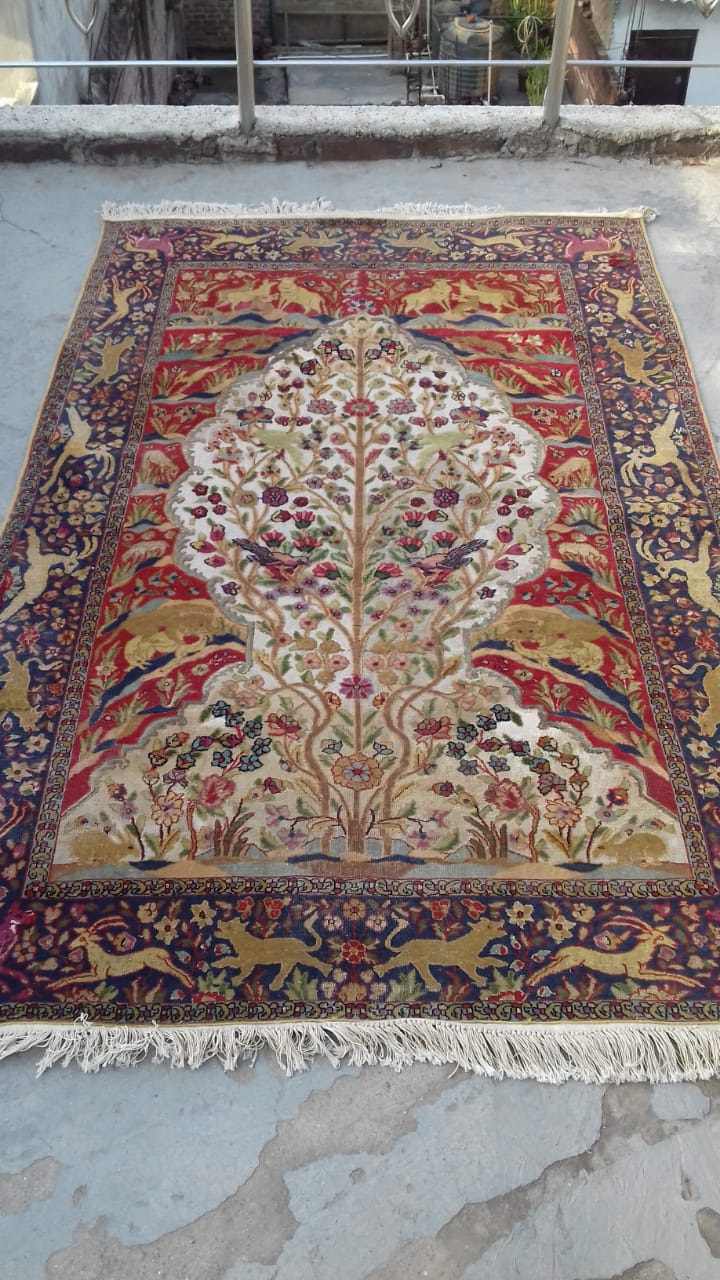
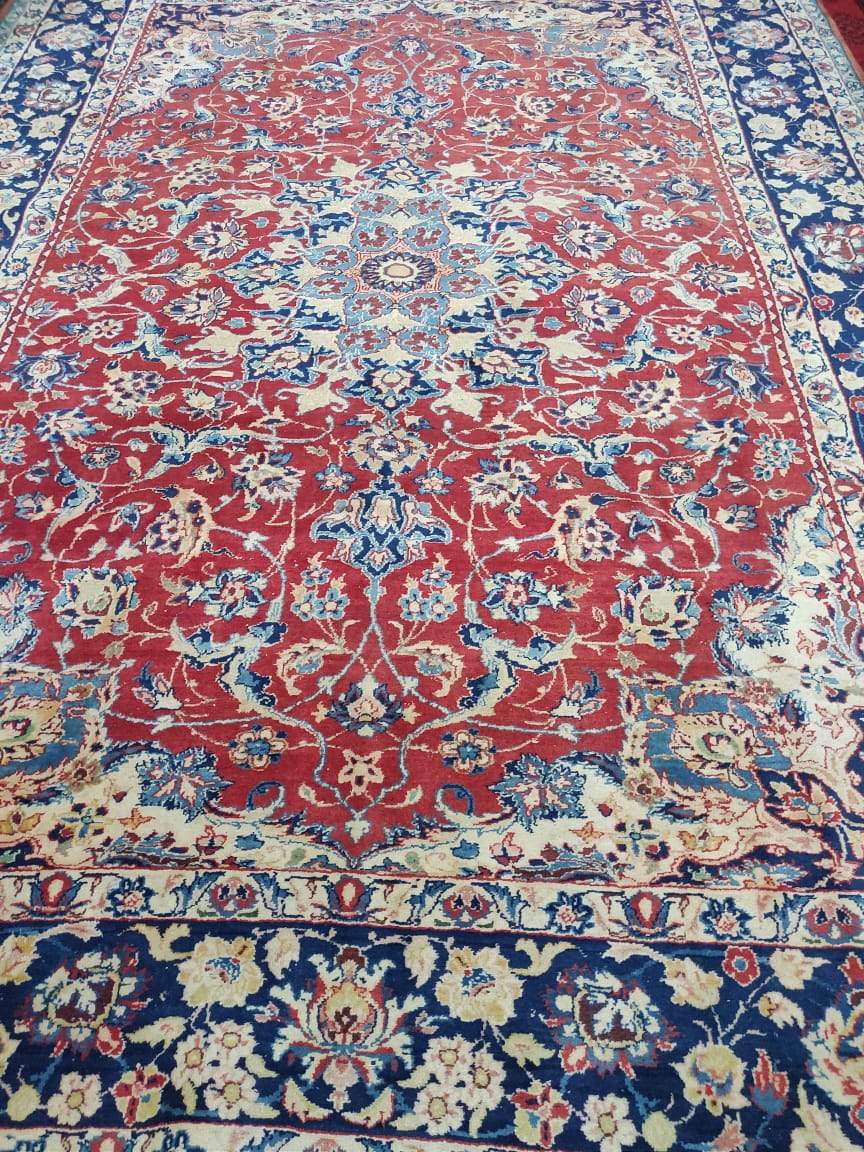
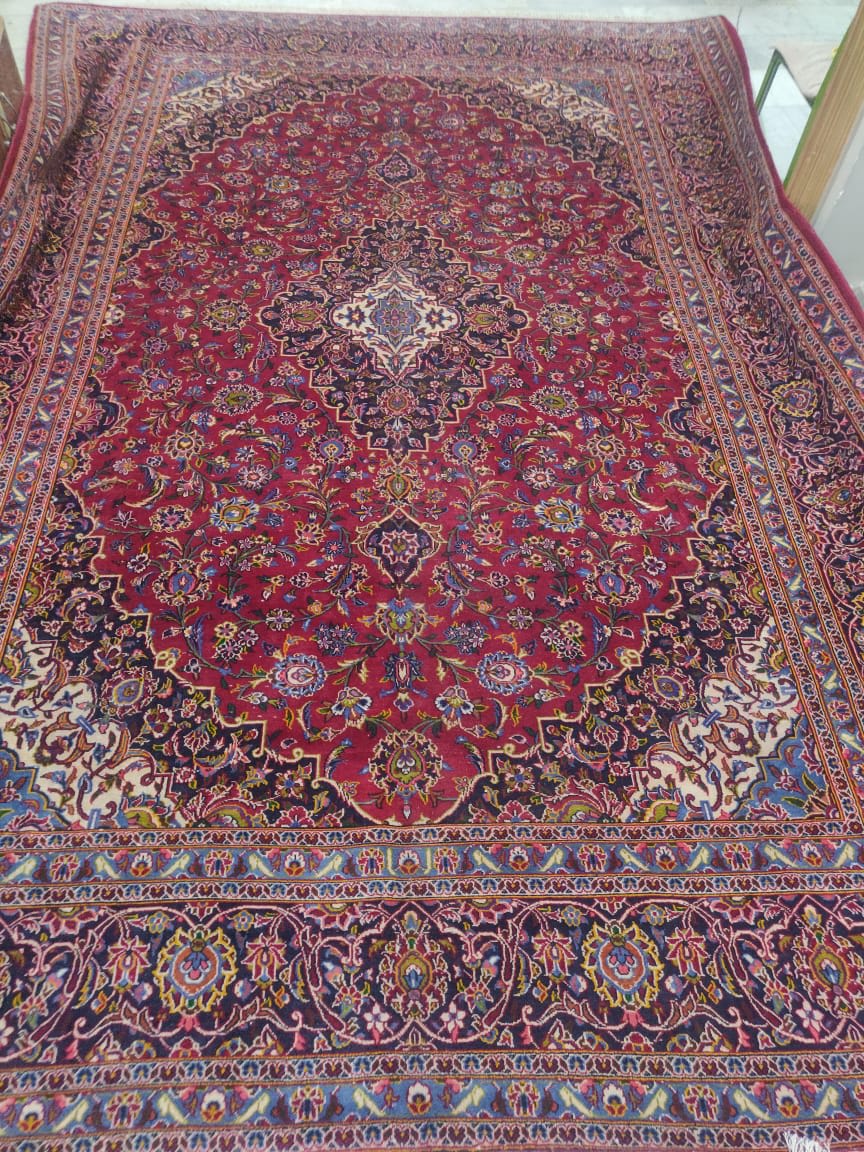
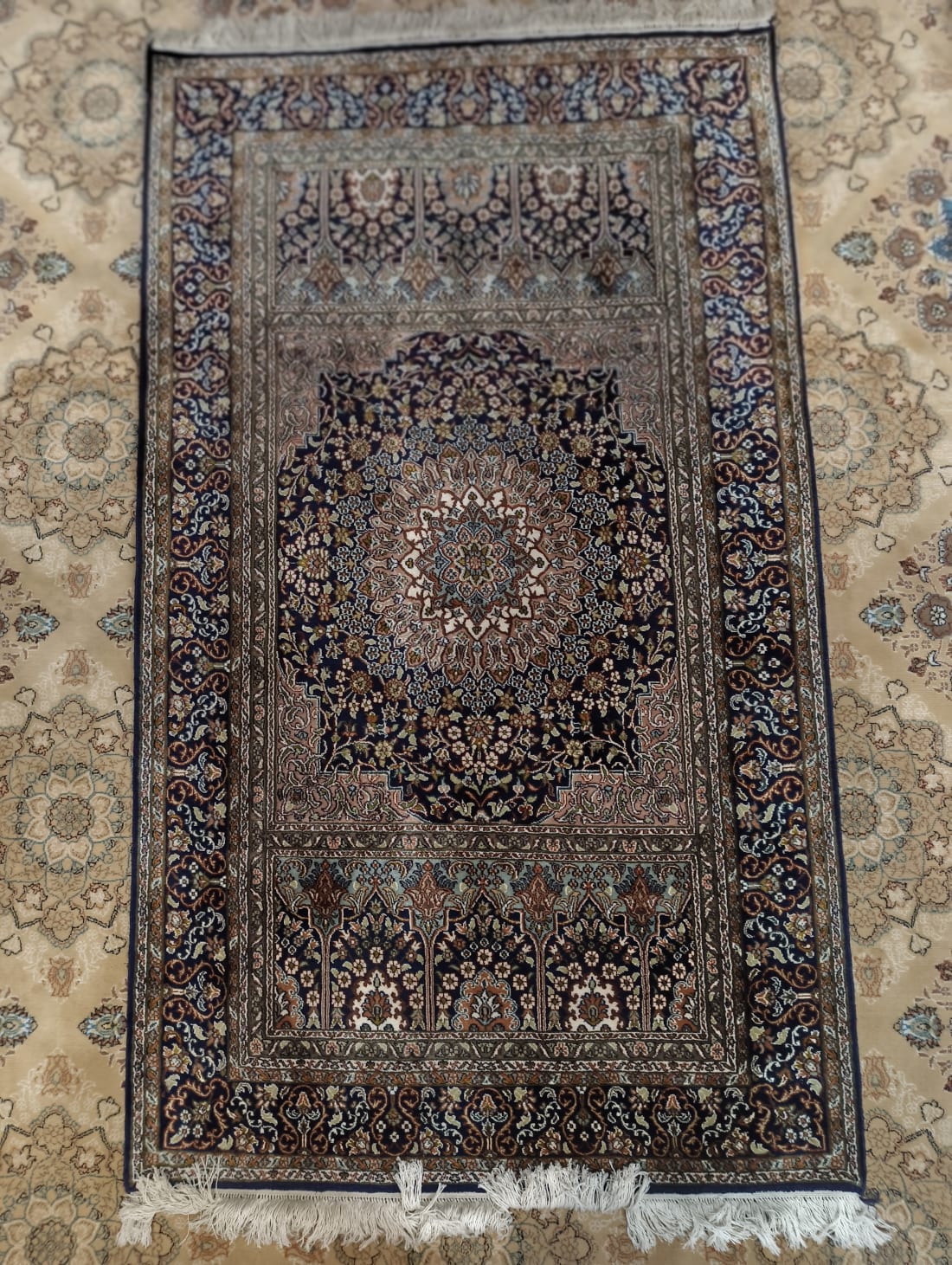
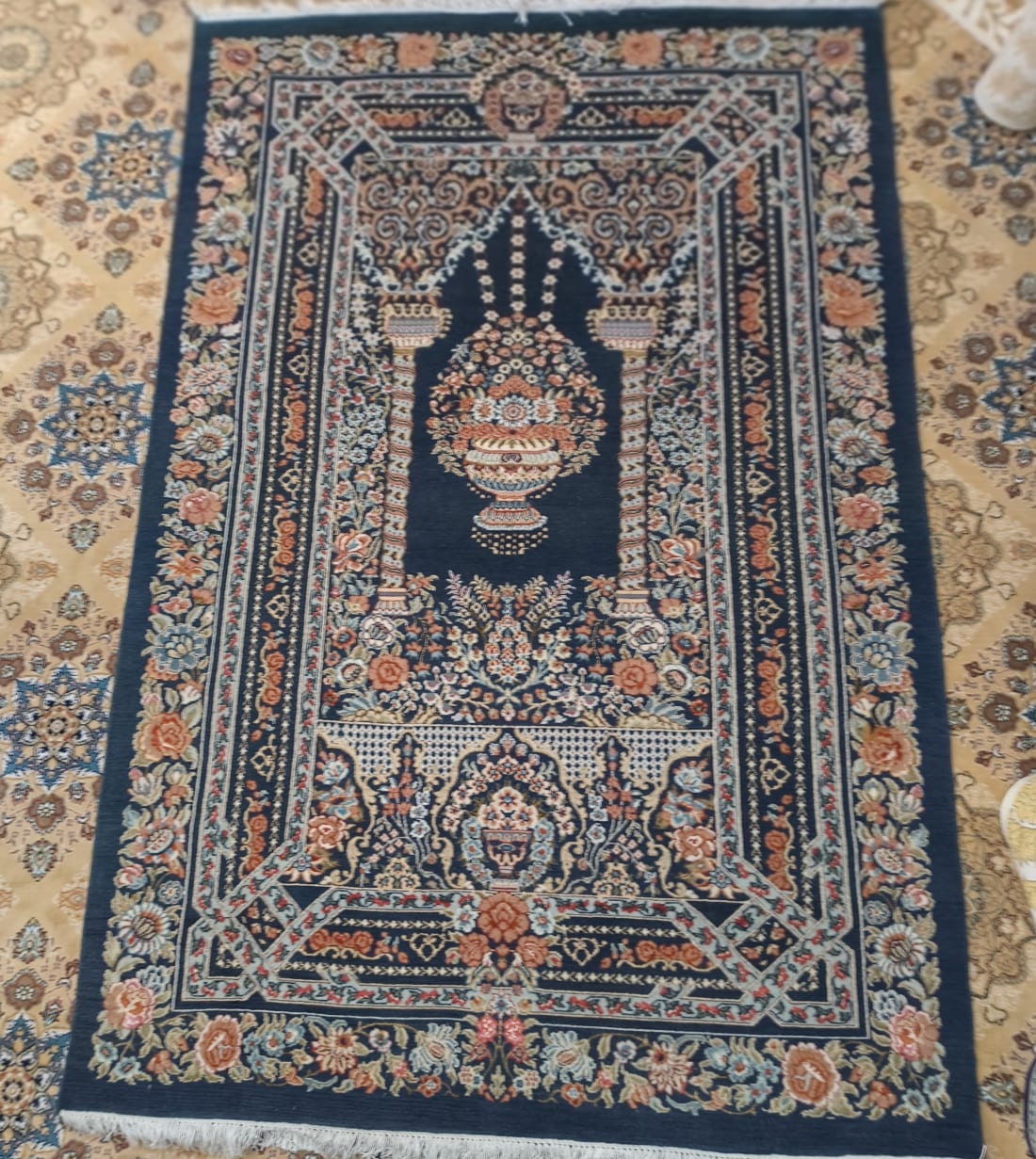
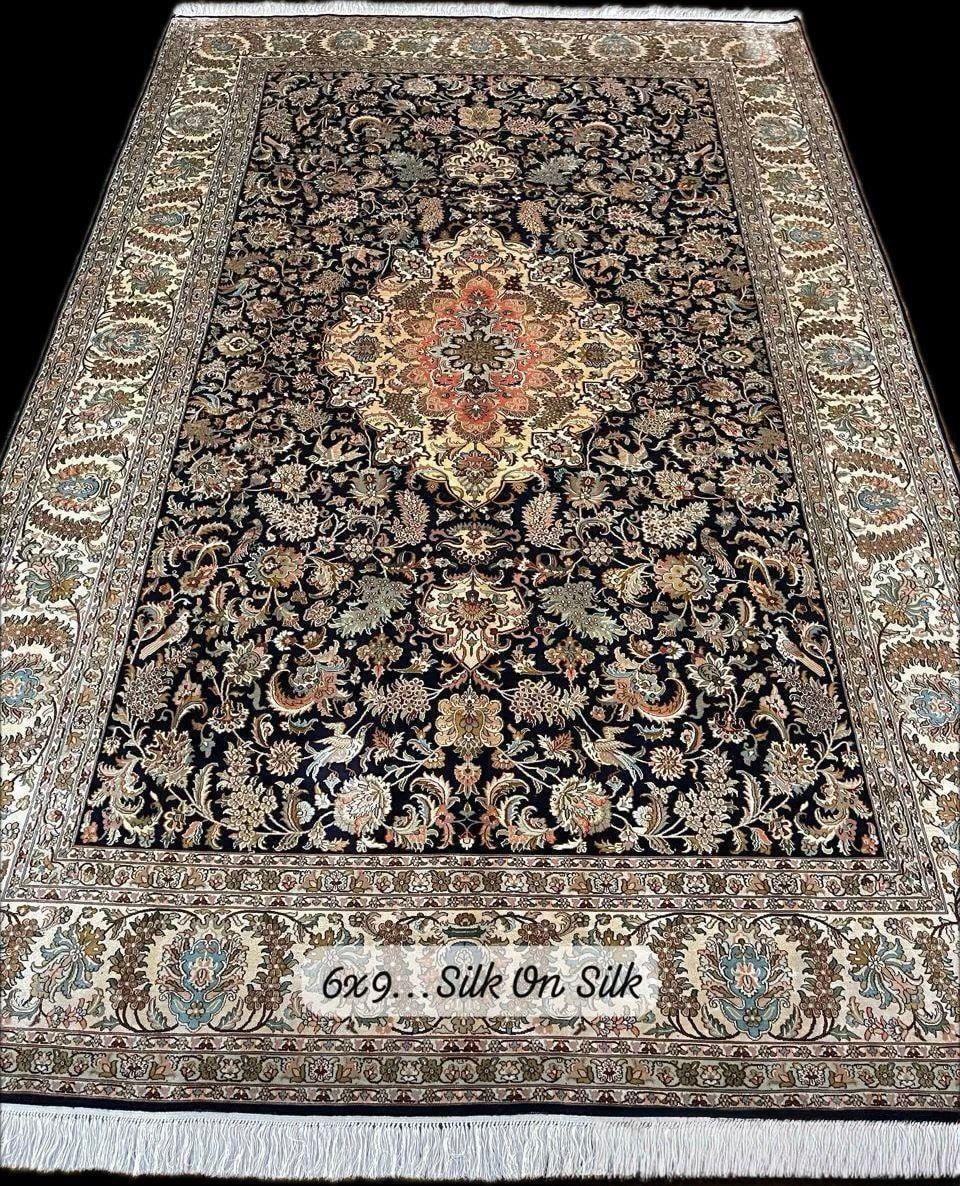
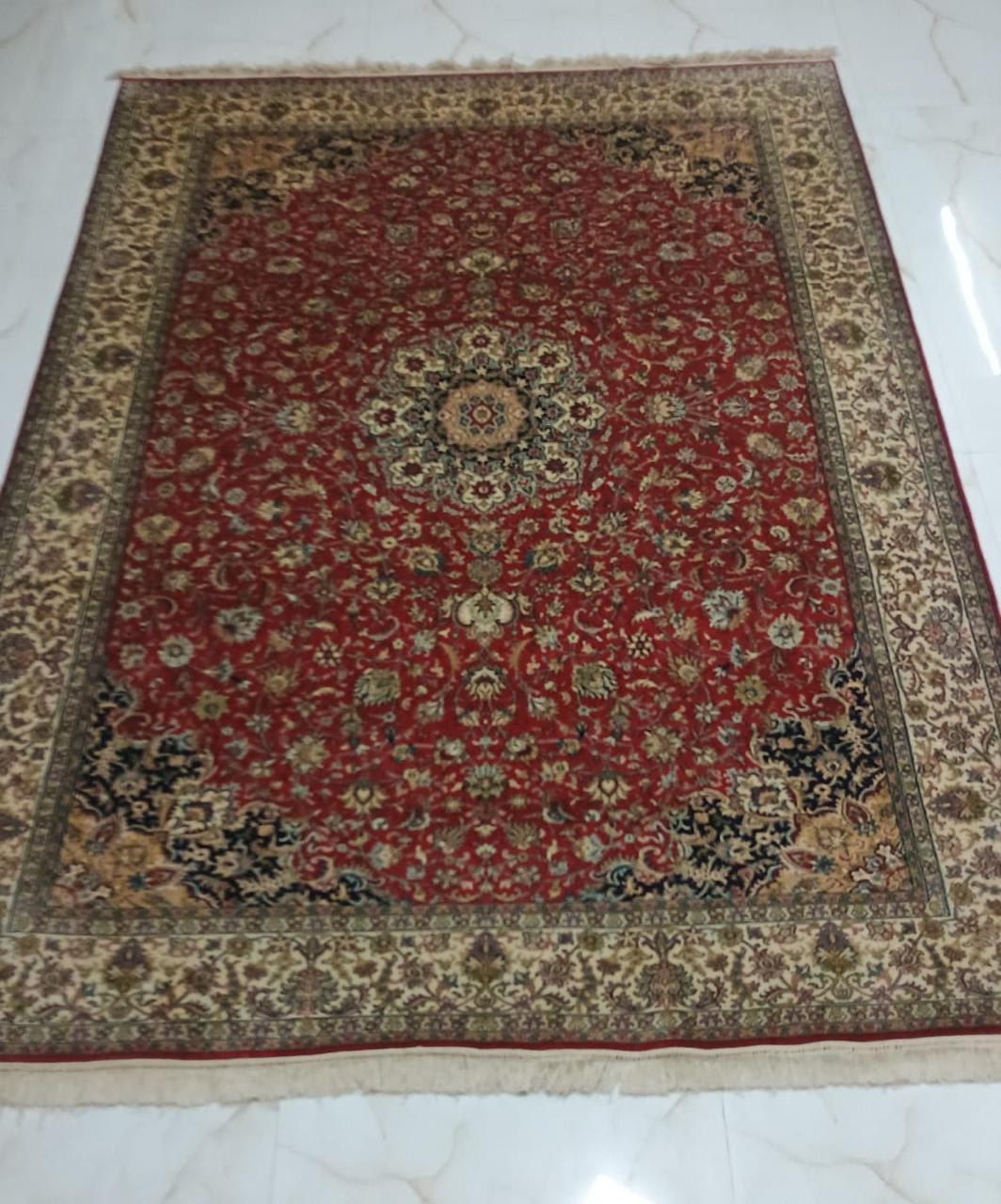
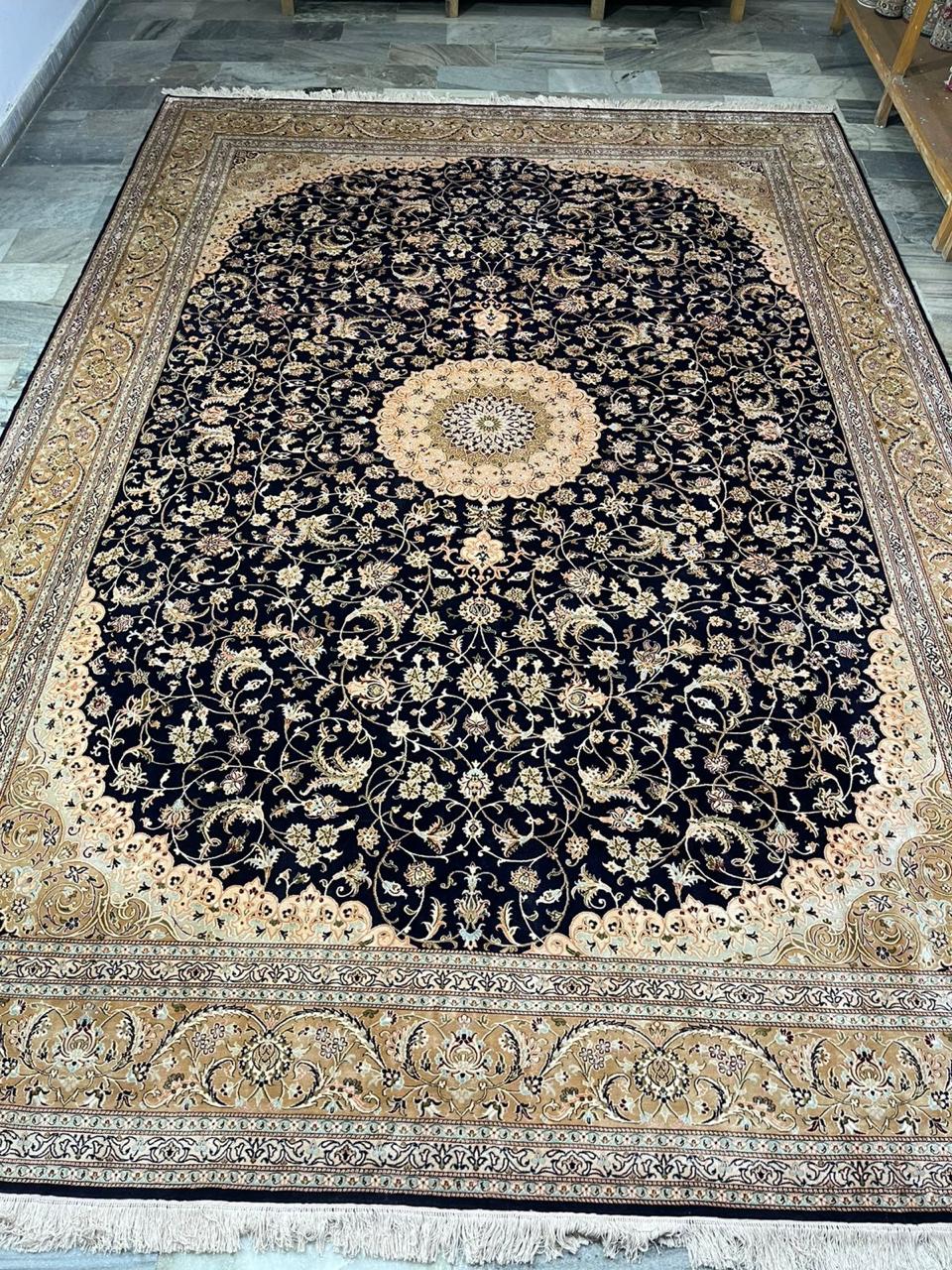
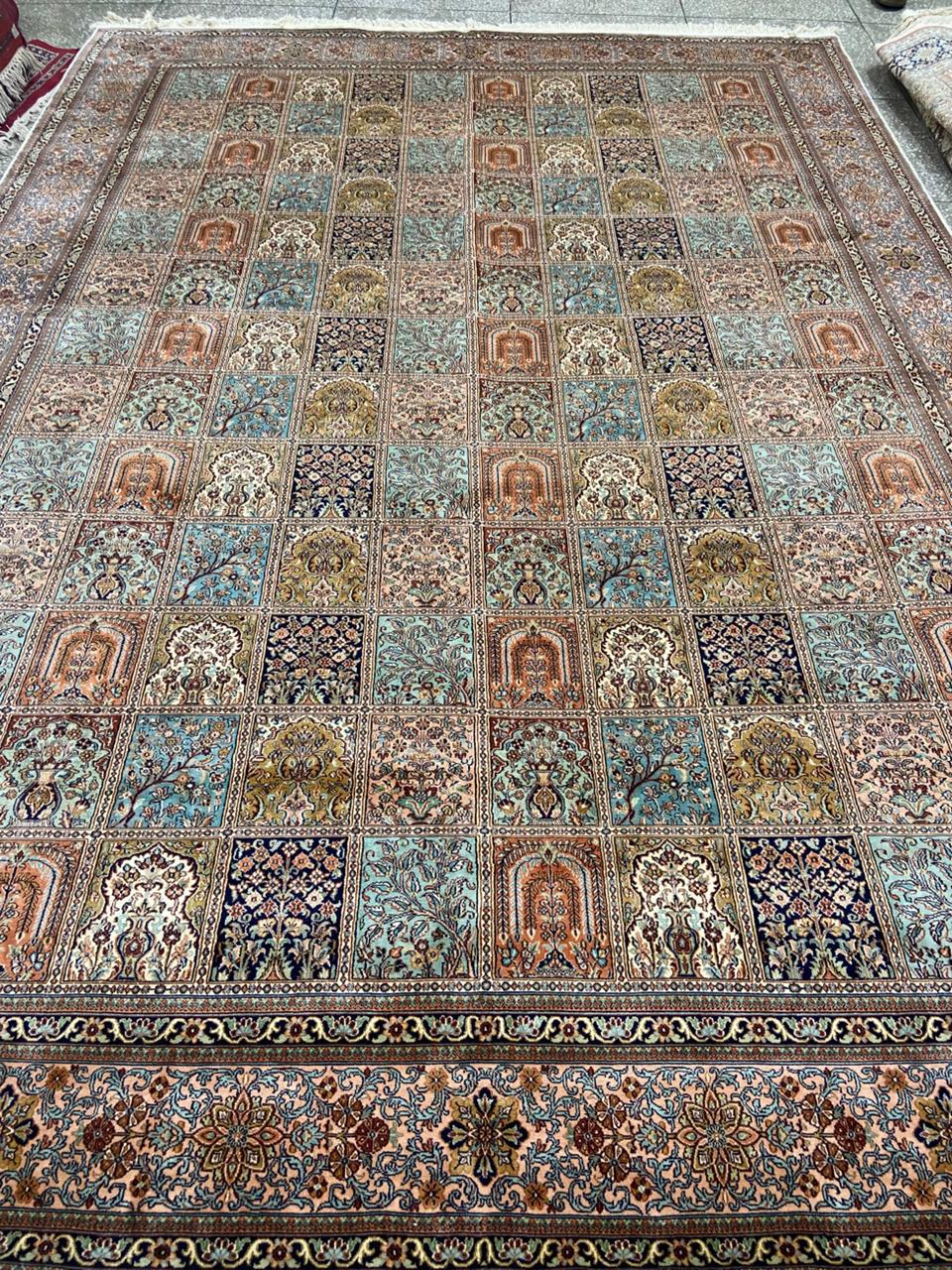
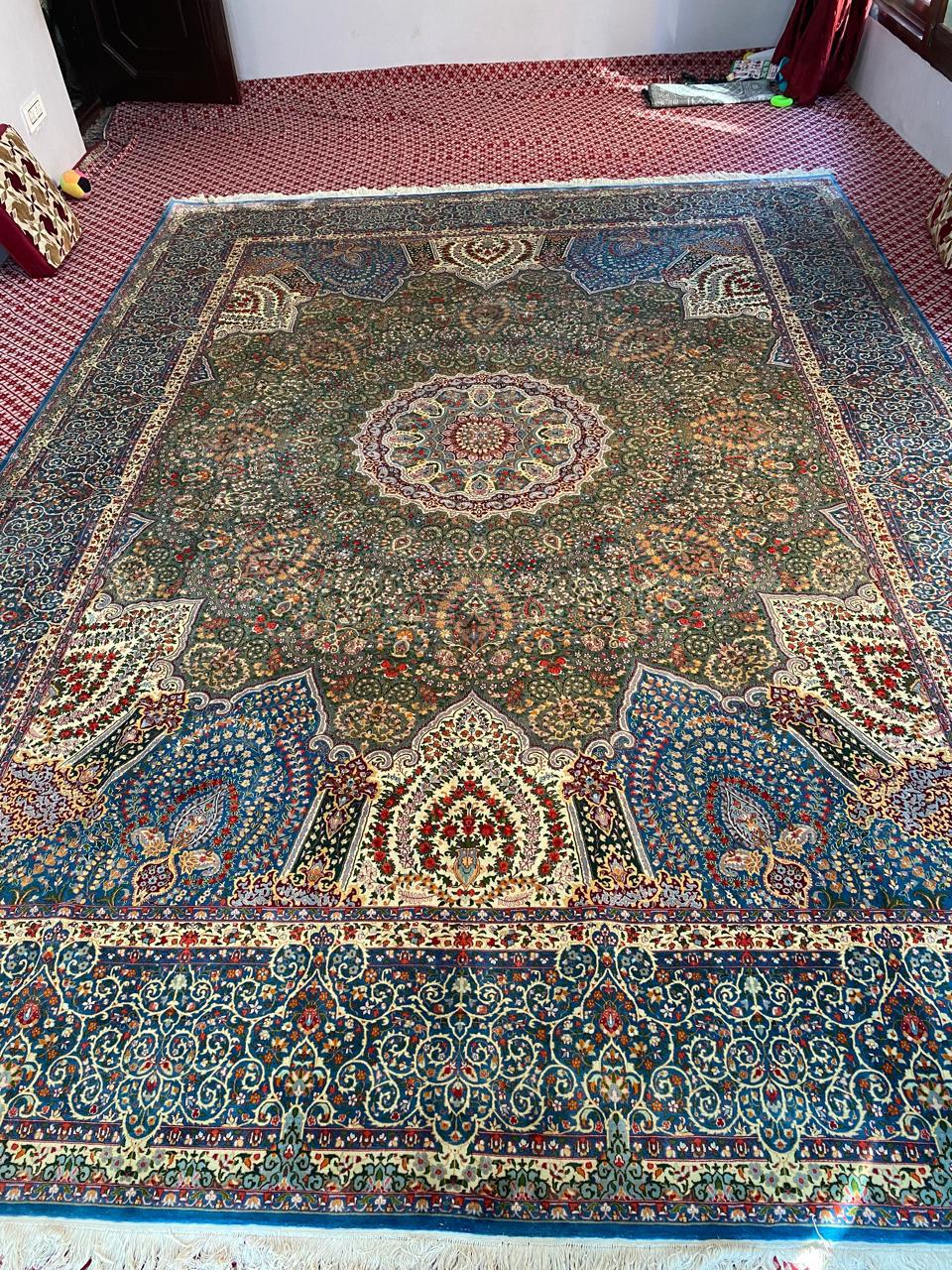
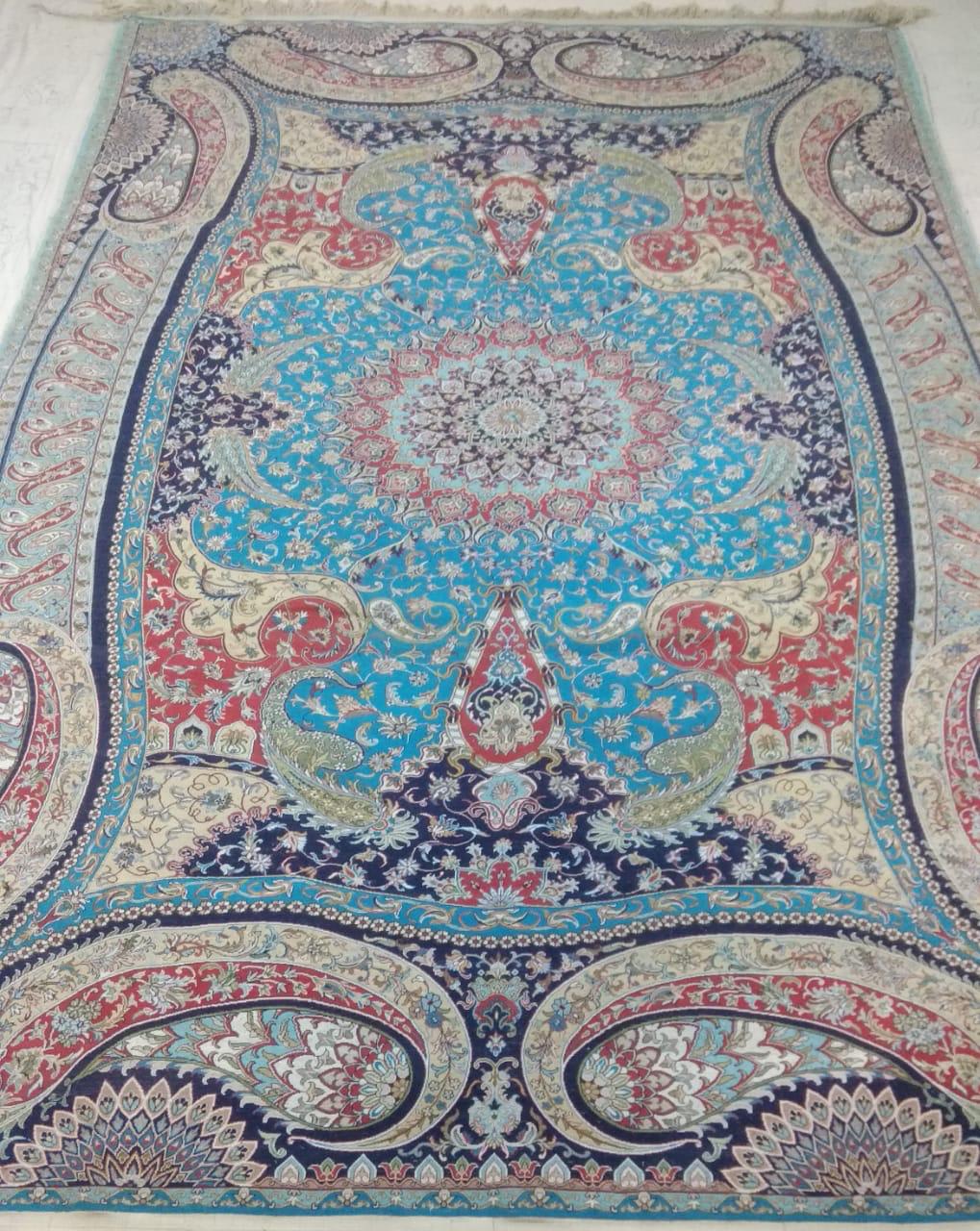
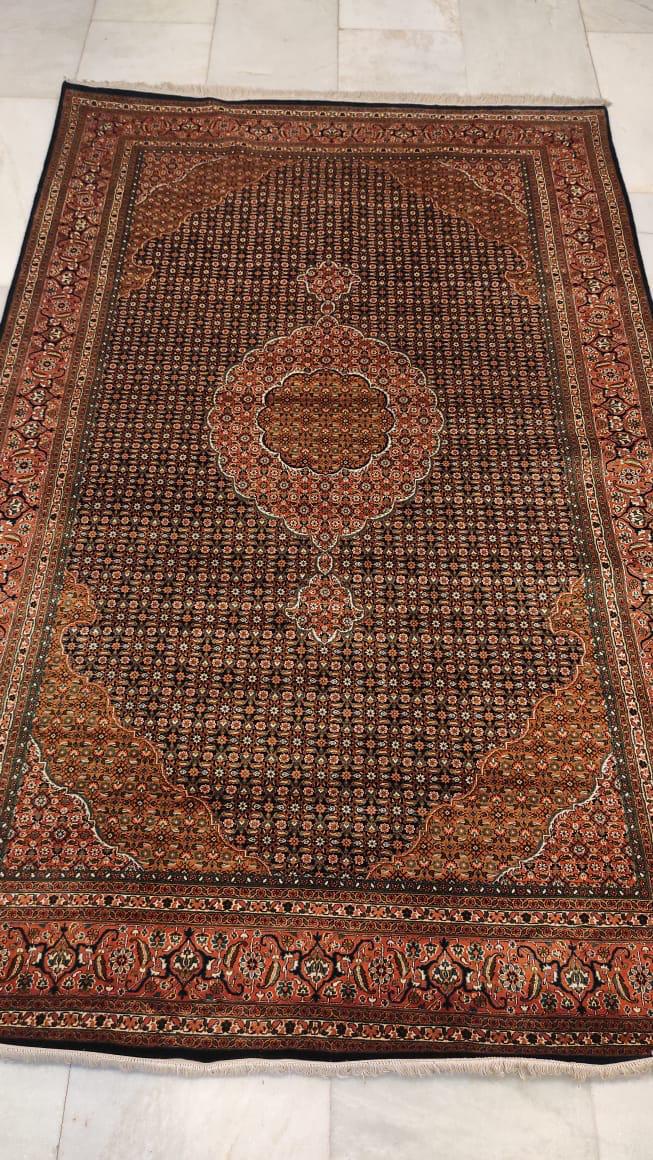
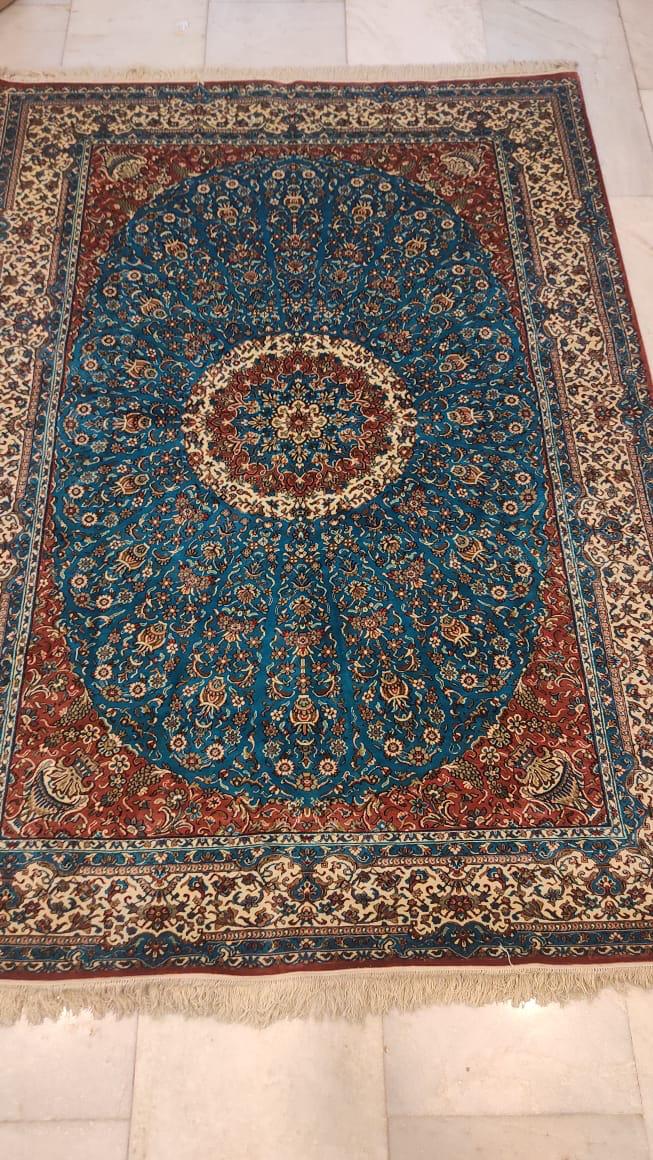
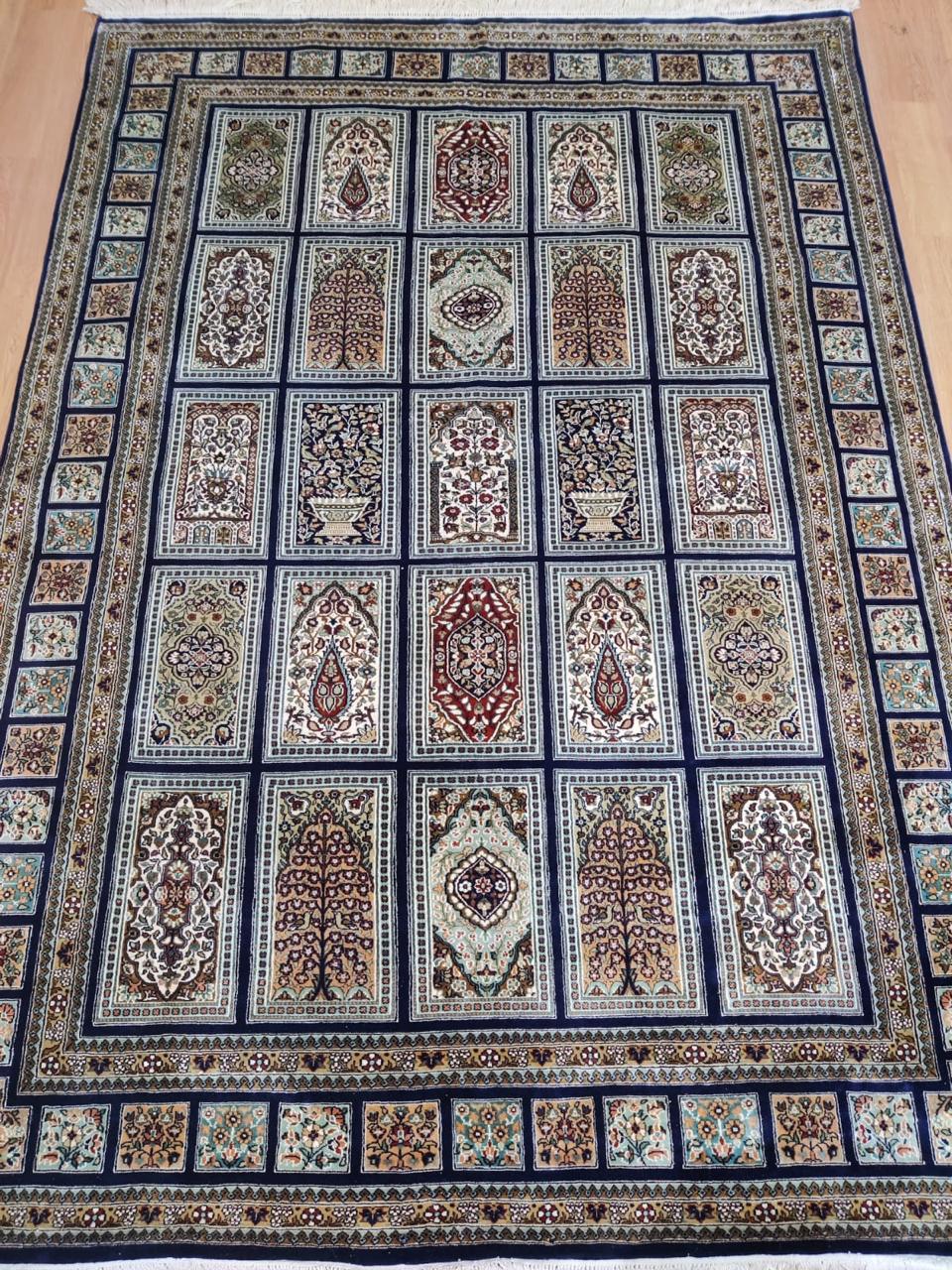
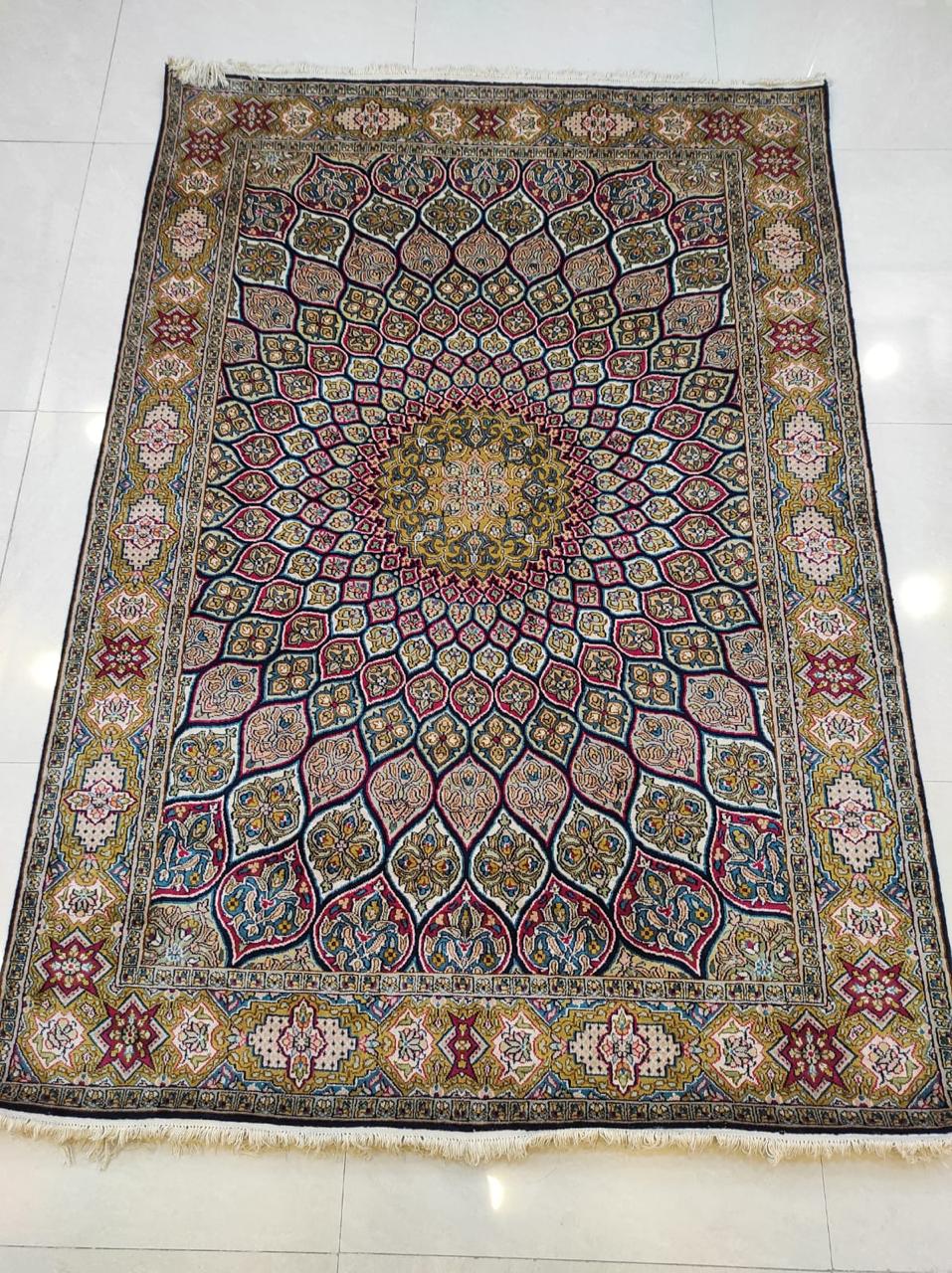
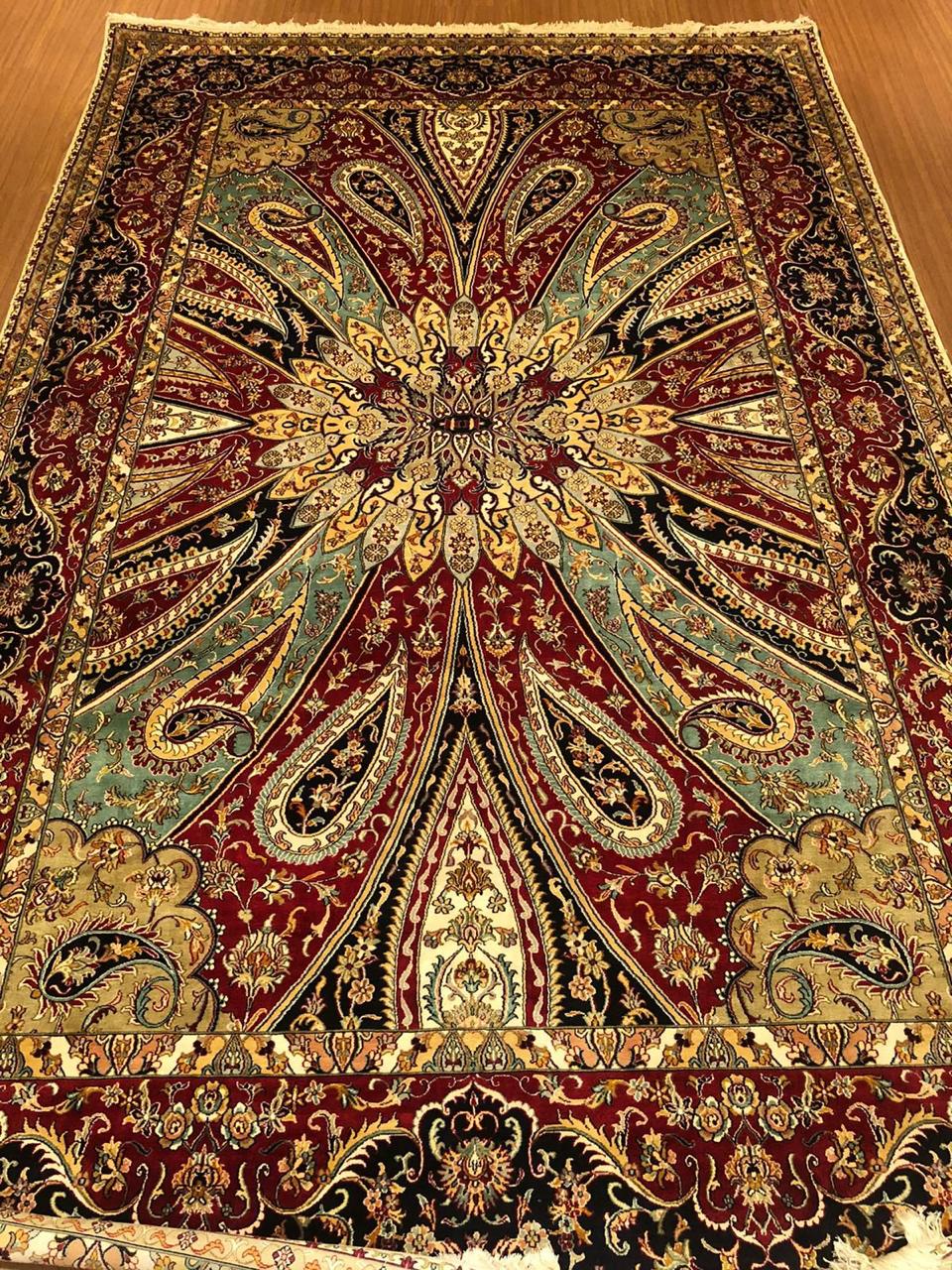
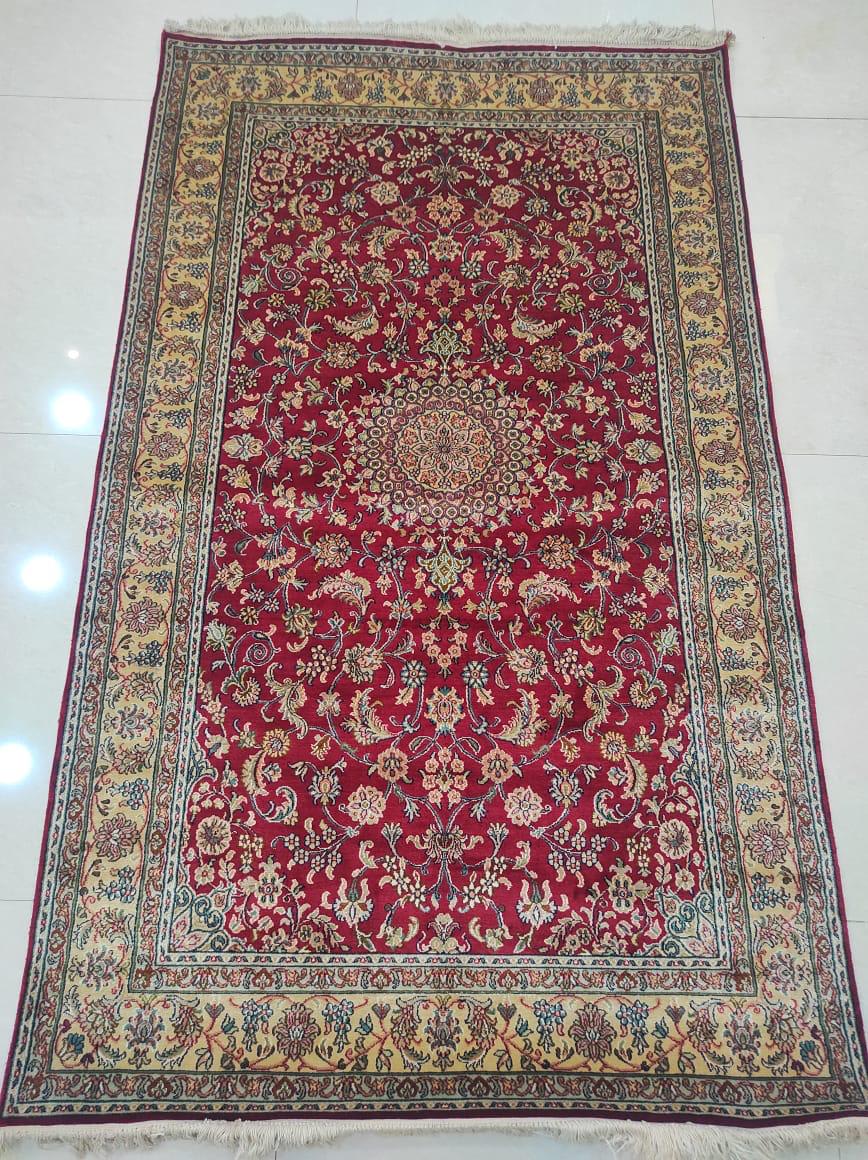
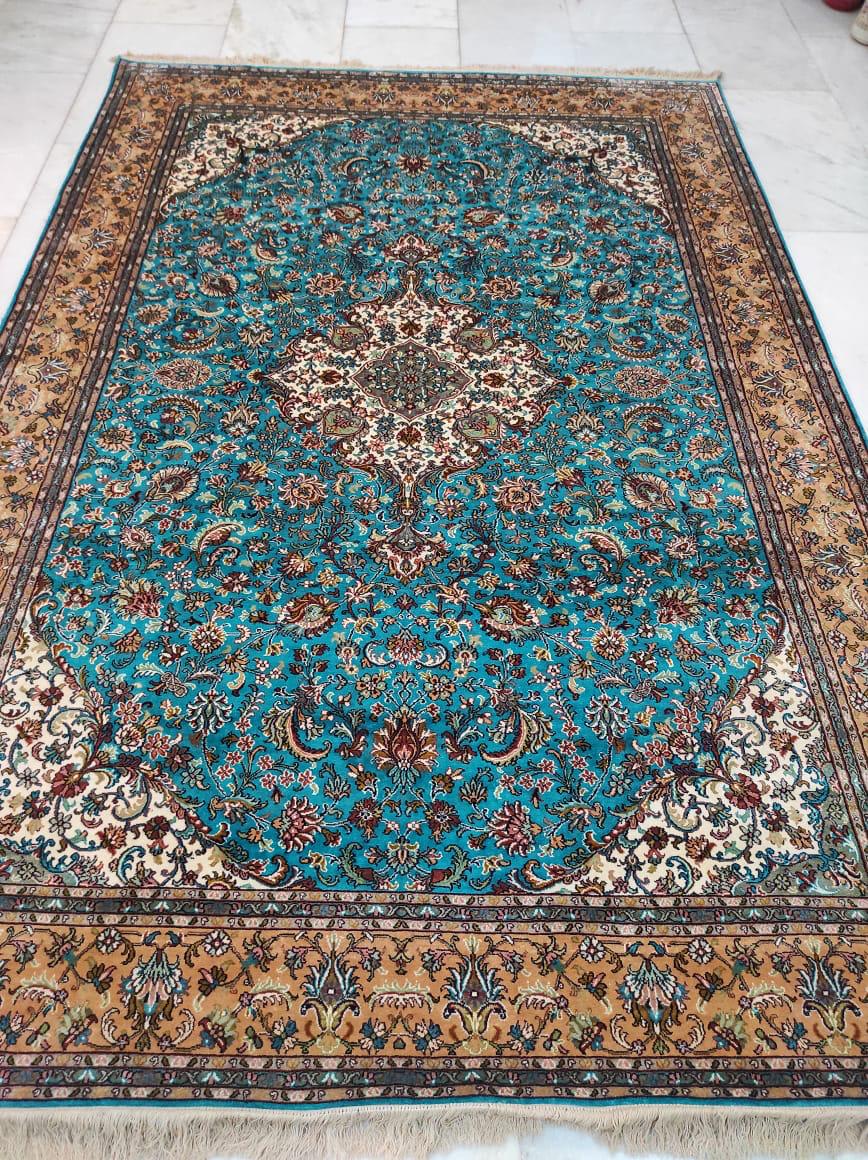
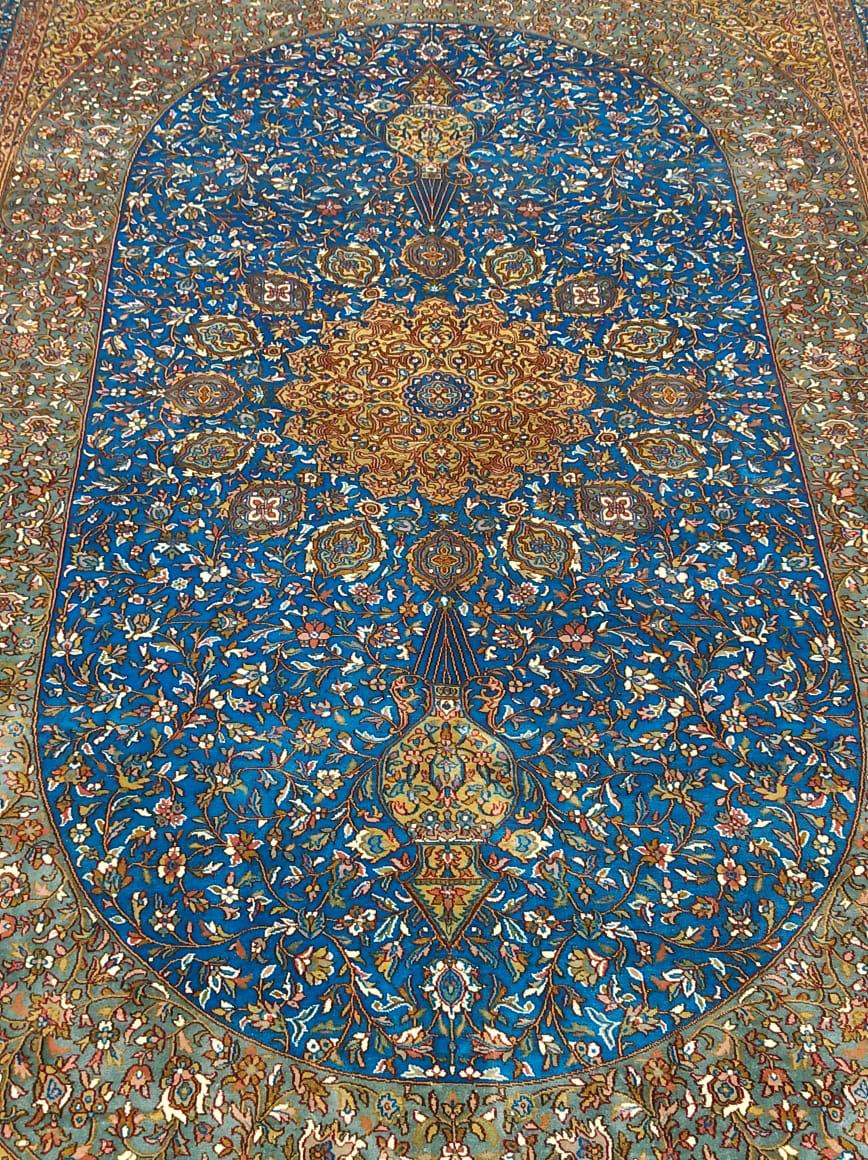
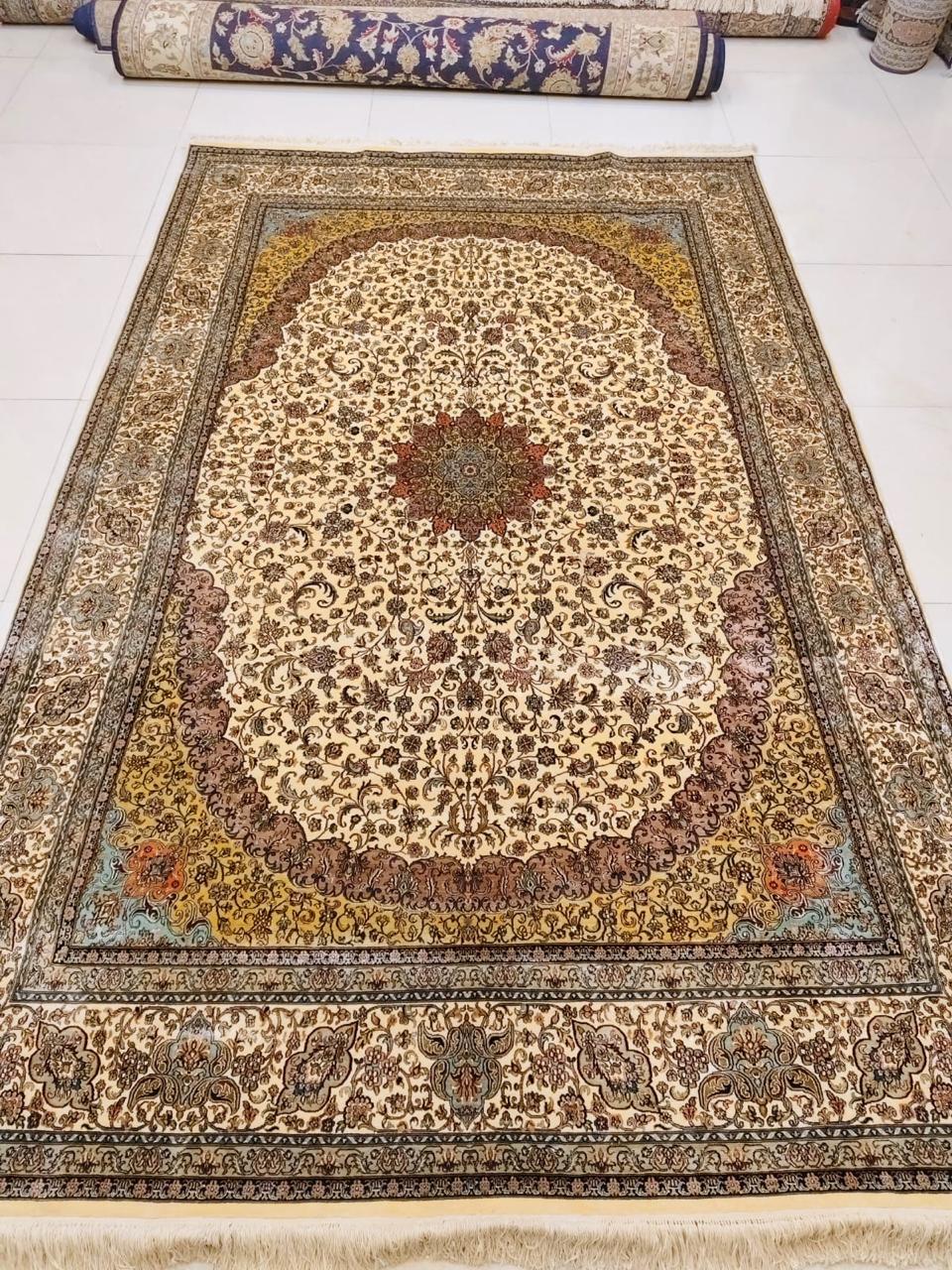
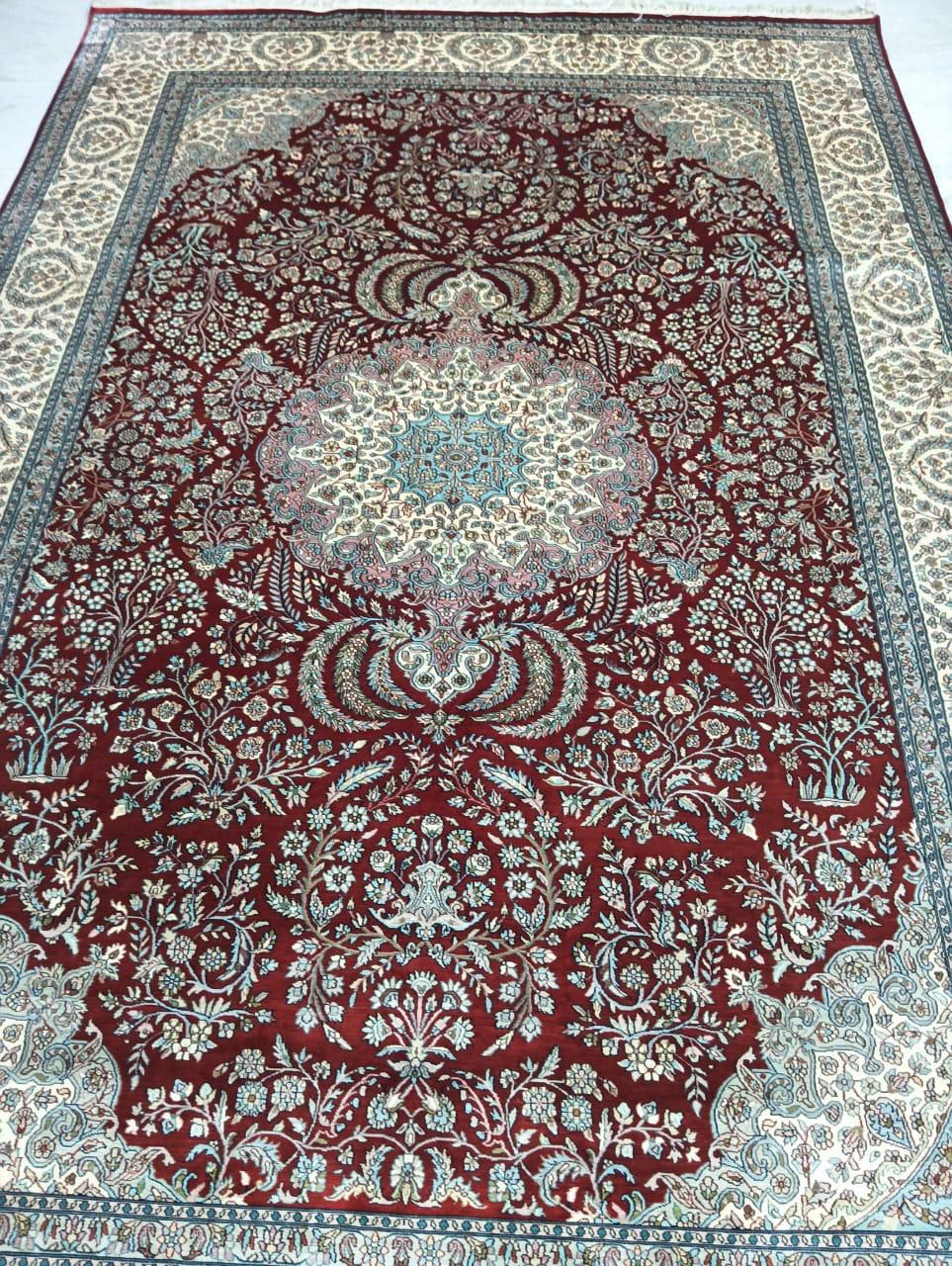
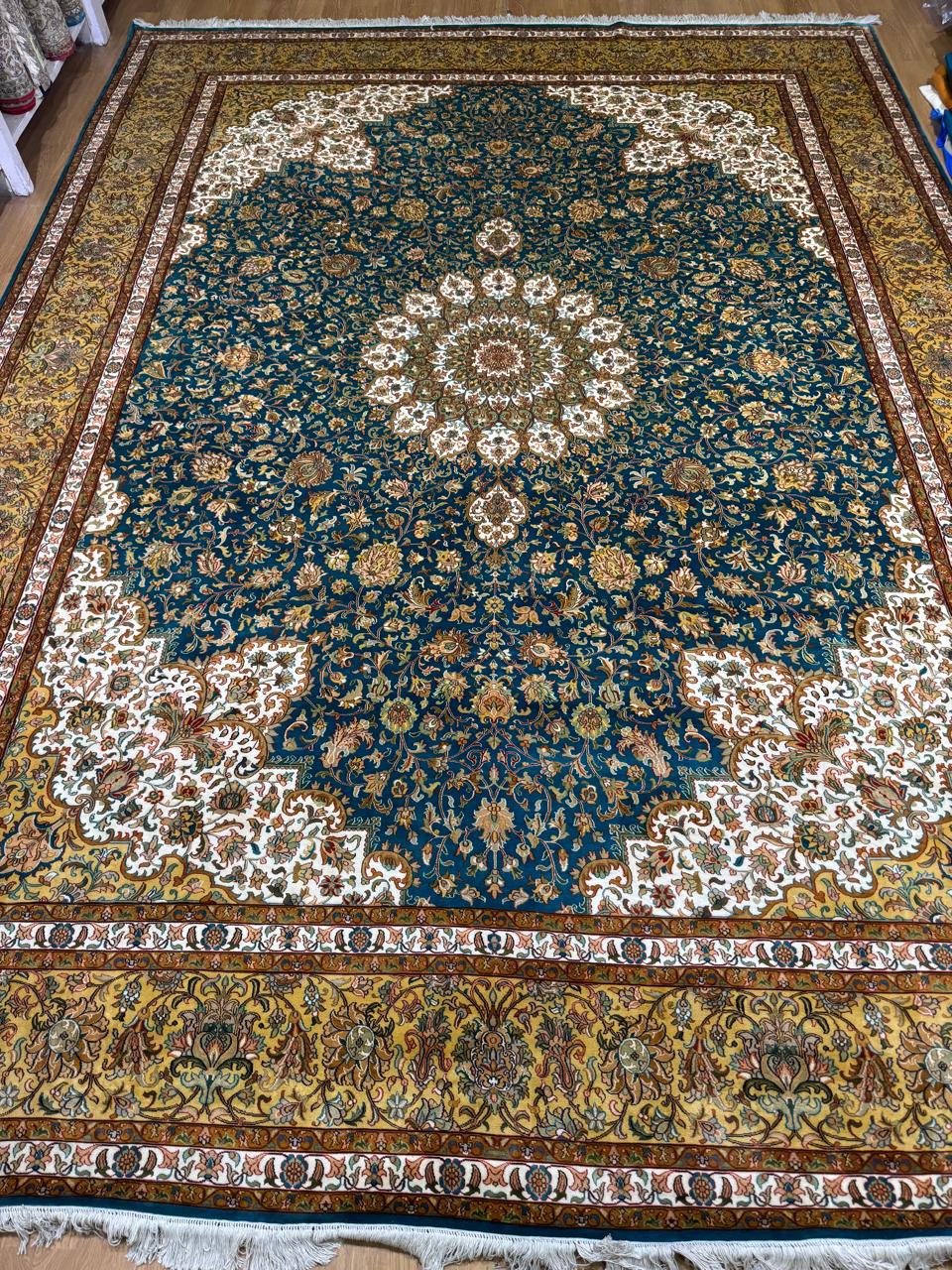
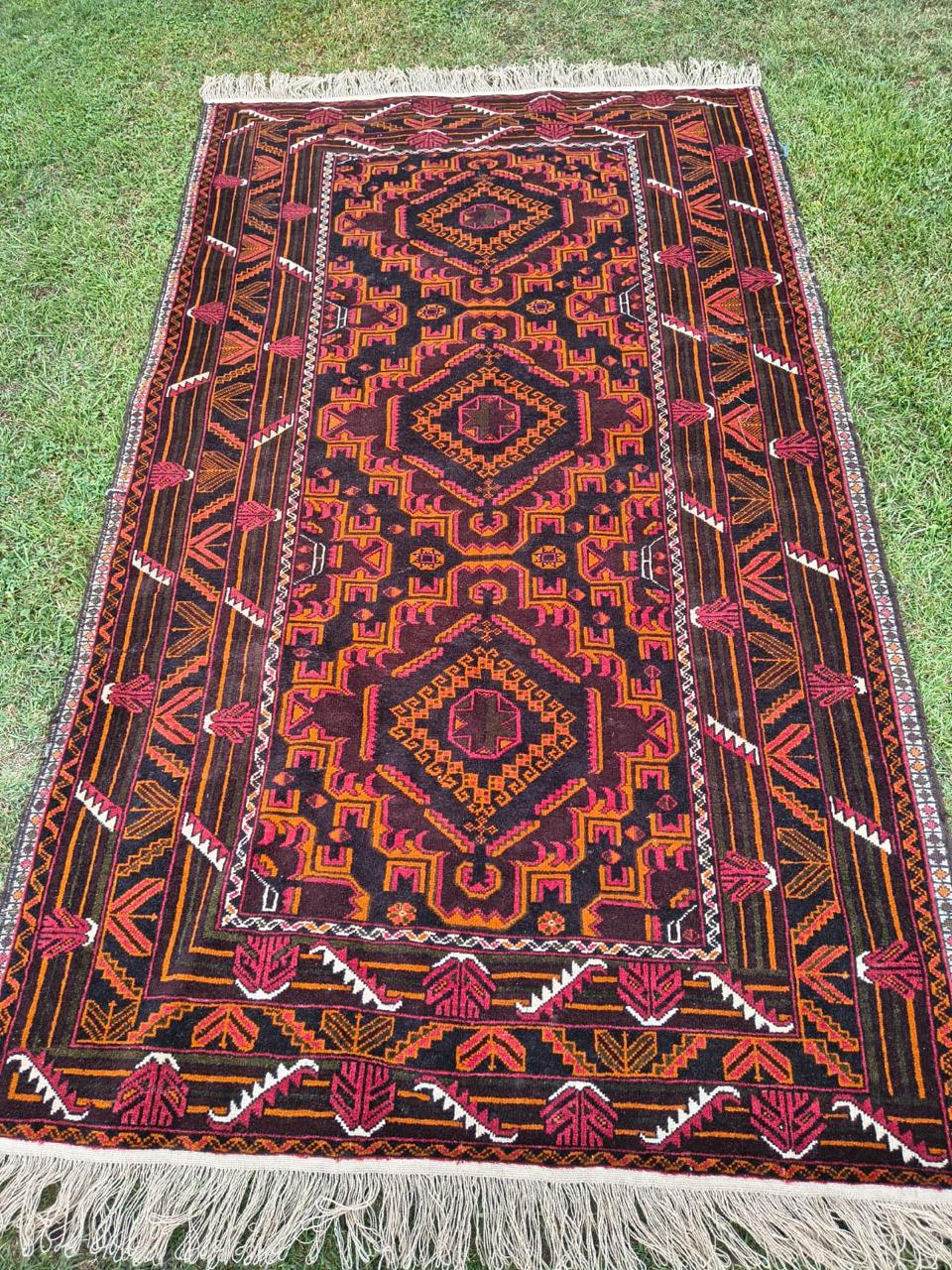
New collection has arrived · 175 hand-tufted carpets and 15 Kashmiri handicrafts are now available. Explore the collection
The Kashmir Knot®  ·  Est. 1991 · Srinagar, Kashmir

The Kashmir
Knot

The Kashmir Knot is a Srinagar-based house of Kashmiri carpets and Pashmina, connecting traditional craftsmanship and individual pieces with collectors, homes and interior projects worldwide since 1991.

Pure Silk Certificate Notes Worldwide Delivery
Scroll
Pure Pashmina Hand-knotted Carpets Sozni Embroidery Kani Weave Natural Dyes GI Guidance Free Worldwide Shipping Pure Pashmina Hand-knotted Carpets Sozni Embroidery Kani Weave Natural Dyes GI Guidance Free Worldwide Shipping
Since 1991 Hand-knotted and handwoven Certificate notes available Private video viewing Worldwide enquiries
Home

A quieter way to buy serious handmade pieces

Most of our carpets and shawls are chosen after a conversation, not a rushed cart checkout. We help you compare pieces, understand scale, confirm availability, and see the details clearly before any payment is made.

Shawls $30-$2,000

Simple plain Pashmina shawls can begin around $30-$60, while finer embroidered, patterned, and motif-rich pieces rise with craft, fibre, and detail.

Carpets $1,000-$5,000

Handmade carpets vary by size, material, knotting, condition, and design type. We explain why a piece sits in its range before you commit.

Specials Higher by quote

The Kashmir Knot Specials are exceptional pieces and may sit above the usual carpet range. We discuss them slowly, with context and close-ups.

We do not surprise you with price. We guide you toward a thoughtful, honest purchase that fits both the piece and your budget.

01 Shortlist

Choose from Kashmiri carpets, Pashmina shawls, specials, or an unseen piece shared privately on WhatsApp.

02 Verify

Ask for close-ups, room guidance, colour checks, material notes, certificate details, and delivery guidance.

03 Confirm

Once price and availability are confirmed, use Pay Quote for Razorpay, Wise, or PayPal with the selected piece details.

One-of-one pieces Private viewing available International delivery by quote Care guidance included
Contact

Speak to The Kashmir Knot

For catalog requests, close-up photos, care guidance, custom sizes, international delivery, or private viewing appointments, message us directly. International enquiries are handled personally by Taufiq Hussain during Kashmir/India daytime. WhatsApp text and voice messages are welcome, and language support can be arranged.

Est. 1991
Since
1991
Srinagar, Kashmir

Rooted in the
Valley of Artisans

Since 1991, The Kashmir Knot has brought the most exquisite handcrafted textiles from the heart of the Kashmir Valley to homes across the world. Founded by Ghulam Mohammad Joo, the house was born from a deep respect for Kashmir's master craftsmen and a desire to carry their work with dignity to families across the world.

In loving memory of Ghulam Mohammad Joo, founder of The Kashmir Knot, who passed away on 16 September 2016. His eye for craft, his fairness toward artisans, and his belief in Kashmiri handwork remain the quiet foundation of everything we do.

Today, The Kashmir Knot is owned by Towfeeq Hussain Joo and serves clients worldwide through its online collection and private enquiries.

Every shawl that bears our name is woven on a handloom from the finest Changthangi Pashmina, sourced directly from nomadic herders in Ladakh. Every carpet is hand-knotted by artisans who begin their apprenticeship at the age of twelve, spending years mastering the intricate Persian and Mughal-inspired motifs that define Kashmiri carpet-making.

We are proud holders of the Geographical Indication (GI) certification — a testament to the authenticity and provenance of every piece we create.

34+Years of Legacy
300+Master Artisans
80+Countries Served
Founder Tribute

Ghulam Mohammad Joo's legacy lives in the way each piece is selected: patiently, honestly, and with respect for the hands that made it.

How we curate

We look for balance first: field, border, colour, knot clarity, pile condition, and whether the piece can live gracefully in a real home.

How we guide

Instead of pushing every piece as rare, we tell you what suits the room, what needs care, and what should be avoided for heavy use.

Authenticity

What you receive with a serious piece

Fine carpets and shawls need more than beautiful photographs. Before purchase, we can share close-ups, condition notes, material guidance, care instructions, and a written piece summary for your records.

01 Piece Summary

Code, name, material, size, origin notes, and close-up details can be shared before confirmation.

02 Authenticity Notes

For hand-knotted and handwoven pieces, we explain the craft, fibre, and visual character plainly.

03 Room Suitability

Send a room photo and we will suggest scale, colour fit, and which piece carries the space best.

04 Aftercare

Care instructions are available for carpets and Pashmina shawls so the piece can age properly.

Before payment

Availability, quoted price, selected piece, size, and payment route are confirmed with you personally.

After confirmation

We prepare the order note, certificate details where applicable, care guidance, and shipping coordination.

After delivery

You can message us for placement advice, cleaning questions, or long-term care decisions.

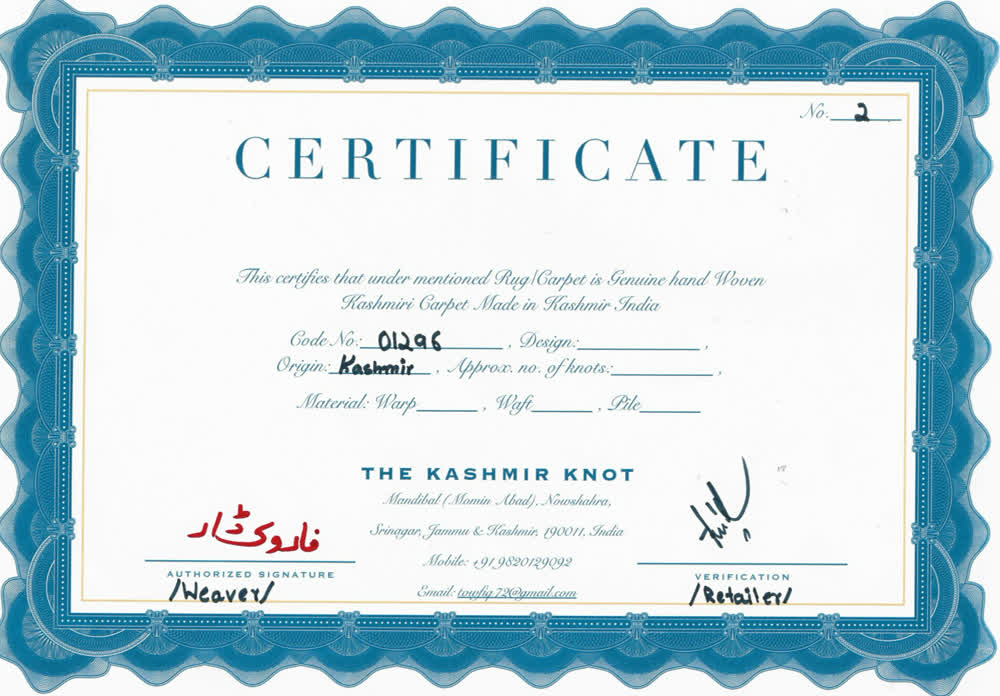
Certificate Format General proof document

This is the certificate format we can prepare with the customer or weaver name, piece code, material, size, and the final purchase details for the selected carpet or shawl.

The Kashmir Knot certificate format preview
Handmade Kashmiri Carpets

Kashmiri Carpet Collection

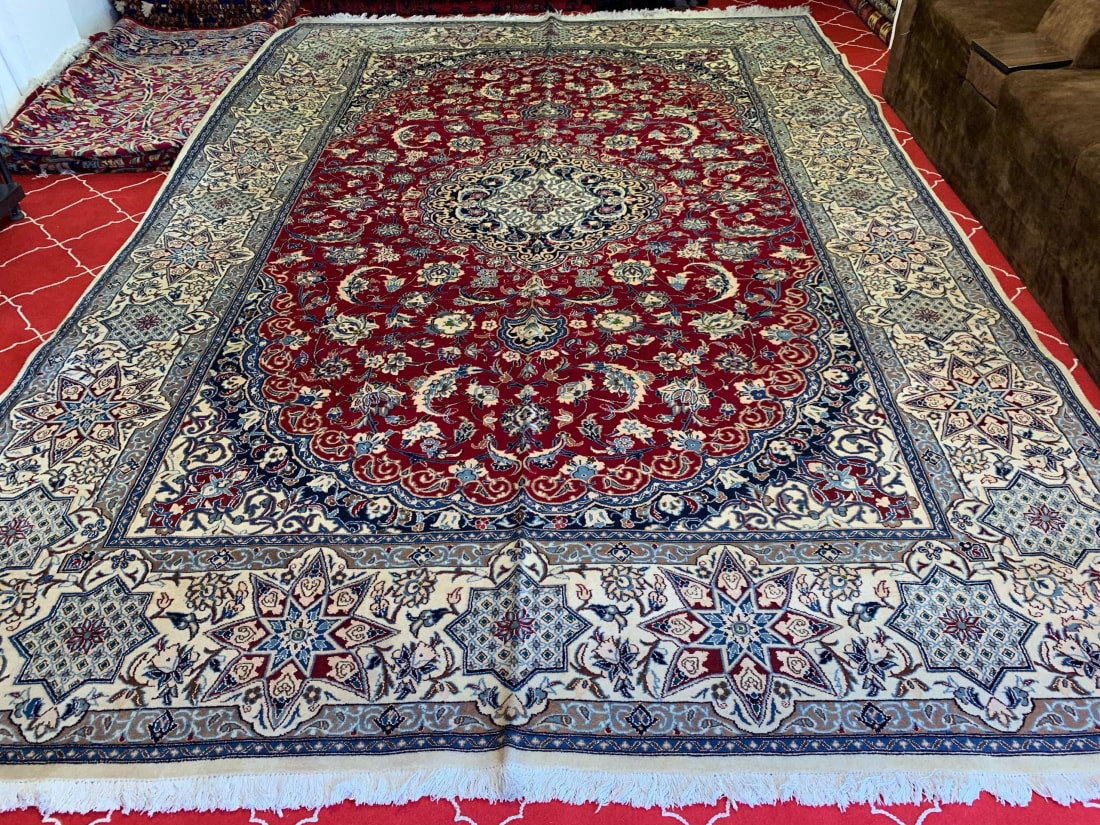
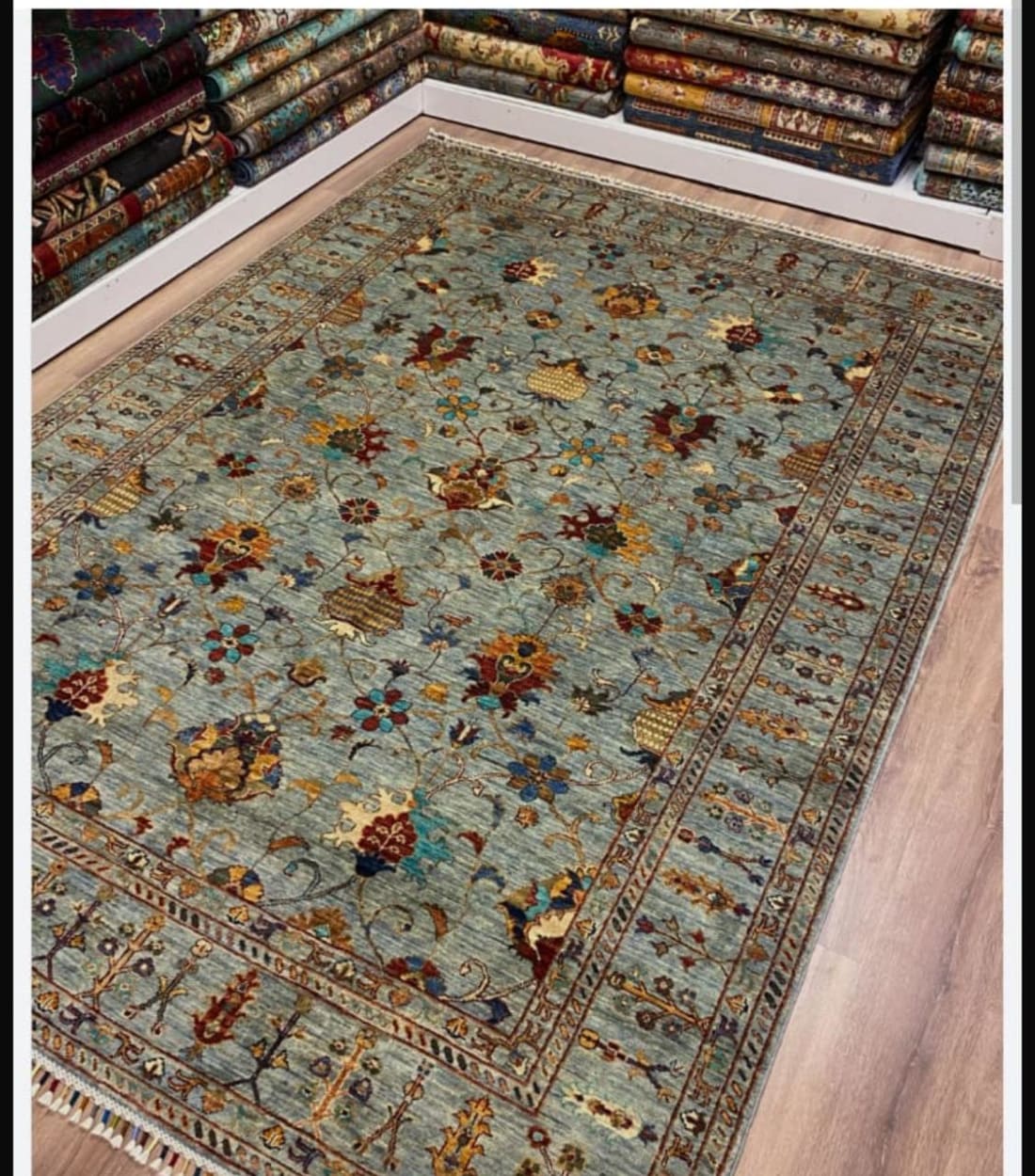
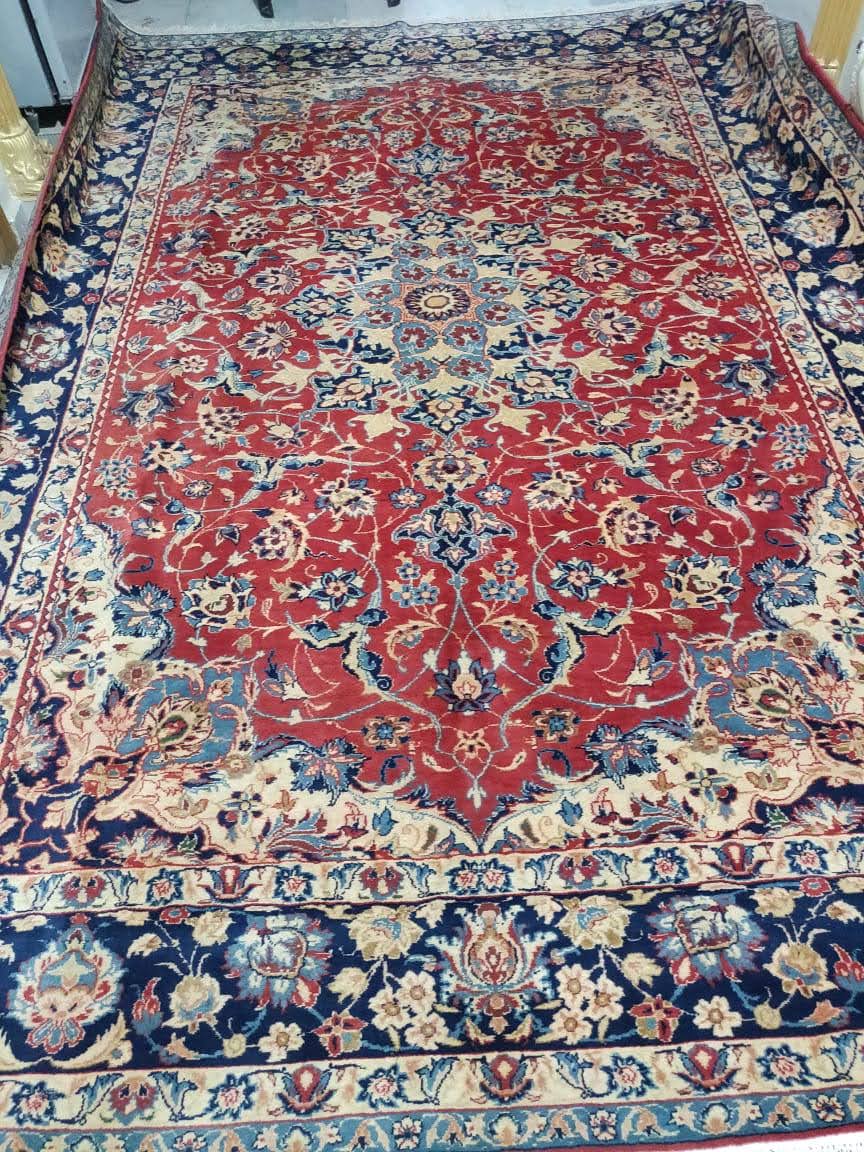
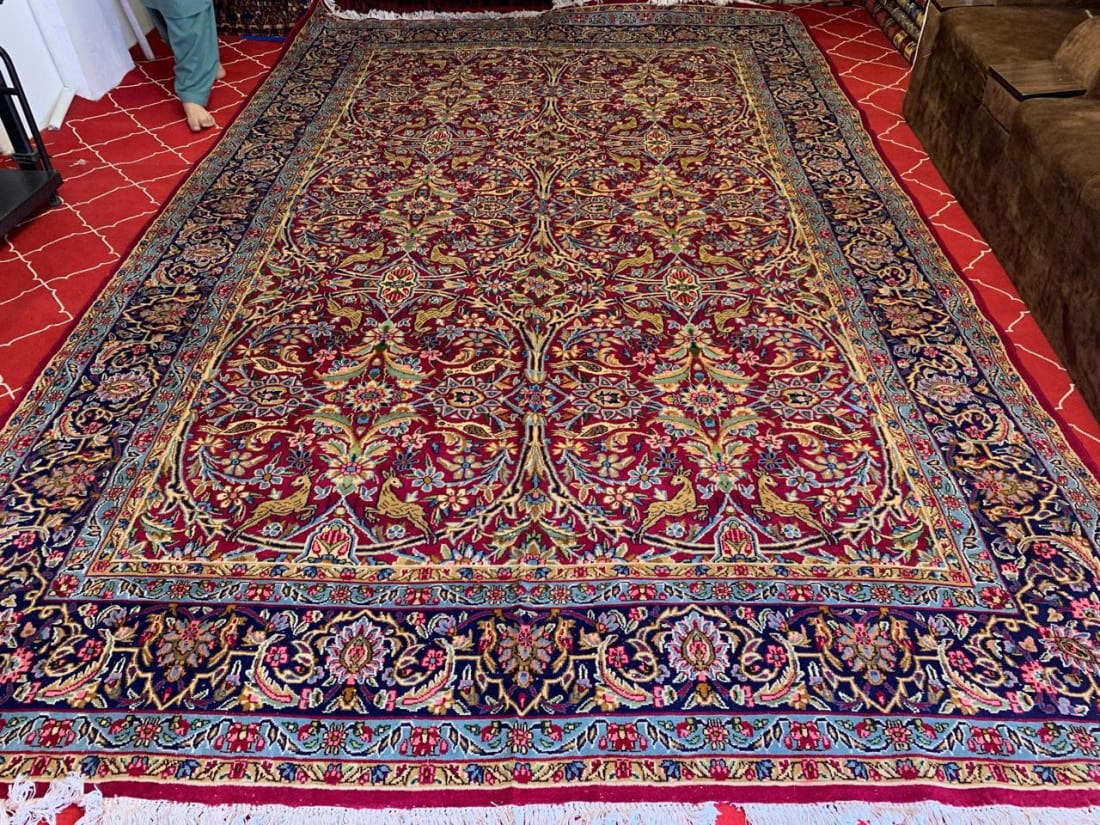
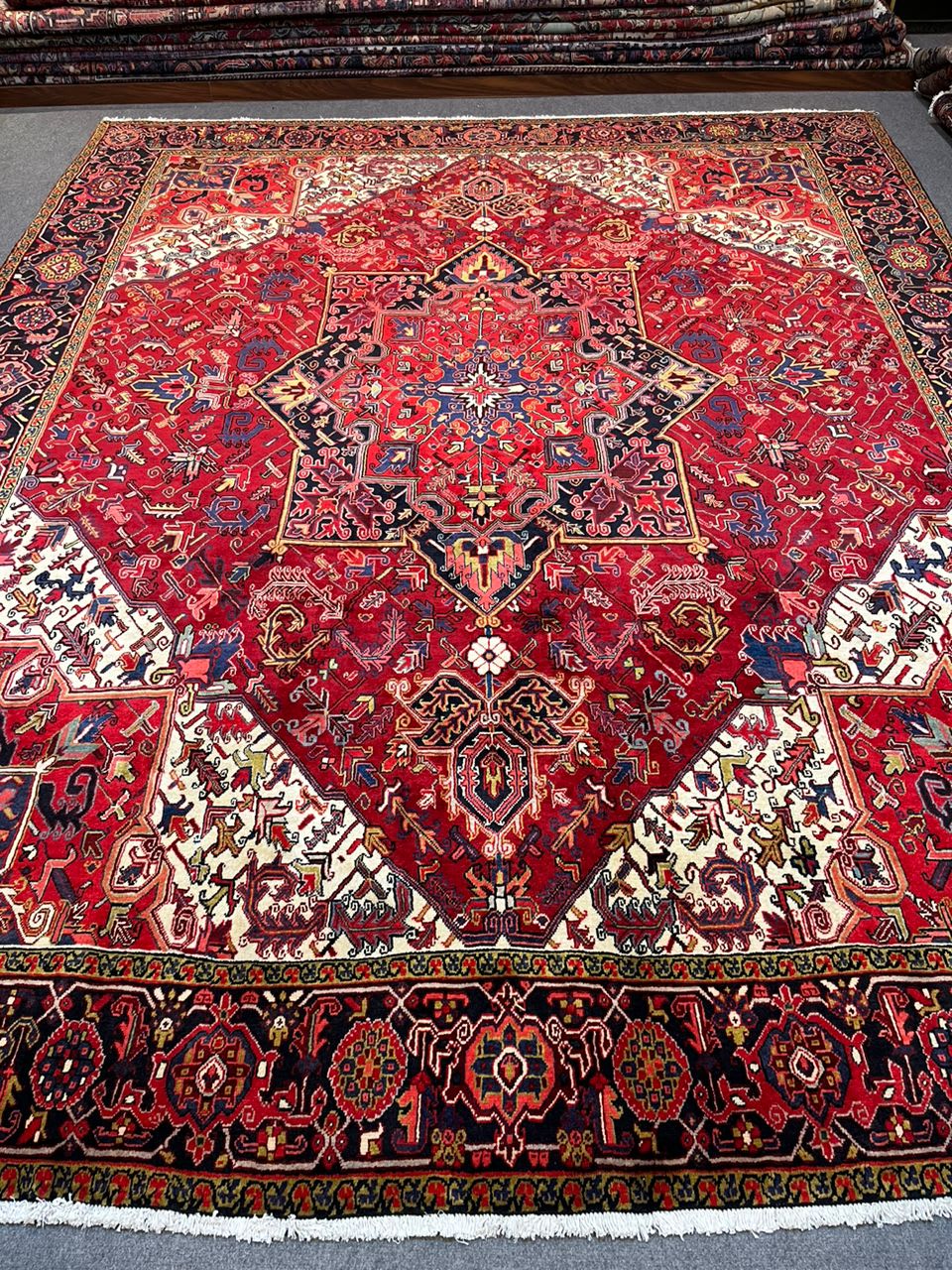
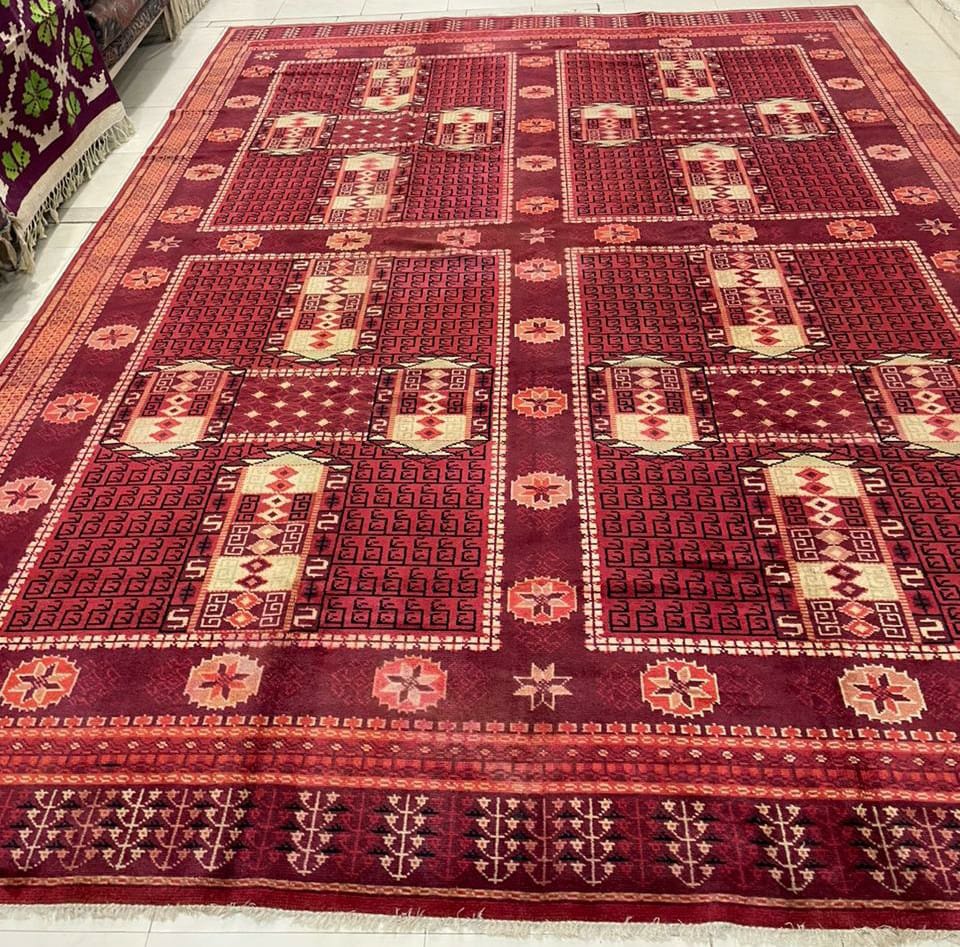
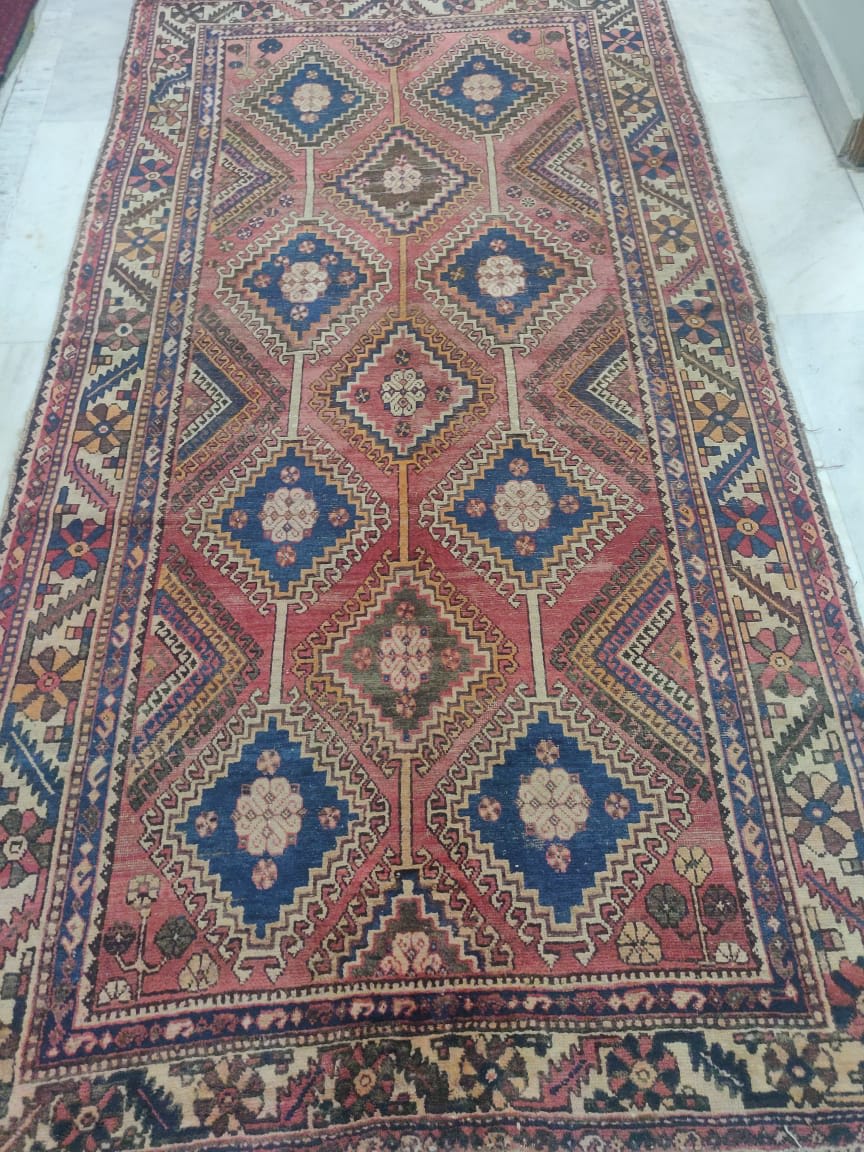
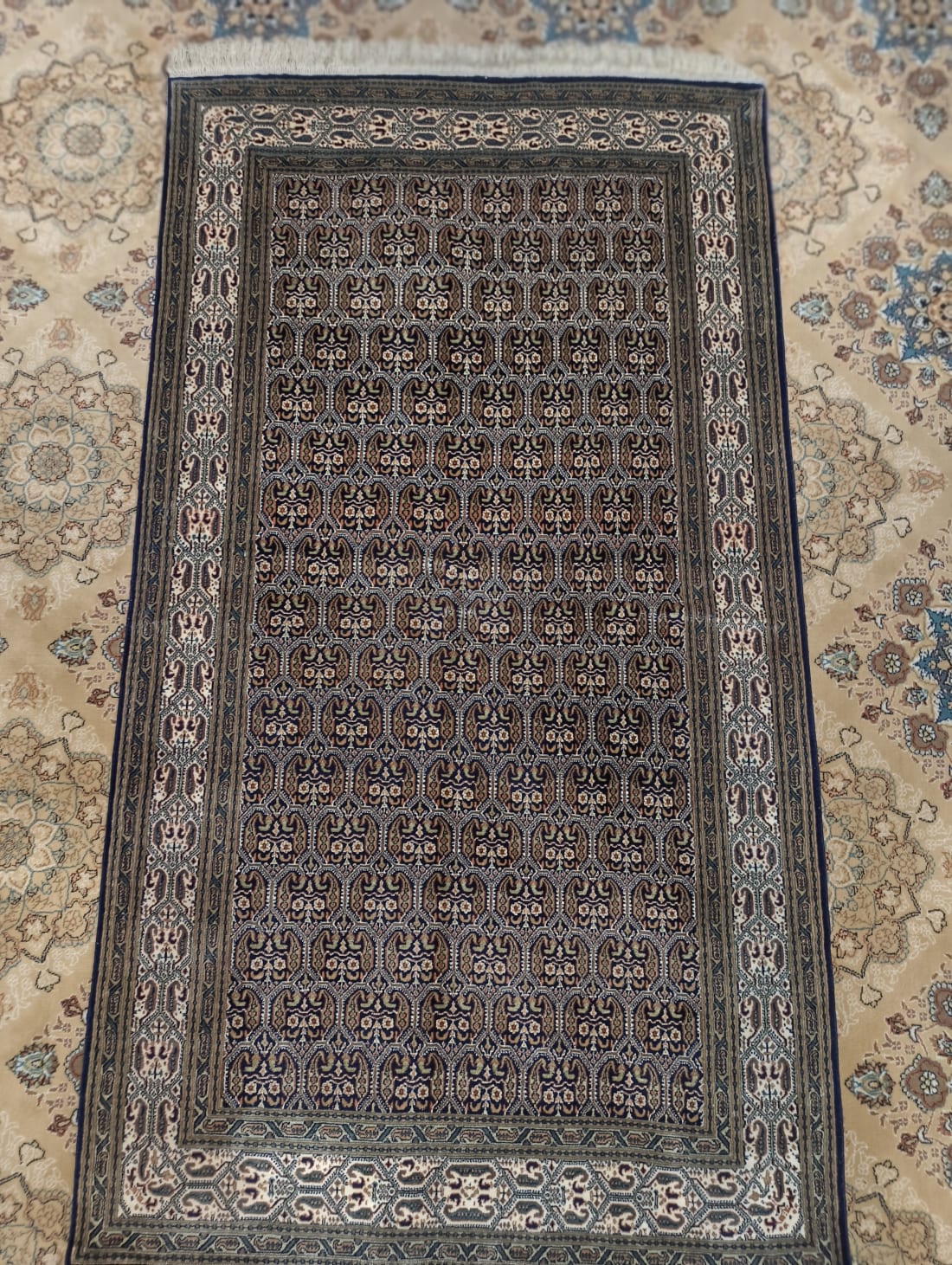
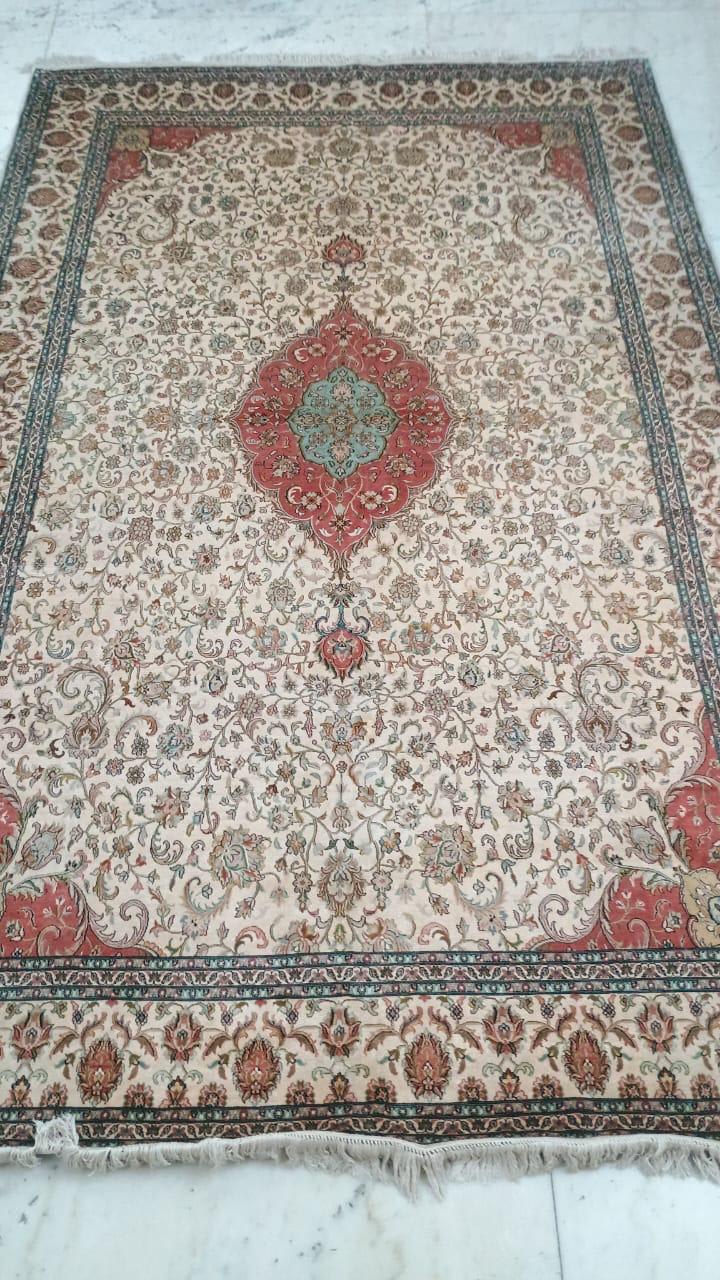
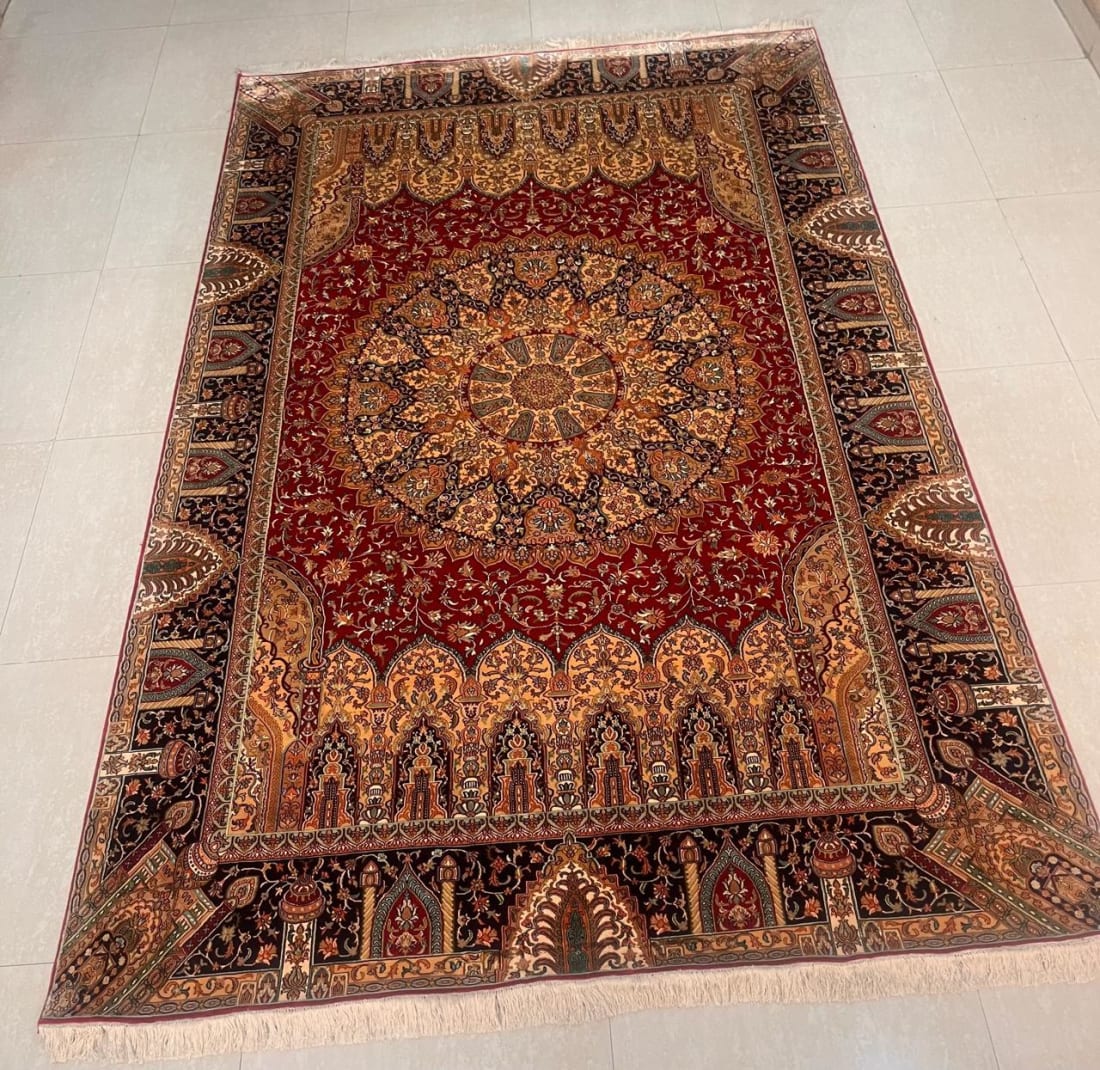
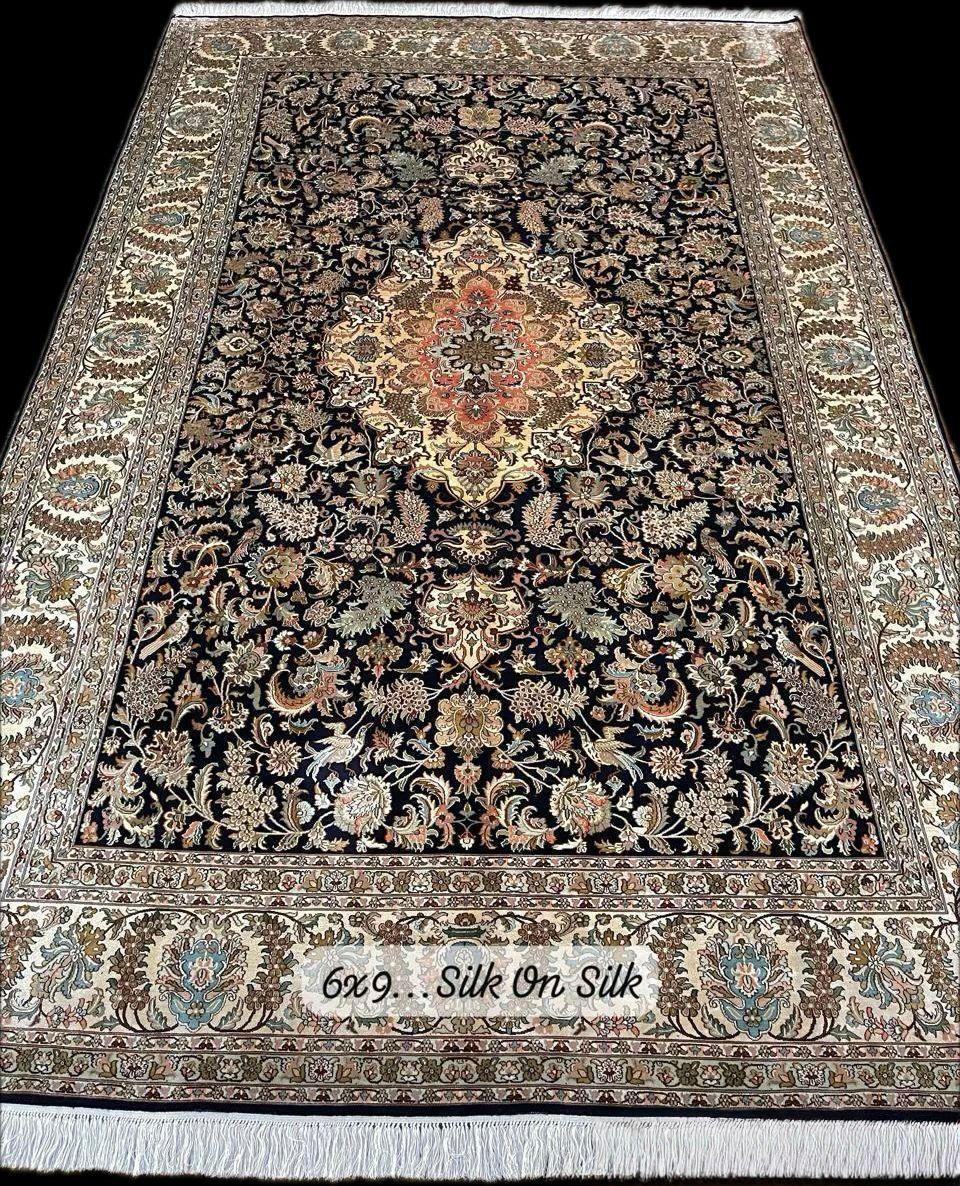
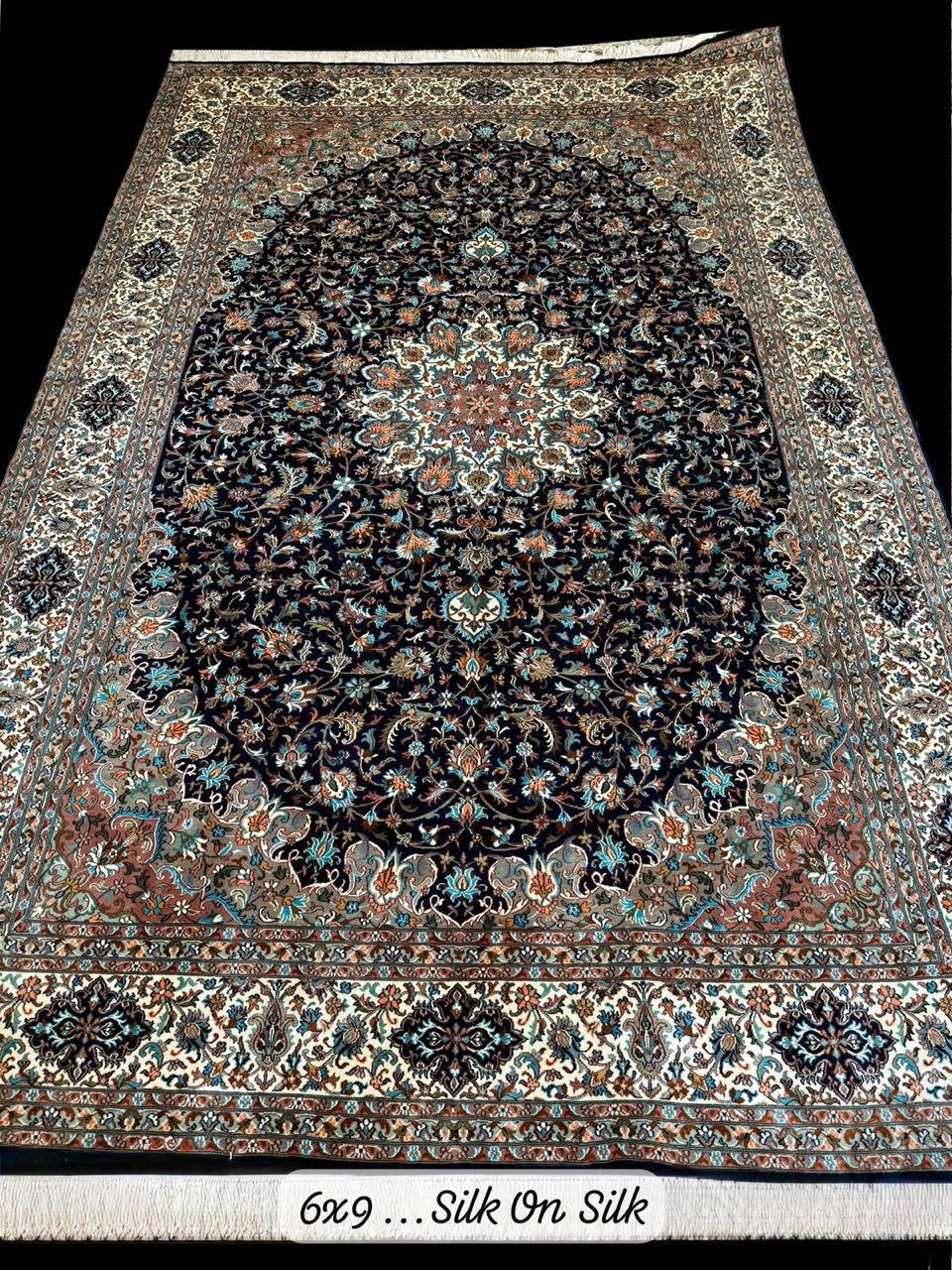
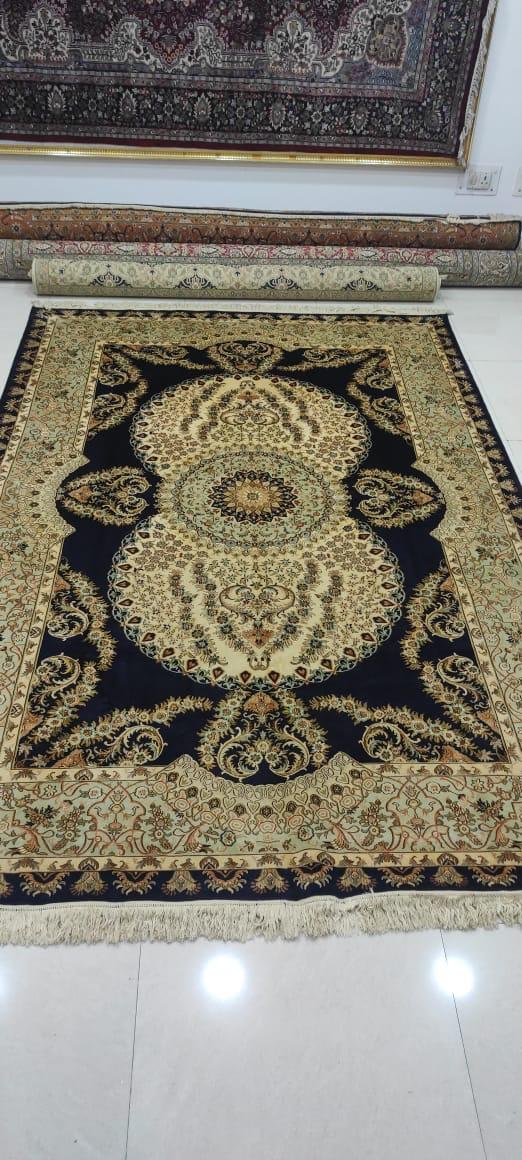
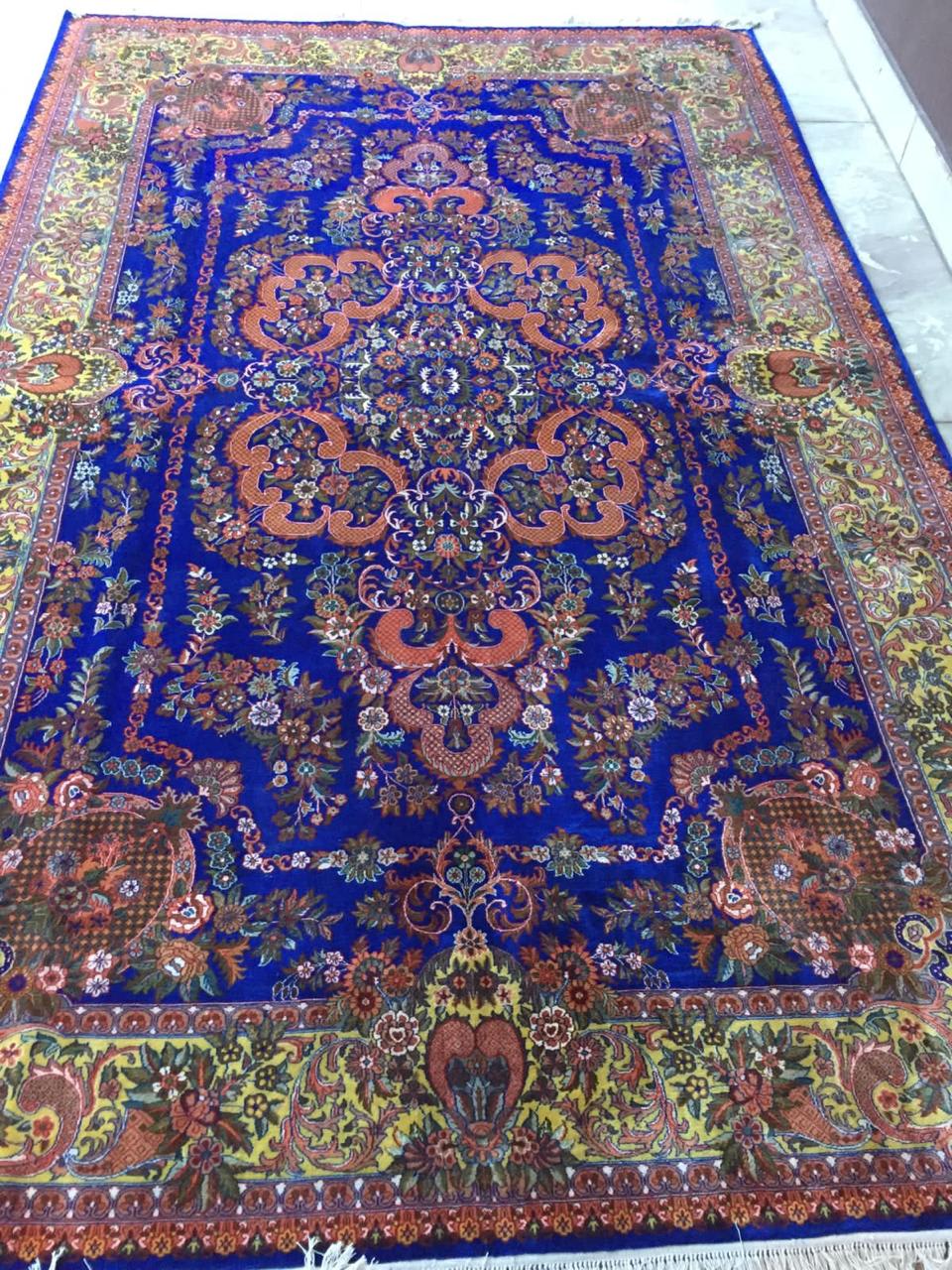
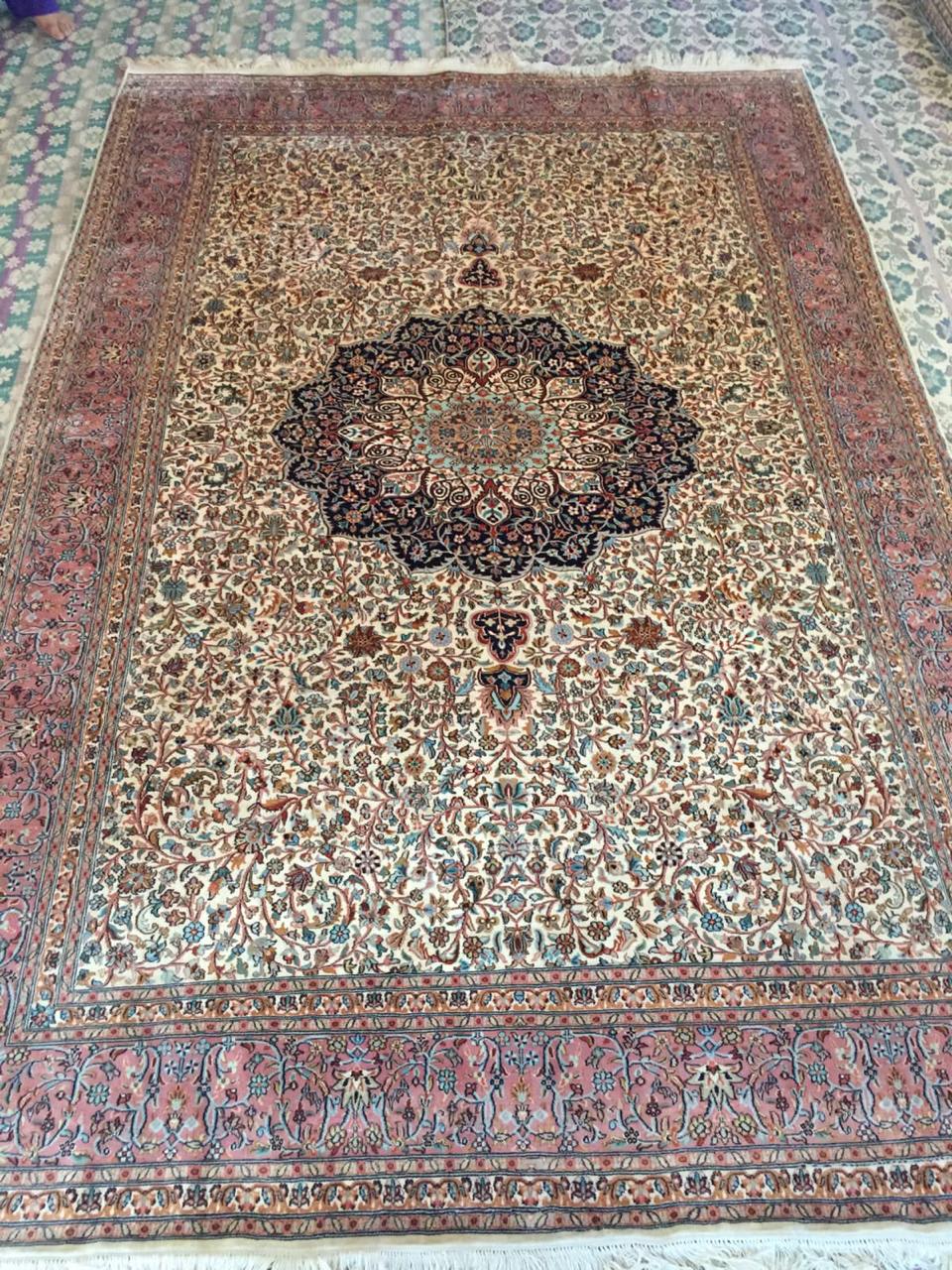
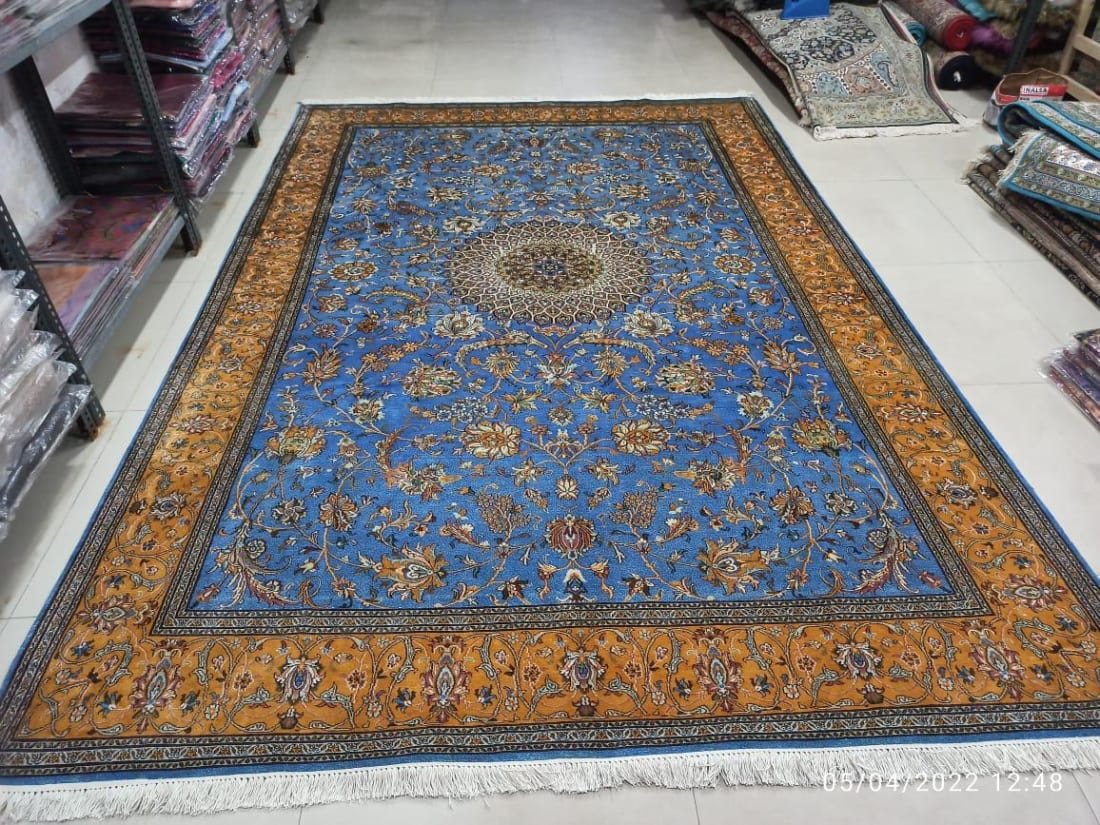
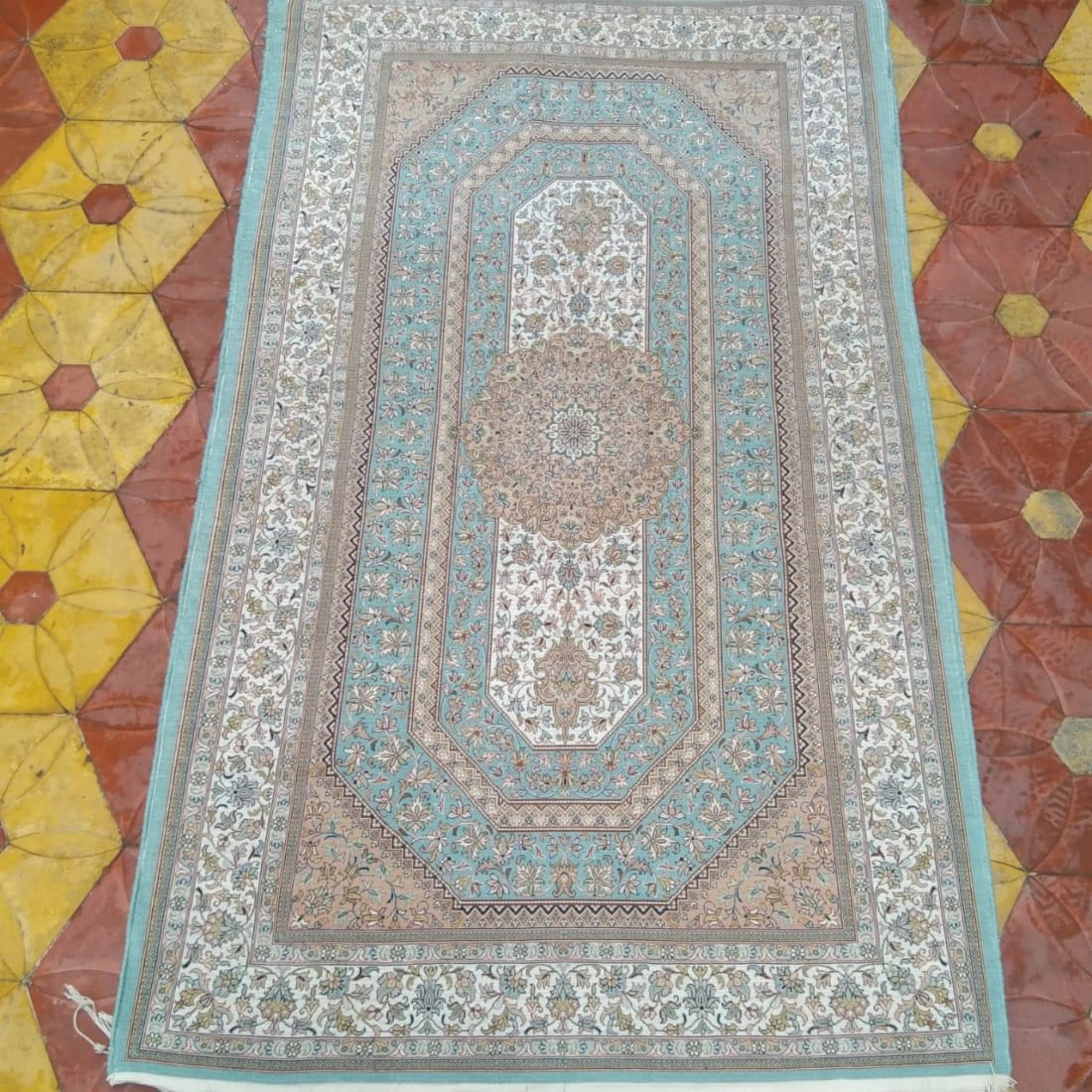
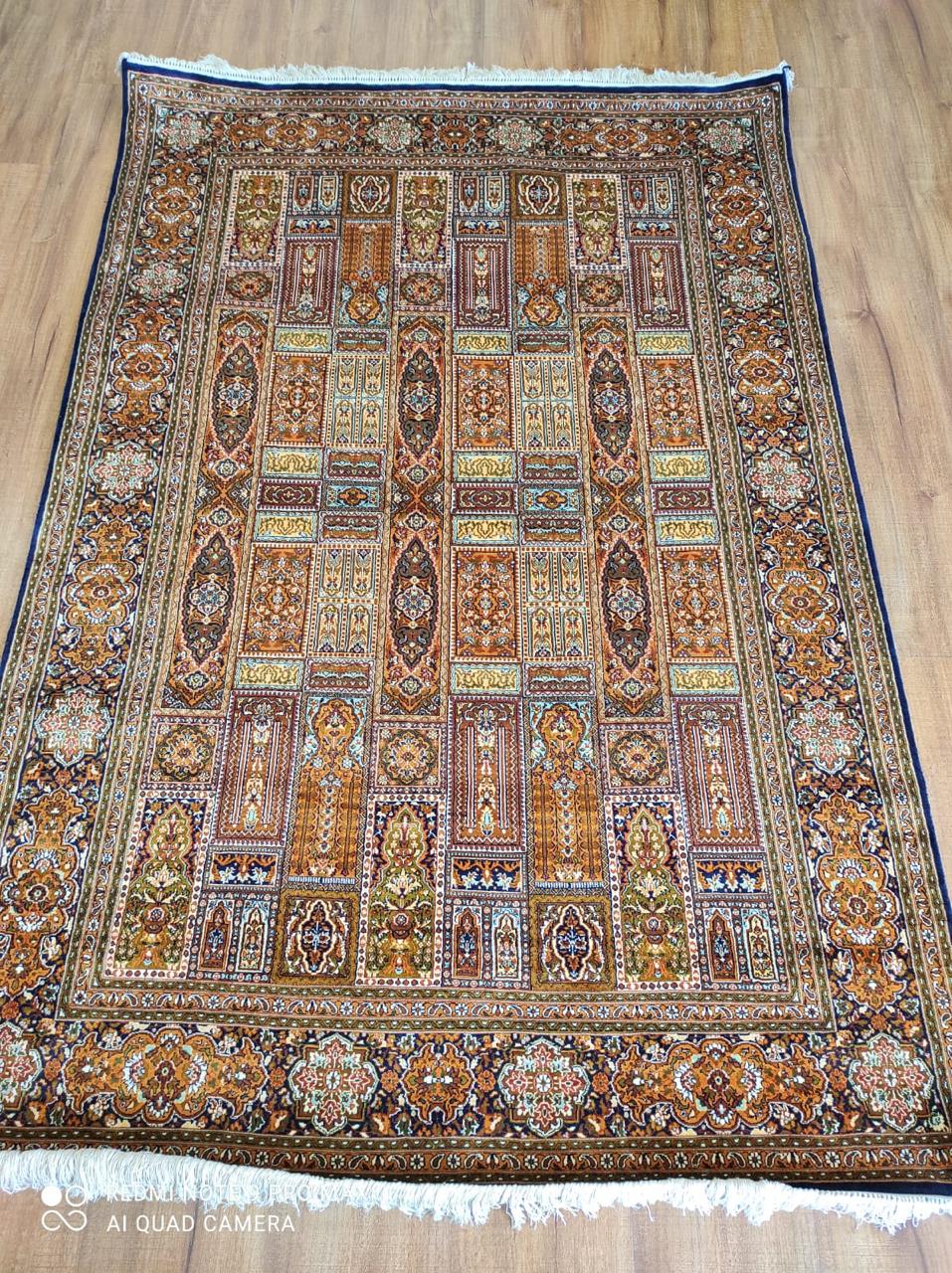
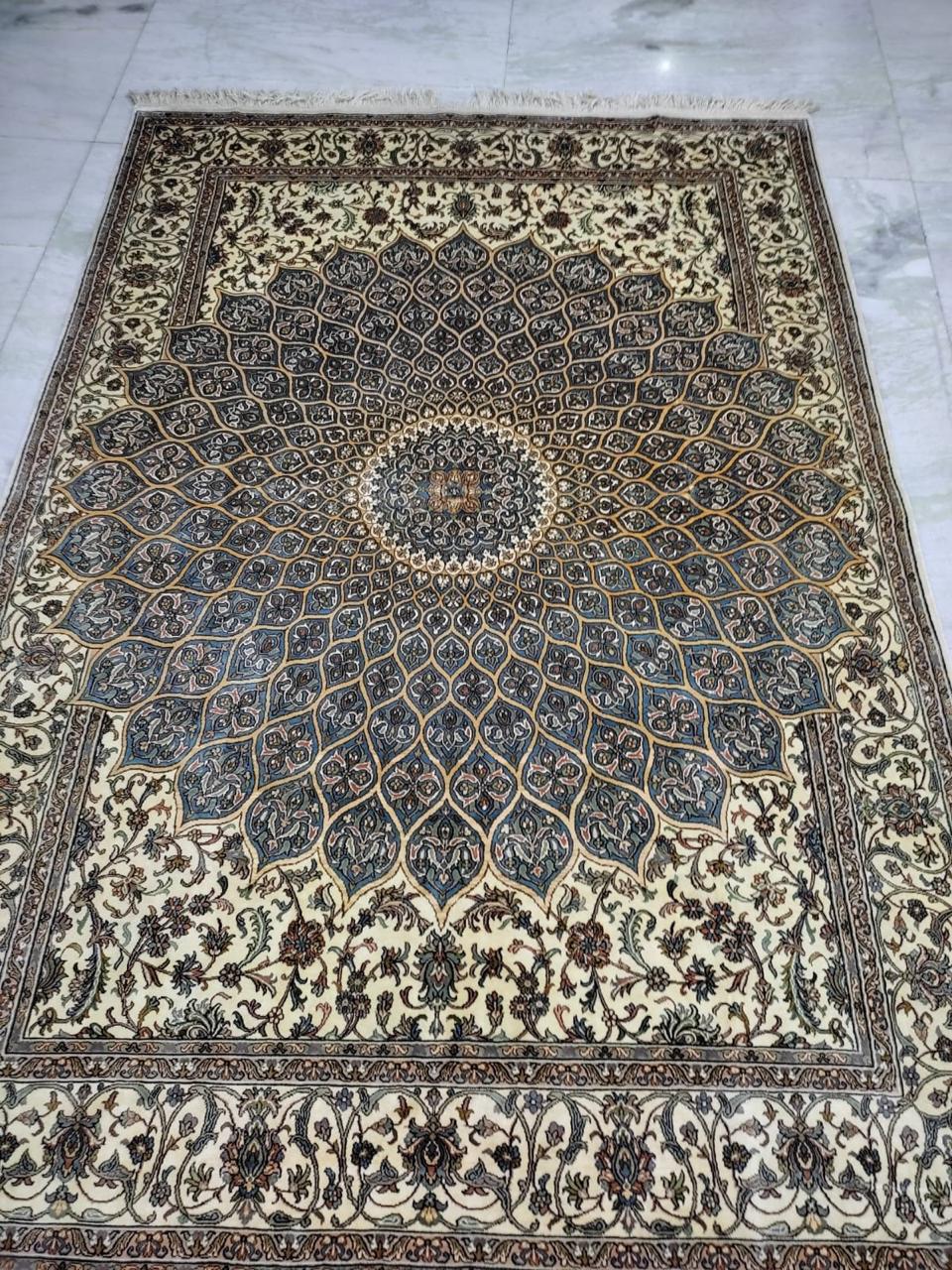
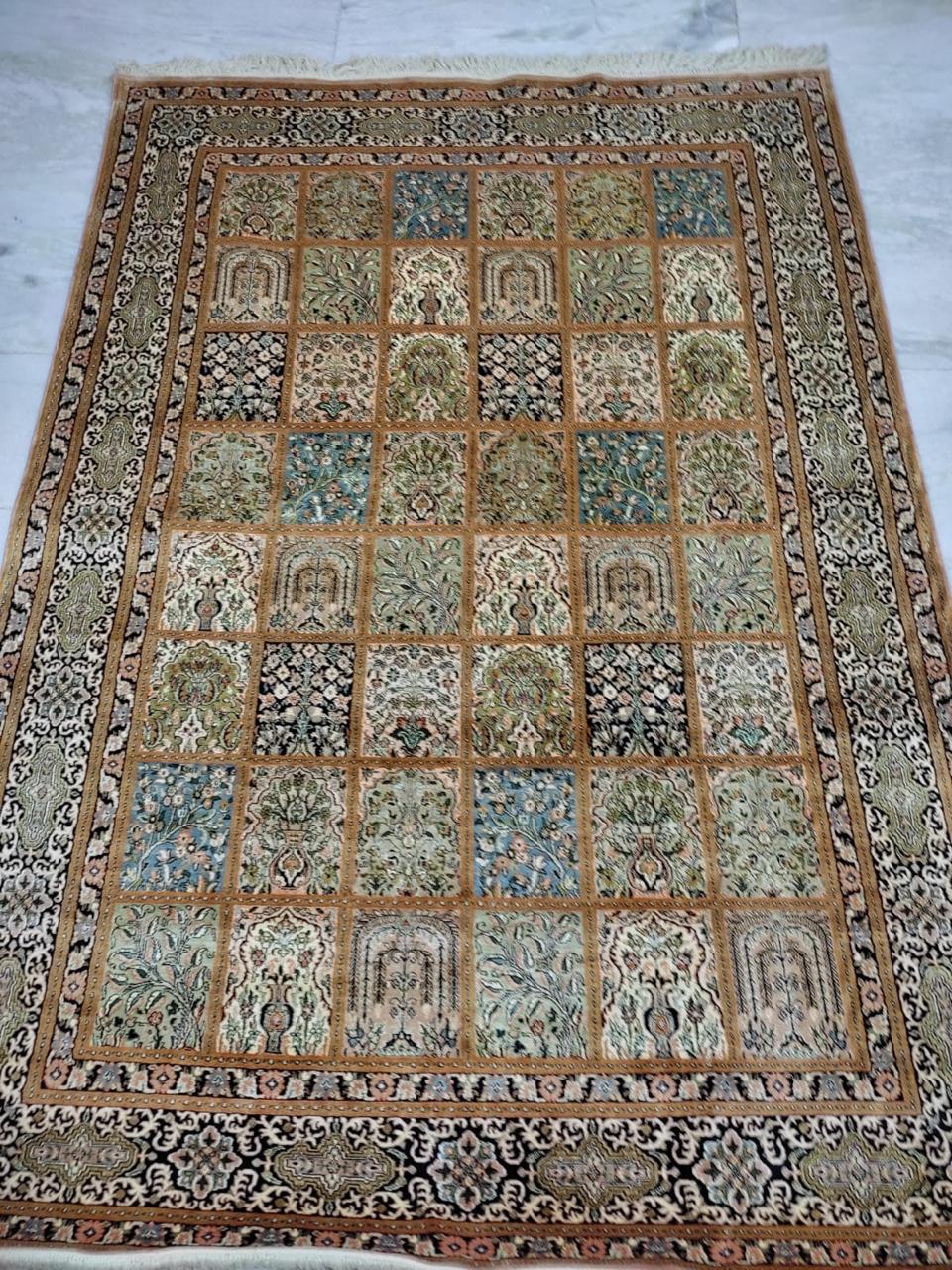
A dedicated selection of handmade Kashmiri carpets. Each carpet is a unique one-size piece; ask for exact dimensions, material, and availability before confirmation.

Every thread, a story
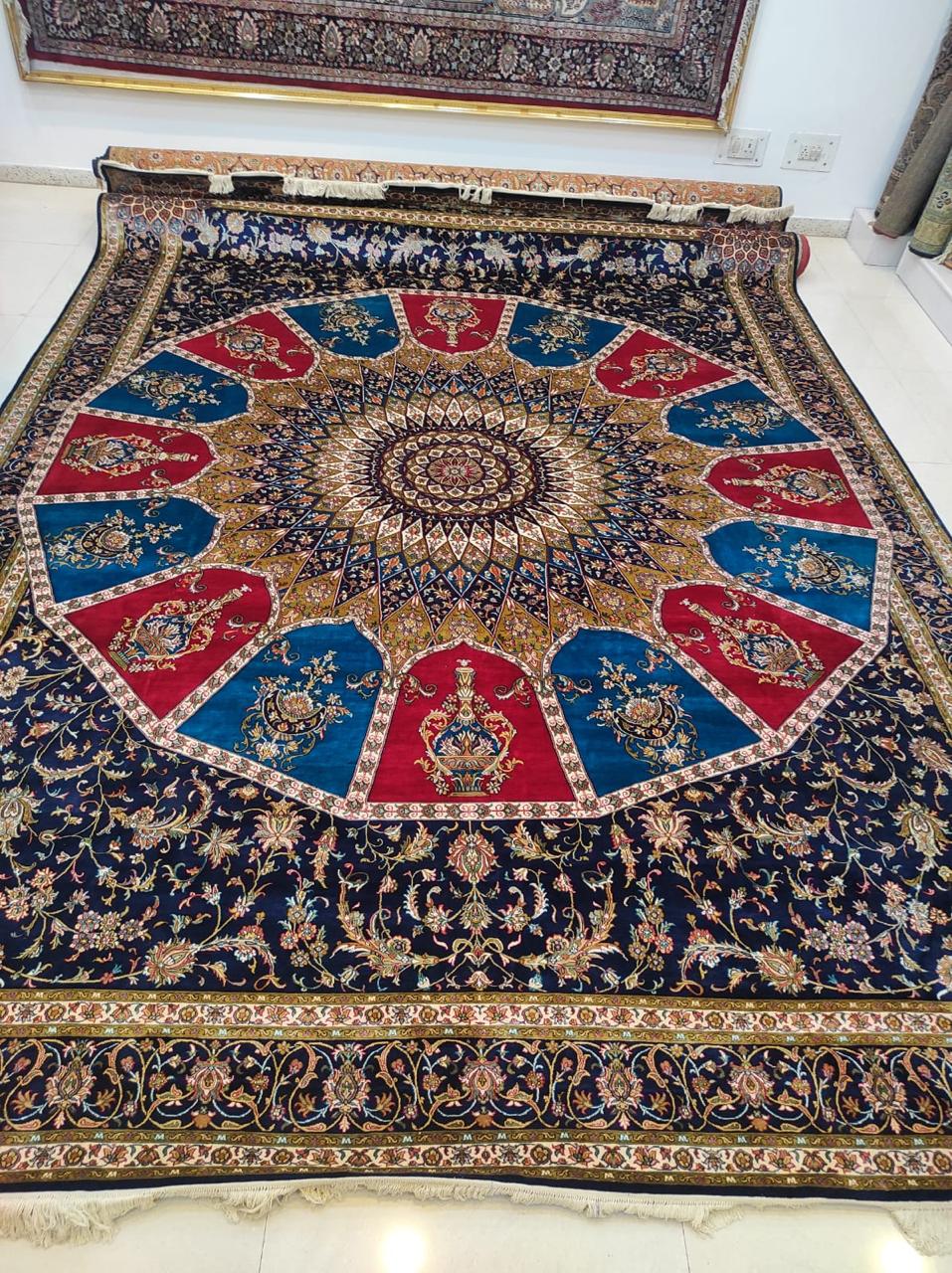
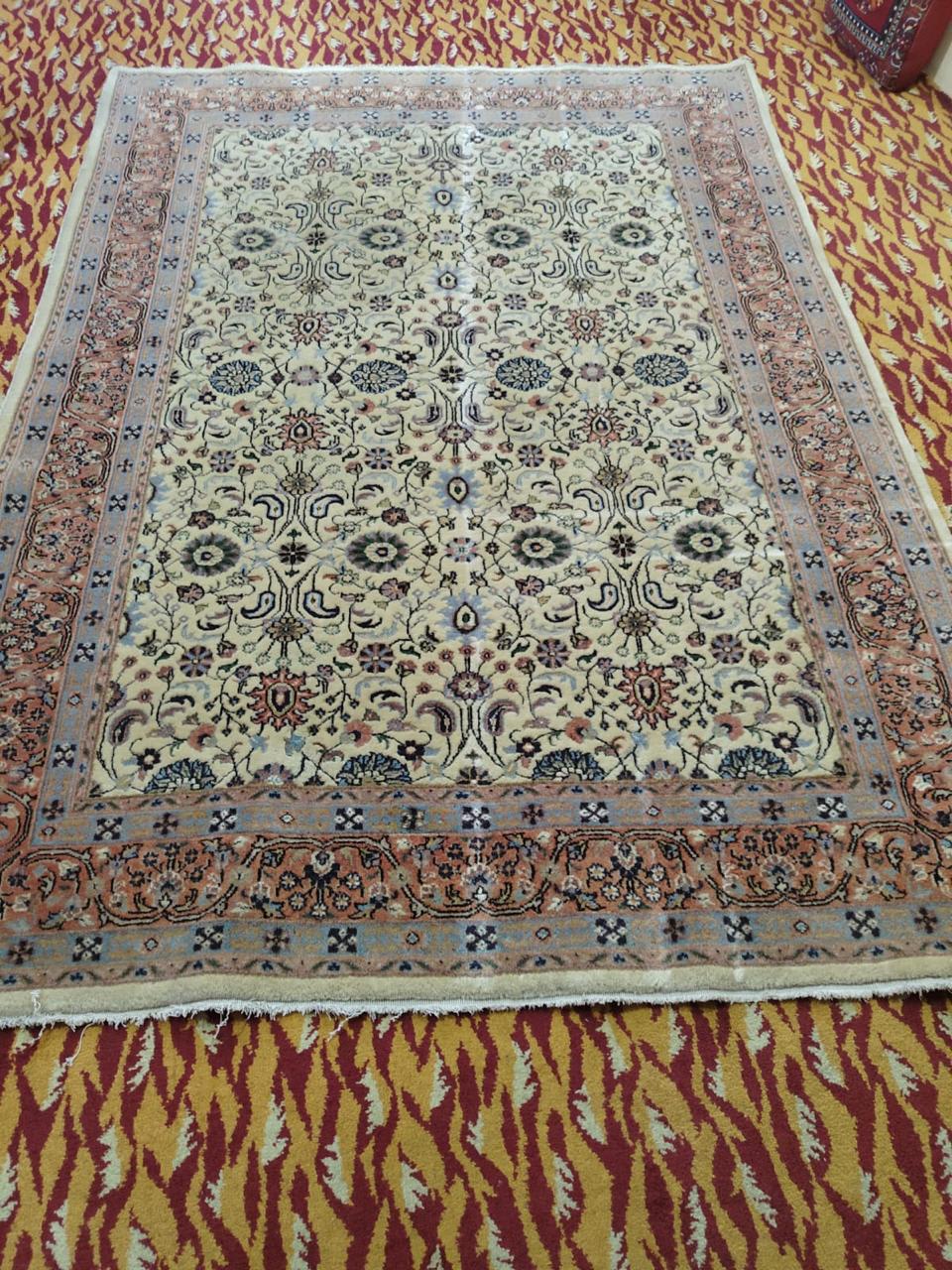
Ivory Navy Medallion Carpet
View Details
Handmade Kashmiri Carpet · Unique Size
Unique size
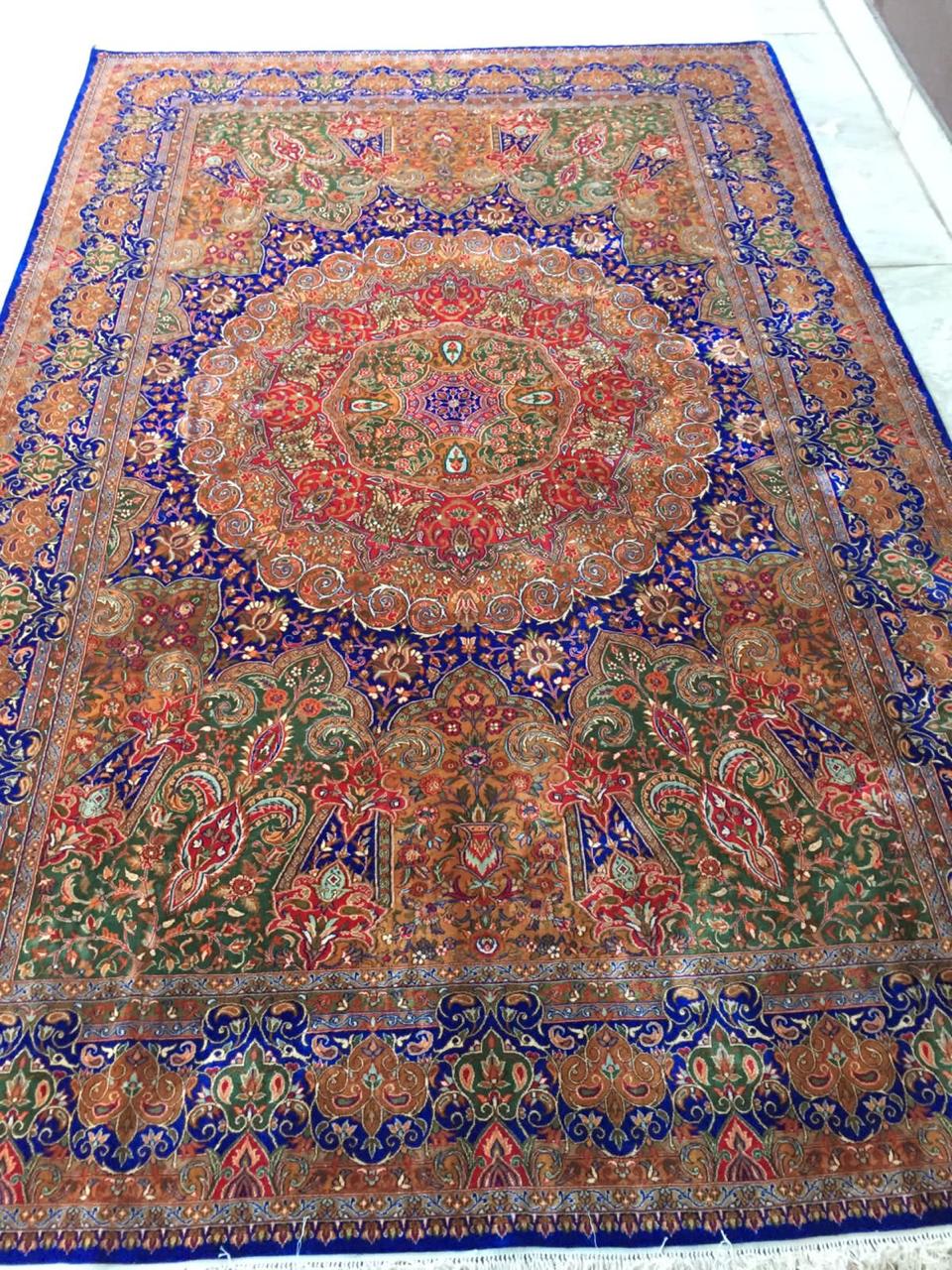
Ruby Blue Medallion Carpet
View Details
Handmade Kashmiri Carpet · Unique Size
Unique size
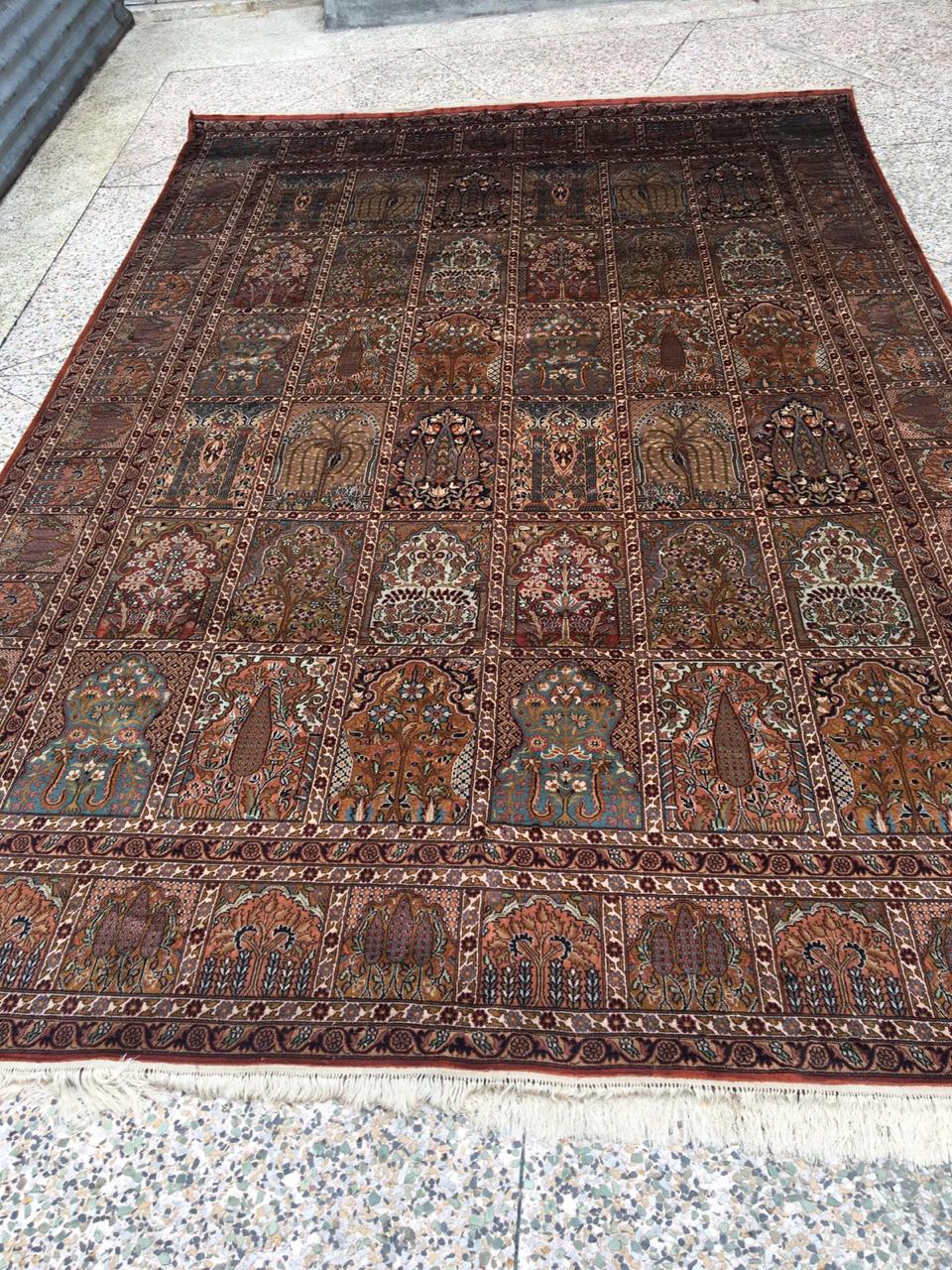
Sage Chinar Garden Carpet
View Details
Handmade Kashmiri Carpet · Unique Size
Unique size
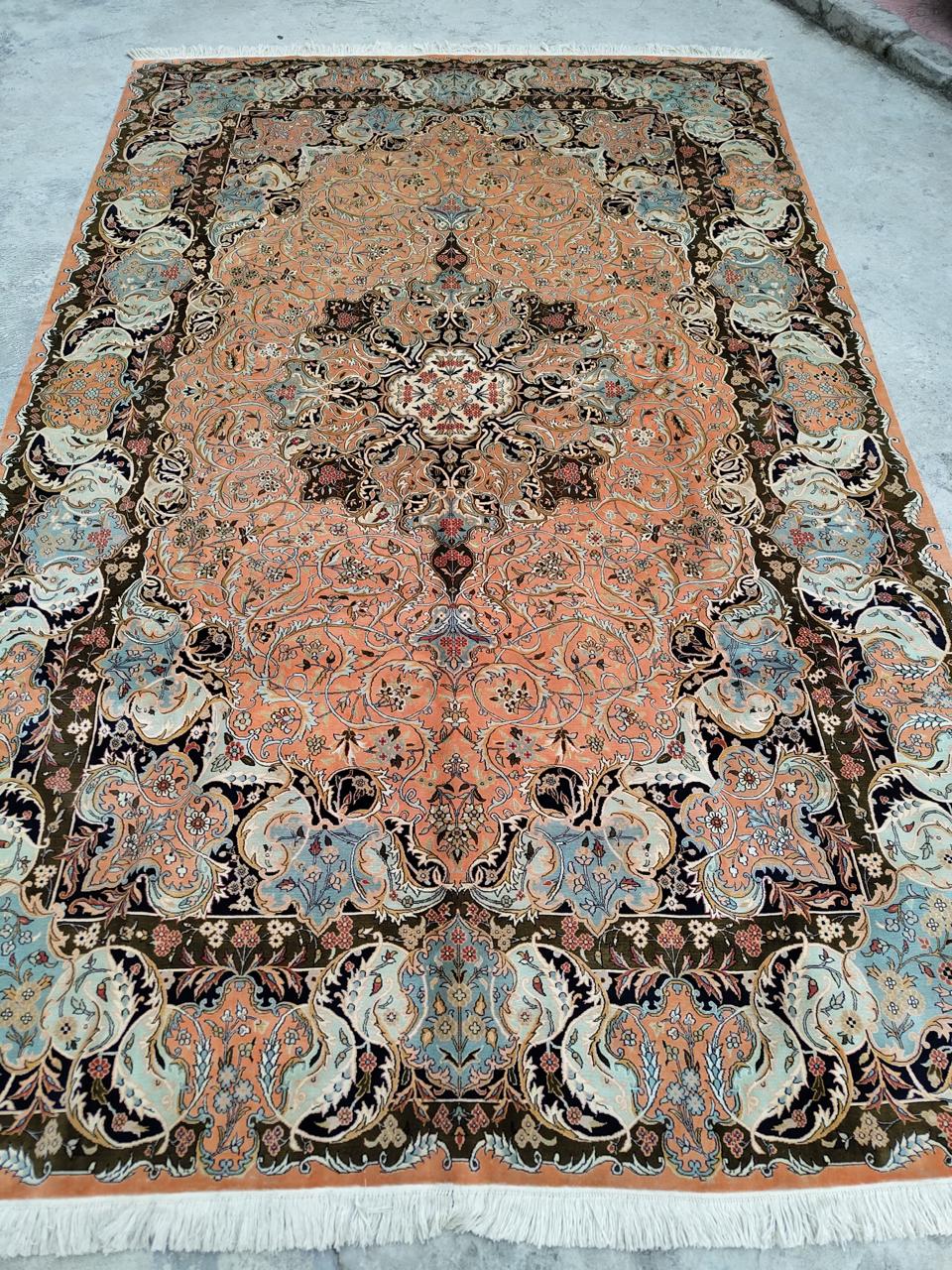
Rose Blue Court Medallion Carpet
View Details
Handmade Kashmiri Carpet · Unique Size
Unique size
Plum Paisley Garden Carpet
View Details
Handmade Kashmiri Carpet · Unique Size
Unique size
Crimson Diamond Medallion Carpet
View Details
Handmade Kashmiri Carpet · Unique Size
Unique size
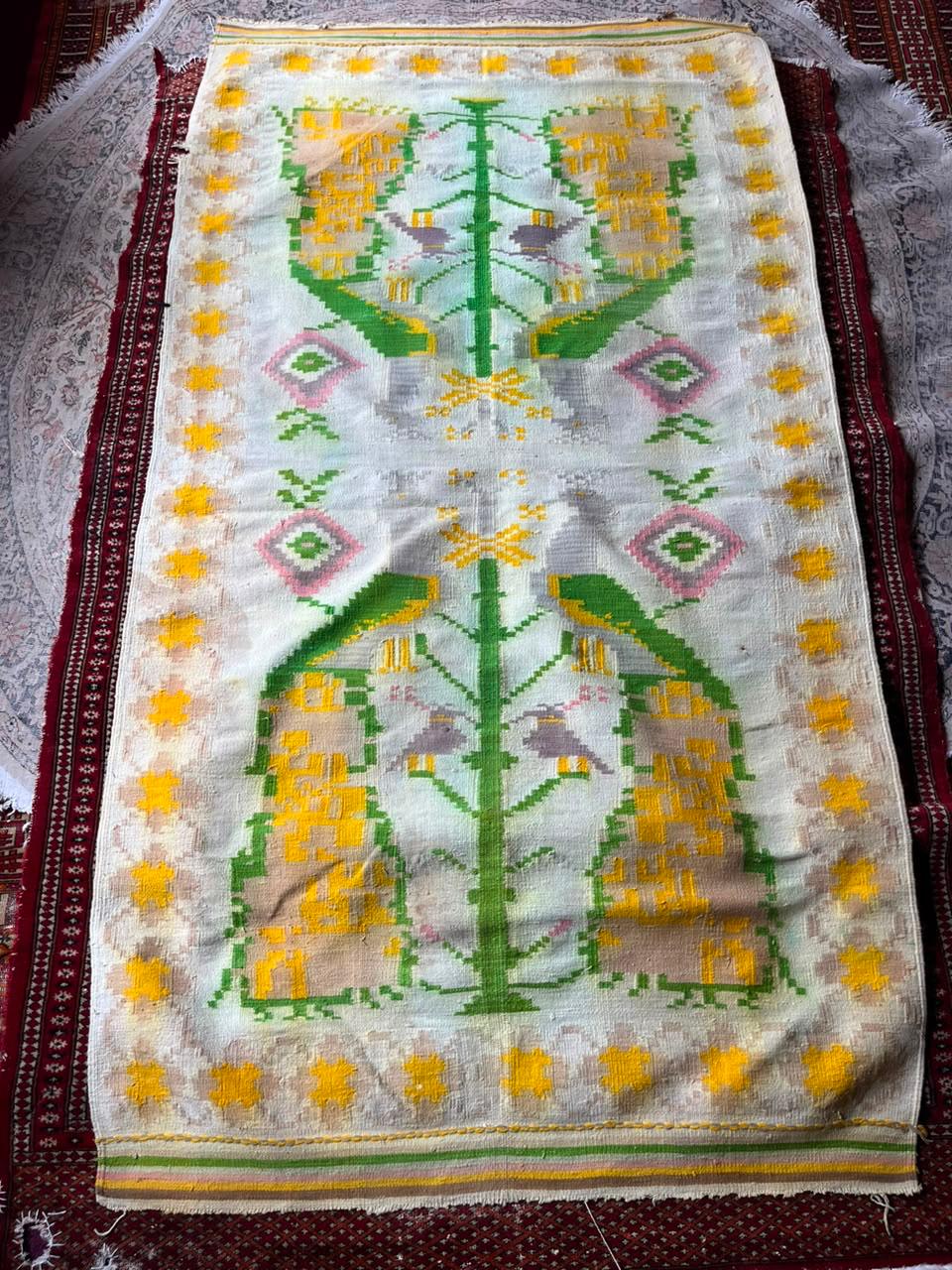
Ivory Floral Prayer Carpet
View Details
Handmade Kashmiri Carpet · Unique Size
Unique size
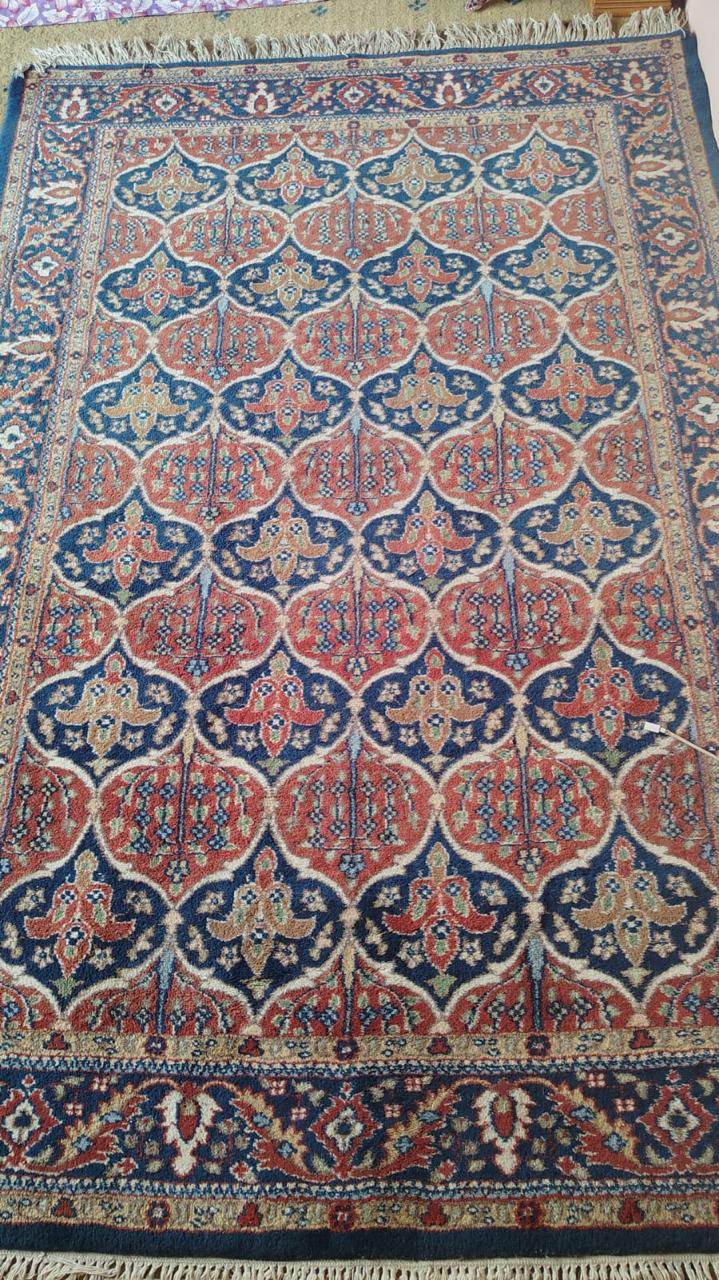
Scarlet Navy Garden Carpet
View Details
Handmade Kashmiri Carpet · Unique Size
Unique size
Antique Rose Medallion Carpet
View Details
Handmade Kashmiri Carpet · Unique Size
Unique size
Crimson Ivory Corner Carpet
View Details
Handmade Kashmiri Carpet · Unique Size
Unique size
Ruby Lattice Garden Carpet
View Details
Handmade Kashmiri Carpet · Unique Size
Unique size
Tribal Diamond Runner Carpet
View Details
Handmade Kashmiri Carpet · Unique Size
Unique size
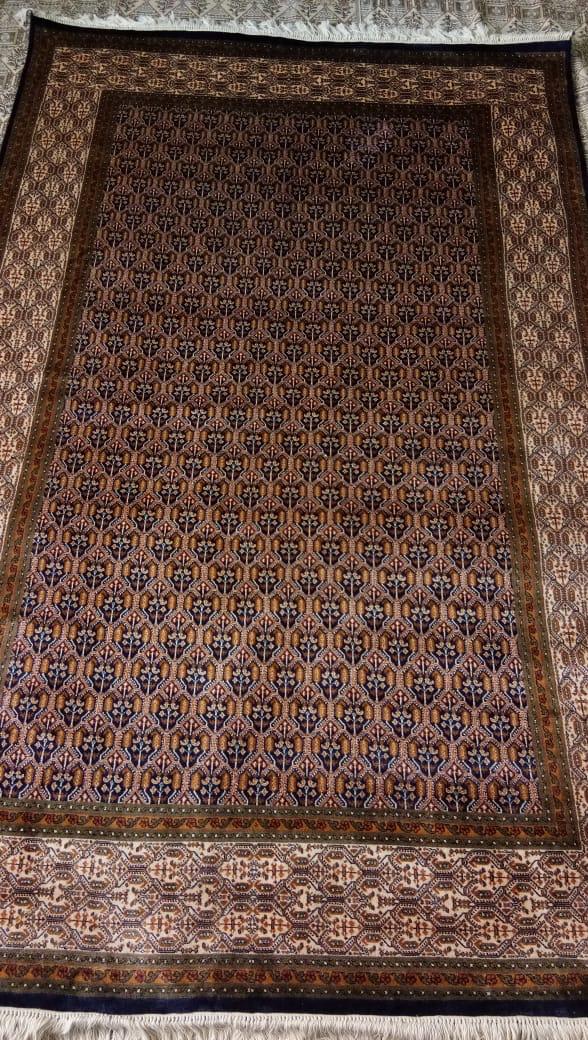
Charcoal Fine Border Carpet
View Details
Handmade Kashmiri Carpet · Unique Size
Unique size
Charcoal Round Medallion Carpet
View Details
Handmade Kashmiri Carpet · Unique Size
Unique size
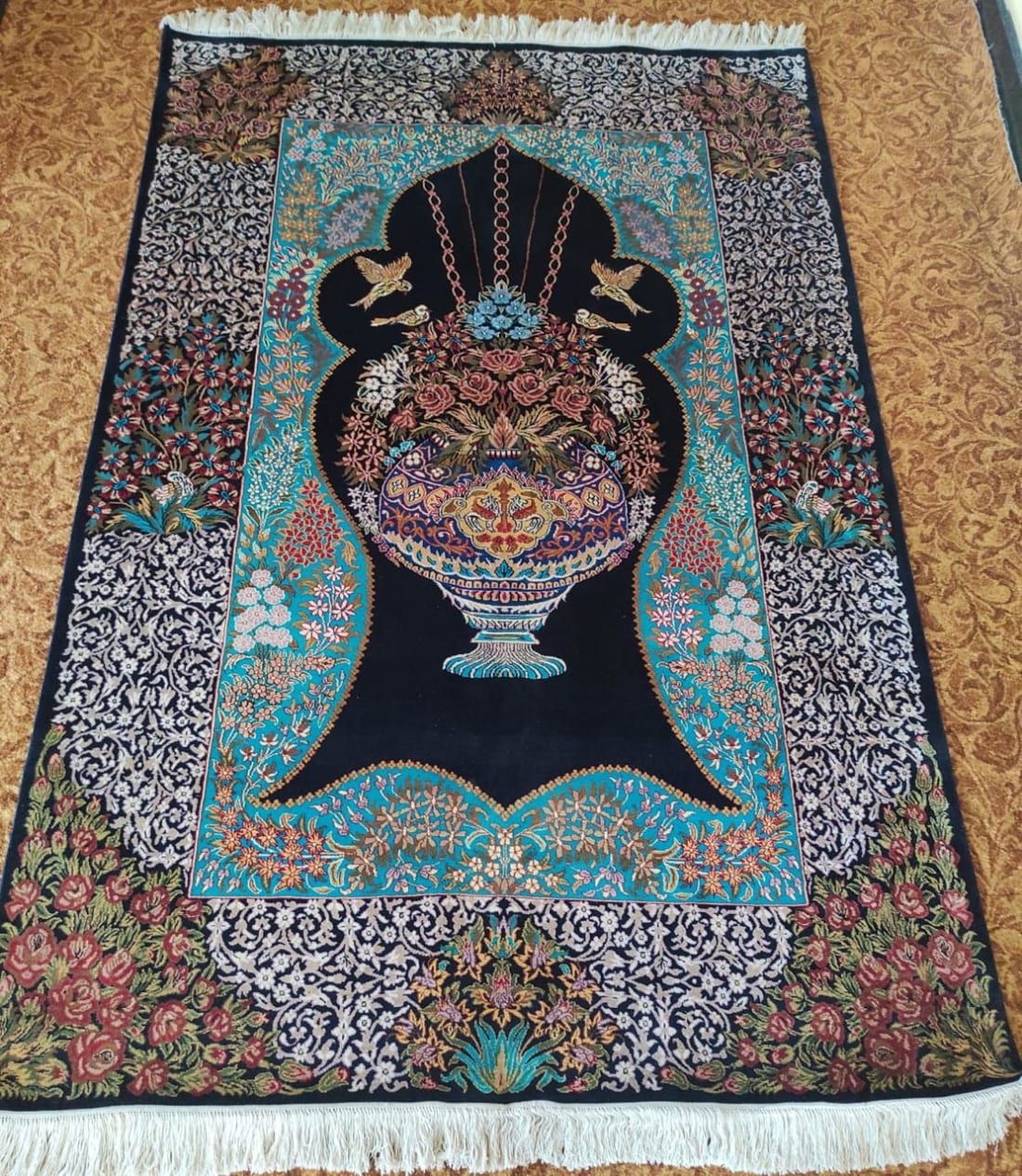
Midnight Prayer Niche Carpet
View Details
Handmade Kashmiri Carpet · Unique Size
Unique size
Charcoal Ivory Medallion Carpet
View Details
Handmade Kashmiri Carpet · Unique Size
Unique size
Ruby Green Medallion Carpet
View Details
Handmade Kashmiri Carpet · Unique Size
Unique size
Ivory Red Pendant Carpet
View Details
Handmade Kashmiri Carpet · Unique Size
Unique size
Saffron Prayer Medallion Carpet
View Details
Handmade Kashmiri Carpet · Unique Size
Unique size
Charcoal Floral Medallion Carpet
View Details
Handmade Kashmiri Carpet · Unique Size
Unique size
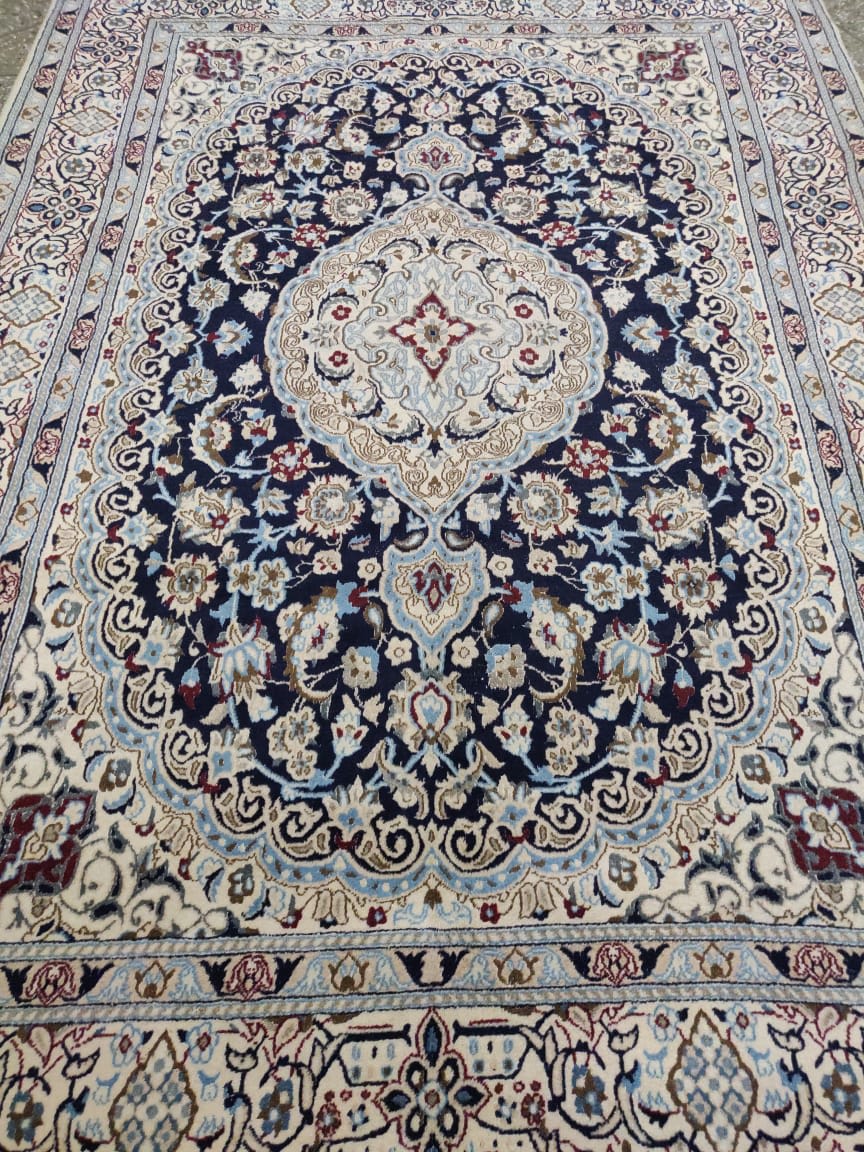
Navy Ivory Oval Medallion Carpet
View Details
Handmade Kashmiri Carpet · Unique Size
Unique size
Black Ivory Oval Medallion Carpet
View Details
Handmade Kashmiri Carpet · Unique Size
Unique size
Pastel Panel Garden Carpet
View Details
Handmade Kashmiri Carpet · Unique Size
Unique size
Moss Green Court Medallion Carpet
View Details
Handmade Kashmiri Carpet · Unique Size
Unique size
Turquoise Paisley Medallion Carpet
View Details
Handmade Kashmiri Carpet · Unique Size
Unique size
Brown Lattice Medallion Carpet
View Details
Handmade Kashmiri Carpet · Unique Size
Unique size
Teal Ruby Oval Carpet
View Details
Handmade Kashmiri Carpet · Unique Size
Unique size
Blue Garden Panel Carpet
View Details
Handmade Kashmiri Carpet · Unique Size
Unique size
Sage Honeycomb Medallion Carpet
View Details
Handmade Kashmiri Carpet · Unique Size
Unique size
Black Gold Vase Prayer Carpet
View Details
Handmade Kashmiri Carpet · Unique Size
Unique size
Cobalt Floral Field Carpet
View Details
Handmade Kashmiri Carpet · Unique Size
Unique size
Ivory Charcoal Medallion Carpet
View Details
Handmade Kashmiri Carpet · Unique Size
Unique size
Sky Blue Floral Medallion Carpet
View Details
Handmade Kashmiri Carpet · Unique Size
Unique size
Walnut Lattice Prayer Carpet
View Details
Handmade Kashmiri Carpet · Unique Size
Unique size
Golden Blue Prayer Carpet
View Details
Handmade Kashmiri Carpet · Unique Size
Unique size
Black Turquoise Vase Prayer Carpet
View Details
Handmade Kashmiri Carpet · Unique Size
Unique size
Brown Diamond Lattice Carpet
View Details
Handmade Kashmiri Carpet · Unique Size
Unique size
Saffron Tree of Life Carpet
View Details
Handmade Kashmiri Carpet · Unique Size
Unique size
Ruby Ivory Floral Runner
View Details
Handmade Kashmiri Carpet · Unique Size
Unique size
Turquoise Ivory Medallion Carpet
View Details
Handmade Kashmiri Carpet · Unique Size
Unique size
Blue Oval Floral Carpet
View Details
Handmade Kashmiri Carpet · Unique Size
Unique size
Powder Blue Prayer Medallion Carpet
View Details
Handmade Kashmiri Carpet · Unique Size
Unique size
Saffron Panel Runner Carpet
View Details
Handmade Kashmiri Carpet · Unique Size
Unique size
Charcoal Scalloped Medallion Carpet
View Details
Handmade Kashmiri Carpet · Unique Size
Unique size
Panelled Garden Runner Carpet
View Details
Handmade Kashmiri Carpet · Unique Size
Unique size
Ivory Gold Oval Medallion Carpet
View Details
Handmade Kashmiri Carpet · Unique Size
Unique size
Silver Red Scalloped Medallion Carpet
View Details
Handmade Kashmiri Carpet · Unique Size
Unique size
Emerald Ivory Medallion Carpet
View Details
Handmade Kashmiri Carpet · Unique Size
Unique size
Tribal Crimson Runner
View Details
Handmade Kashmiri Carpet · Unique Size
Unique size
Yellow Green Prayer Carpet
View Details
Handmade Kashmiri Carpet · Unique Size
Unique size
Ivory Floral Fringe Carpet
View Details
Handmade Kashmiri Carpet · Unique Size
Unique size
Pastel Herati Runner
View Details
Handmade Kashmiri Carpet · Unique Size
Unique size
Red Prayer Medallion Carpet
View Details
Handmade Kashmiri Carpet · Unique Size
Unique size
Every Thread, A Story
Payment Desk

Pay a confirmed quote

Once our team confirms availability and the final price on WhatsApp, select the exact piece code below, enter the quoted amount, and choose the payment route that suits you.

Card checkout Bank transfer request International backup Confirmed quotes only
Collection Wheel
Serial Code Wheel
Selected carpet preview
Selected Piece TKK-K-001 Ivory Navy Medallion Carpet

Select a serial code to preview the piece here.

Pure Silk By enquiry
Continue to the private checkout page for secure card payment. International bank transfer is available as a request route once account details are confirmed.
Match the codeSelect the same serial code shared on WhatsApp, or choose Other Carpets for a private quoted piece.
Enter quote onlyUse the exact final amount confirmed by us. Prices are not fixed publicly because availability and currency can change.
Keep contact visibleEmail or phone helps us match successful payments with the correct order quickly.
Private Viewing

See the piece before you decide

For high-value carpets and one-of-one shawls, we can arrange a private video viewing or email follow-up with close-ups of the border, pile, back, fringe, colour in daylight, and scale beside furniture.

Close-up photos Video walkthrough Room fit guidance Care and shipping notes
Useful for overseas clients

If you are buying from outside India, we can show the piece in daylight, compare tones against your room photo, and confirm the destination, free-shipping arrangement, payment currency, import responsibilities and realistic delivery guidance before payment.

Add a phone number or email so we can reply.

A thousand hands
before yours

Every piece from The Kashmir Knot travels a long and sacred journey — from mountain pasture to the hands of our artisans, and finally to you.

01

Fibre Sourcing

We source only Changthangi Pashmina from the high-altitude plateaus of Ladakh, at elevations above 14,000 feet. The fine under-fleece is combed — never sheared — to preserve its integrity.

02

Hand Spinning

Village craftswomen spin the de-haired fibre into yarn on a traditional wooden yinder (spinning wheel). This process cannot be mechanised without compromising the thread's warmth and softness.

03

Natural Dyeing

Our dye masters use plant-based dyes — walnut shells, indigo, pomegranate rind, and saffron — to achieve Kashmir's iconic jewel-toned palette. The colours deepen beautifully with age.

04

Weaving or Knotting

On handlooms for shawls, or on vertical looms for carpets, the woven structure takes shape row by row. A single square inch of a fine carpet may contain over 900 hand-tied knots.

05

Embroidery & Finishing

Sozni embroidery — so delicate it is indistinguishable on both sides of the fabric — is applied by master needle-workers. Finally, the piece is washed, blocked, and inspected.

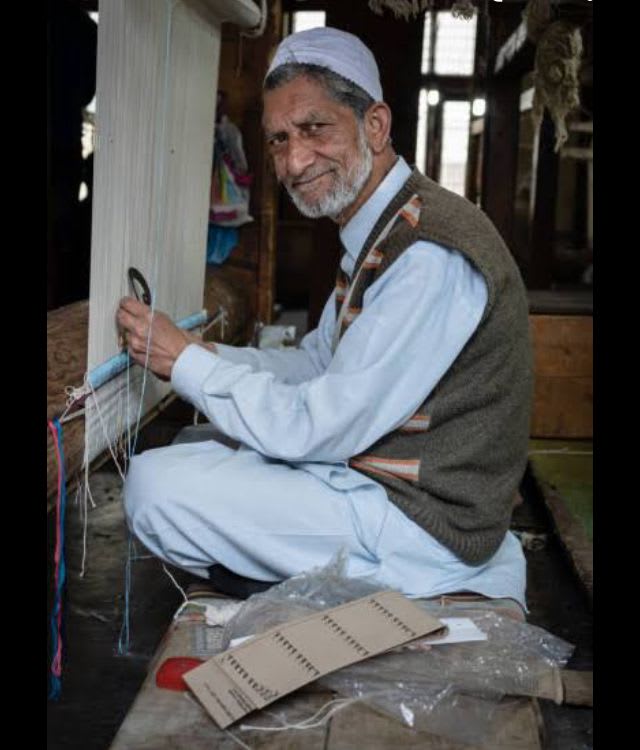
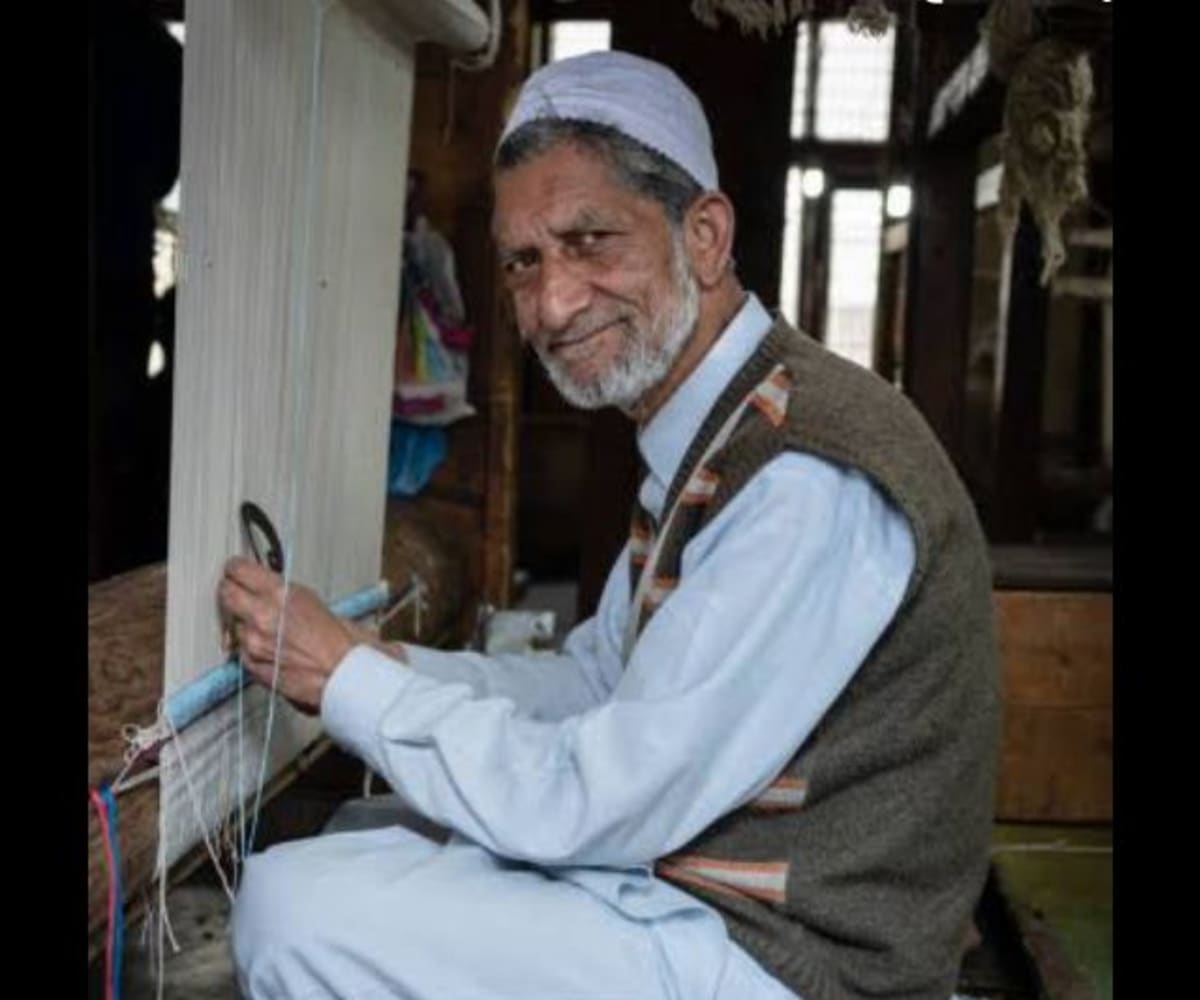
Farooq Dar, head weaver at The Kashmir Knot
Head Weaver
Farooq Dar
🪡
"We do not make products.
We make time — suspended in wool and silk,
knotted into something eternal."
— In memory of Ghulam Mohammad Joo, Founder
✦ Preserve Your Investment ✦

The Art of Care

A Kashmir carpet or Pashmina shawl, properly cared for, does not merely last — it becomes an heirloom. These are the time-honoured practices our craftspeople recommend.

🌀
Vacuum Gently
Use suction only — never a beater brush or rotating head. Vacuum along the pile direction, not against it. Sand and grit work deep into the knots and cause irreversible fibre damage over time.
Weekly or fortnightly
💧
Spills — Act Fast
Blot immediately with a clean white cloth — never rub. Work from the outside of the spill inward. Use cool water only. Never use chemical cleaners, detergents, or soap — they permanently alter natural dyes.
Immediately on spills
☀️
Rotate Regularly
Rotate your carpet 180° every three months. This distributes foot traffic and sunlight exposure evenly, preventing uneven fading and wear patterns. Direct UV light can fade a fine carpet within a season.
Every 3 months
🚿
Deep Cleaning
Only wet-clean by a professional experienced with hand-knotted wool and silk rugs. Never dry-clean using powder methods — residue hardens in the foundation. Never steam-clean — this causes dye bleed and shrinks fibres.
Every 2–5 years
🐾
Pet Accidents
Flush the area immediately with cold water. Elevate the soiled section over a pan and rinse until clean. A mild shampoo may be used but rinse thoroughly. Ensure the carpet is completely dry before relaying — moisture causes dry rot.
Immediate action critical
🛏️
Use a Rug Pad
Always lay your carpet on a quality rug pad on hard floors. Pads prevent slipping, reduce abrasion on the knot base, and add cushioning that dramatically extends the life of the pile.
Permanent recommendation
✓  Do
  • Vacuum with suction attachment only, along the pile
  • Blot spills immediately with a clean white cloth
  • Rotate the carpet every quarter to even out wear
  • Use a rug pad — especially on marble or wood floors
  • Ensure complete drying after any moisture contact
  • Send to a specialist rug cleaner every 2–5 years
✗  Never
  • Use a beater brush or Dyson-type power head
  • Apply chemical cleaners, bleach, or soap to fibres
  • Steam-clean — causes dye bleed and fibre shrinkage
  • Dry-clean with powder methods — leaves gritty residue
  • Leave a wet carpet — mould and dry rot are irreversible
  • Expose to direct sunlight for prolonged periods
Emergency Stain Reference
Red Wine
Blot, then apply cold water + small amount of white wine or club soda. Blot dry.
Candle Wax
Place brown paper over spot, press with warm iron (moving constantly). Wax transfers to paper.
Chewing Gum
Press ice until brittle and it snaps off. Use vinegar-soaked cloth to remove last traces.
Ink / Pen
Saturate with hairspray, allow to dry, then blot lightly. Repeat if needed.
Have a question about caring for your specific piece?

Worn across
generations

★★★★★

I have owned Pashminas from across the world. Nothing — nothing — compares to the quality of The Kashmir Knot. My shawl is fifteen years old and grows softer each winter.

Isabelle Moreau Paris, France
★★★★★

The carpet I purchased for my study has become the centrepiece of my home. The colours, the motifs, the density of the pile — it is more alive than a painting. Pure art underfoot.

Rajiv Mehta Mumbai, India
★★★★★

I gifted a Sozni shawl to my mother for her 70th birthday. She wept when she unwrapped it. The craftsmanship is unlike anything available in the West. A true family heirloom.

Catherine Holt London, UK
★★★★★

Towfeeq Hussain's guidance was incredible. He helped me understand the colours, scale, and character of the rug before I bought it. It now lives at Green Mountain Linen Store in Vermont, where people stop to admire it.

Robin Maynard Seaver Vermont, USA
The Kashmir Knot Journal

Stories held
in every thread

A long-form guide to Pashmina, hand-knotted carpets, honest provenance, and the Persian artistic currents that Kashmir made entirely its own.

Volume I Eight essays From Srinagar
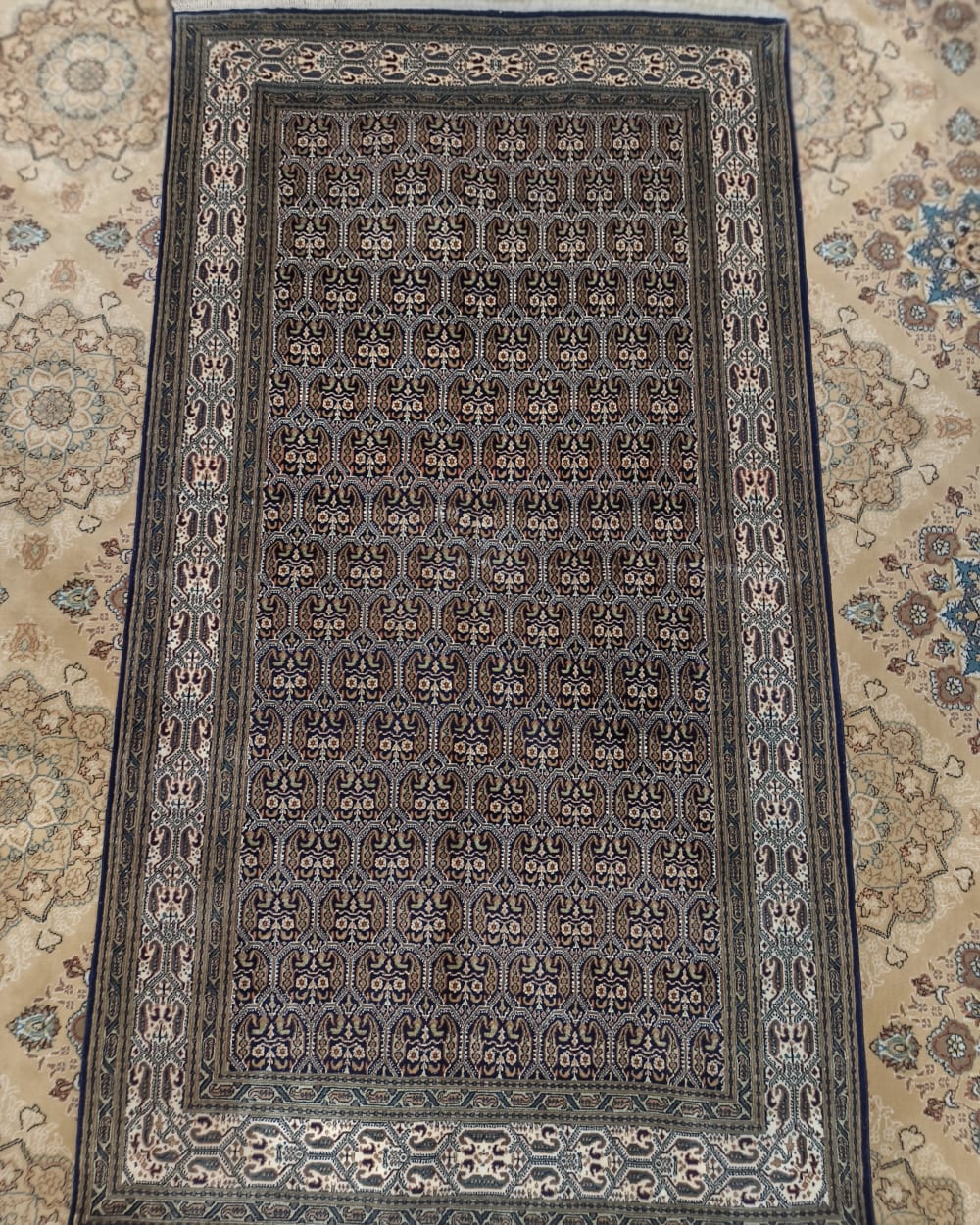
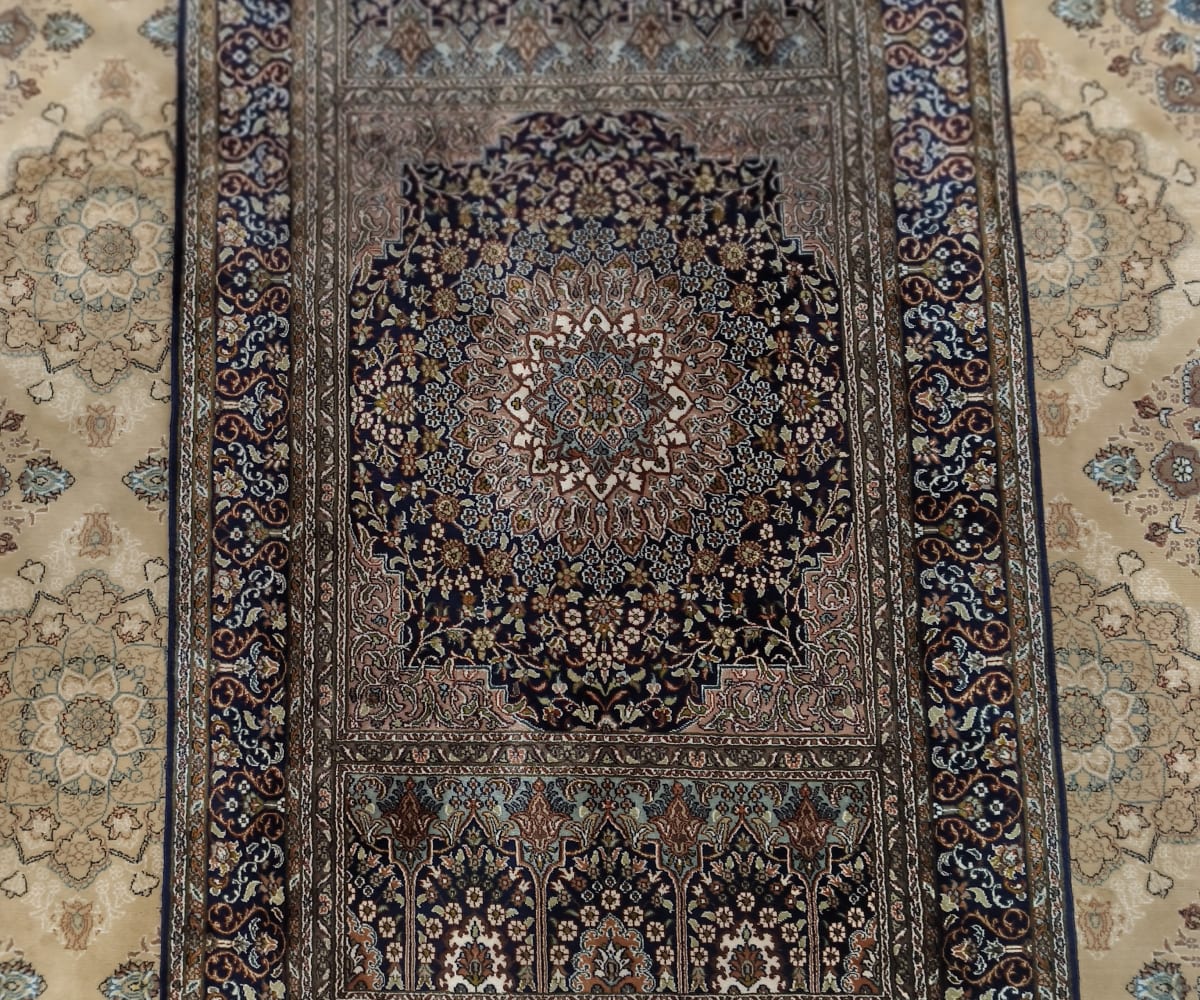
Detailed handmade Kashmiri carpet
Hand-knotted in KashmirOne carpet · One maker's history
Essay 01 · Pashmina

What is Pashmina? Fibre, cashmere and Kashmir craft

Before pattern, price or prestige, understand what Pashmina is, how it relates to cashmere, and how fine fibre becomes a finished Kashmir shawl.

A detailed Pashmina shawl from The Kashmir Knot collection
A finished shawl is the visible end of a long chain: fibre selection, spinning, weaving, finishing, and sometimes months of needlework.

The word Pashmina is used so freely that it can conceal more than it reveals. In some shops it describes a colour, in others a soft-feeling scarf, and in still others a blend whose exact composition is never explained. For a serious buyer, the useful question is not simply, “Is this Pashmina?” It is, “What is this fibre, how was it prepared, how was this cloth made, and what work has been added to it?” Those questions move the conversation away from romance alone and toward respect for the material and the people who shape it.

The fibre before the shawl

Pashmina begins with fine under-fleece associated with goats adapted to the severe cold of the high-altitude Changthang region of Ladakh and adjoining Himalayan areas. The animal grows a protective coat to survive a landscape of strong wind, sparse vegetation, and deep winter. Beneath the coarser outer hair lies a finer insulating layer. That fine material, collected seasonally and separated from the coarse hair, is the beginning of Pashmina. It is precious not because someone has given it a luxurious name, but because the useful yield is limited and the work of cleaning, sorting, and preparing it demands judgment.

Raw fibre does not arrive as a perfect cloud ready for weaving. It contains variations that must be understood. The finest portions need careful dehairing and cleaning. Excessive mechanical handling can weaken character; careless sorting can leave coarse fibres in the finished cloth. When buyers compare two shawls that appear similar in a distant photograph, they may be comparing very different levels of fibre selection, spinning consistency, weave, finishing, and decorative work. Softness at first touch is only one clue. Balance, warmth without heaviness, resilience, drape, and the behaviour of the surface over time matter just as much.

Pashmina and cashmere: related, but not a complete buying answer

Cashmere is the broader fibre family associated with fine goat undercoat. Pashmina is a more specific craft and origin term, but retail usage varies widely between countries and sellers. That is why a buyer should not treat either word as a complete specification. Ask for the fibre composition of the exact shawl, where the fibre claim comes from, how the yarn was prepared, how the cloth was woven and what any certificate or GI record actually supports.

A label reading “cashmere blend,” “silk Pashmina” or simply “Pashmina” may describe genuinely different cloths. A blend can be an intentional textile, but its components should be stated clearly. The practical comparison is therefore not which word sounds more luxurious; it is whether fibre, making, dimensions, handwork and provenance are described honestly enough for the piece in front of you.

Why the handloom matters

A handwoven shawl carries the rhythm of a loom operated by a person, not the rigid repetition of an industrial line. This does not mean that every irregularity is beautiful or that poor work should be excused as “handmade.” Skilled handwork is disciplined. The weaver manages tension so the cloth remains light, stable, and graceful. Tiny variations may remain, but the finished shawl should feel resolved rather than careless. The achievement is not merely slowness. It is control: creating a cloth fine enough to drape naturally while strong enough to be worn, folded, and passed on.

The simplest-looking plain Pashmina can be among the clearest demonstrations of weaving quality because there is nowhere for inconsistency to hide. Without embroidery or a busy pattern, the eye reads the surface, edges, fall, and colour directly. A plain shawl may therefore be an excellent first purchase. It can enter everyday life more easily, travel well, and reveal the particular comfort of fine fibre without asking the wearer to reserve it for ceremonial moments. Simplicity should not be confused with inferiority. It often expresses restraint.

When the surface becomes a garden

At the other end of the visual spectrum are shawls carrying elaborate embroidery, woven pattern, or dense all-over work. In Kashmir, motifs can unfold as borders, corner arrangements, flowing vines, flowers, paisleys, or fields that appear almost painted from a distance. The value of such a piece is not determined by how much empty space has been filled. Good ornament needs composition. The work should respect the shawl beneath it, allowing the cloth to remain wearable rather than turning it into a stiff display surface. Colour relationships, stitch control, spacing, and the intelligence of the motif all matter.

Different forms of decoration demand different kinds of labour. A restrained border may suit a buyer who wants a shawl to live comfortably with many outfits. A heavily worked piece may be chosen as a collector object or for occasions where its full visual presence can be appreciated. Neither should be sold through vague claims. The buyer should know whether the pattern is woven or embroidered, how extensive the handwork is, whether the base cloth is plain or patterned, and what care the finished surface requires. A high price should be explained by specific work, not by adjectives alone.

“The finest shawl is not always the one with the most work. It is the one in which fibre, weave, colour, and handwork agree with one another.”

Understanding price without mystery

Pashmina prices can span a very wide range because the category includes genuinely different objects. A simple, lightly finished shawl intended for daily wear does not involve the same labour as a complex, densely embroidered piece. Fibre quality, purity, dimensions, fineness of spinning, weaving difficulty, finishing, design, embroidery technique, density of work, and the experience of the artisans all influence the final value. The honest approach is to describe the piece in front of the customer rather than use the prestige of the word Pashmina to justify any price.

At The Kashmir Knot, our enquiry process exists precisely because these distinctions deserve conversation. A buyer may want a thoughtful gift within a modest budget, a plain shawl for regular use, or a richly worked piece that feels significant enough to mark an occasion. We can discuss what changes across those choices and show close views before confirmation. We do not believe a customer should be surprised by price. The useful surprise is discovering how much thought, time, and skill can live within a cloth that feels almost weightless.

What authenticity can and cannot be

Authenticity should not be reduced to a dramatic ring test, a burn test performed for entertainment, or a promise that one touch can settle every question. Some popular tests are unreliable, destructive, or easily imitated. A better assessment combines documentation with informed observation: the seller's traceability, fibre information, the character of the weave, close-up examination, and, where applicable, recognised testing or certification. Kashmir Pashmina is registered as a Geographical Indication in India, but a general mention of GI should never be used as a blanket claim for a specific piece without the relevant support.

Buyers should also be cautious of perfection used as proof. A handmade shawl can show subtle human variation, yet variation alone proves nothing. Machines can imitate irregularity, and poor handwork can still be poor. The goal is not to romanticise every uneven thread. It is to understand the whole object. Ask for clear photographs in natural light, close views of the weave and edge, and an explanation of the technique. Ask how the shawl should be stored and cleaned. A seller who respects the piece should be comfortable discussing its limits as well as its beauty.

Living with Pashmina

A shawl becomes meaningful through use. It warms a shoulder during travel, softens formal clothing, returns each winter, and begins to hold the memory of the person who wears it. That life requires gentle care. Avoid hanging a heavy or embroidered shawl for long periods, because gravity can distort it. Store it clean, dry, folded, and protected from moths without allowing harsh chemicals to touch the cloth. Air it occasionally. Keep jewellery and rough surfaces from snagging fine fibres. When cleaning is necessary, choose a professional who understands delicate natural fibre and decorative handwork.

Over time, a good shawl may become softer and more personal. It should not be treated as fragile to the point of fear, nor as an ordinary synthetic scarf that can withstand anything. The right relationship lies between those extremes: use it, notice it, and care for it. Pashmina is extraordinary precisely because it turns a response to a severe mountain climate into something intimate and humane. Its luxury is not loud. It is the quiet intelligence of warmth, lightness, and work carried close to the body.

The Kashmir Knot note

When enquiring, tell us how you plan to wear the shawl, the climate it will live in, your preferred colours and your budget. We will help distinguish simple daily pieces from elaborate collector work without inventing certainty where it does not exist. Continue with the Shahtoosh versus Pashmina legal and fibre guide, the Pashmina authenticity and buying guide, explore the current Pashmina shawls, or request a private video viewing for an exact piece.
Return to journal index
Essay 02 · Carpets

Handmade carpet or machine-made carpet?

A useful comparison is not a contest of insults. It is a way to understand two fundamentally different methods, costs, surfaces, and reasons for ownership.

Farooq Dar, head weaver of The Kashmir Knot Handmade Kashmiri carpet showing detailed pattern
Hand-knotting joins design and structure one knot at a time. The maker is not decorating a finished surface; the maker is building it.

A machine-made carpet can be attractive, practical, affordable, and completely appropriate for a busy room. A handmade carpet can be deeply individual, repairable, culturally meaningful, and capable of ageing with unusual grace. Trouble begins only when one is presented as the other, or when vague words such as “hand-finished,” “heritage style,” and “artisan inspired” are allowed to blur the method of construction. The purpose of comparison is not to shame one category. It is to let the customer understand what they are paying for.

Two surfaces, two systems

A hand-knotted carpet is built on a foundation of warp threads held under tension on a loom. The weaver ties pieces of pile yarn around the warp, row after row, then secures and compacts the work with weft threads and a comb-like beater. The design emerges as the structure grows. In Kashmir, the process may be guided by a talim, a coded system that communicates design and colour instructions. The official Indian handicrafts description of Kashmiri hand-knotted carpet identifies the Persian Sehna or Sinneh knot tradition and notes that carpets can take an exceptionally long time to complete.

Machine-made carpets are produced through mechanised systems designed for speed, repeatability, and scale. Depending on the process, pile may be woven or tufted into a primary backing and then stabilised with additional materials. A design can be reproduced across many sizes and units with close consistency. That efficiency is not a moral failure. It is the reason machine-made carpets can furnish hotels, rentals, offices, and family rooms at accessible prices. But the customer should not pay a hand-knotted price for a machine-produced structure merely because the pattern resembles a traditional medallion.

Reading the back

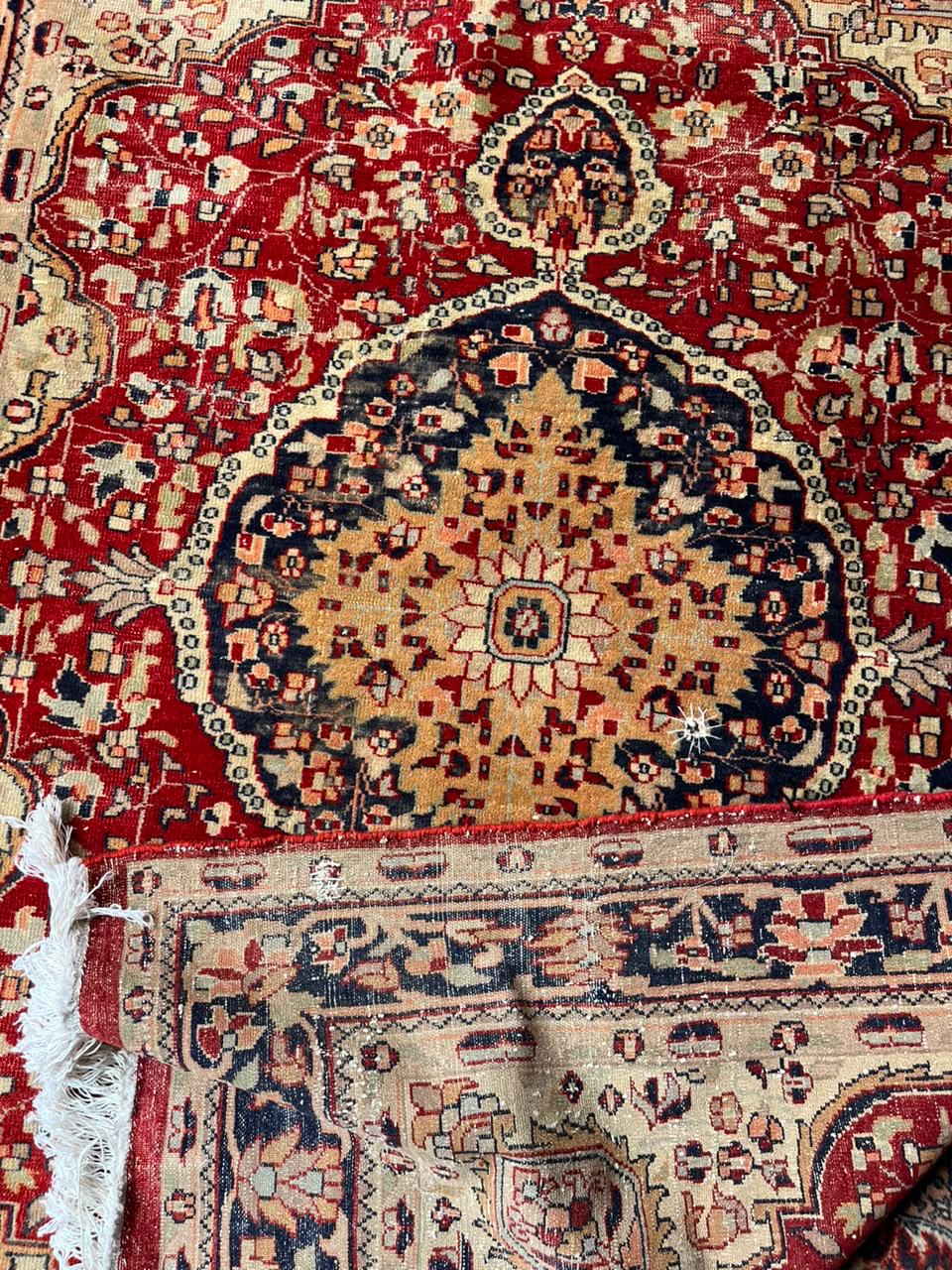
The back of a carpet often speaks more clearly than the front. On many hand-knotted carpets, the pattern is visible on the reverse because the knots belong to the carpet's construction. The reverse may reveal small, natural variations in line, spacing, and colour placement. You may be able to trace motifs from front to back. Machine-made pieces often show a highly regular reverse, a backing layer, or a construction in which the relationship between the face and back is less direct. However, no single clue should be treated as universal; machine methods vary, and deceptive finishing can conceal evidence.

Fringe is another useful point of examination. In a traditional hand-knotted carpet, the fringe is generally an extension of the warp foundation. It is structurally continuous with the carpet. On many machine-made carpets, fringe is added after production for appearance. A sewn-on fringe does not make a carpet bad, but it changes what it is. Check where fringe meets the body. Look gently rather than pulling. If buying remotely, request clear photographs of the back, edge, fringe attachment, and a folded corner. A serious seller should understand why these views matter.

Variation, precision, and the human hand

People often say that imperfections prove a carpet is handmade. That phrase is only partly useful. Hand-knotted work can contain minute differences because a person maintains tension, reads instructions, changes yarn, and responds to the growing textile. Yet experienced weaving is precise. Borders should feel intentional. Motifs should have rhythm. The carpet should lie properly after finishing. A wildly distorted field is not automatically charming, and a beautifully controlled carpet does not become suspicious merely because its maker was highly skilled.

Machine production excels at exact repetition. Repeated motifs can be nearly identical, lines can be extremely uniform, and colour placement can remain constant across large runs. That character may suit contemporary interiors that demand predictable specification. Handmade work offers a different kind of order: the coherence of a design interpreted through sustained attention. Seen closely, one flower may differ slightly from its neighbour. Seen as a whole, the carpet can feel alive because its order is not sterile.

“The reverse of a carpet is not the less beautiful side. It is the page on which its construction can be read.”

Time, labour, and why prices diverge

The price of a hand-knotted carpet is shaped by more than a knot count. Knot density matters because it affects the level of detail possible and often the time required, but material, size, design complexity, yarn preparation, colour, weaving quality, finishing, condition, and origin all matter too. Two carpets with a similar stated density may differ greatly in artistic balance and execution. A fine silk carpet with complex curves asks something different of the loom and weaver than a robust wool carpet intended for daily use.

Machine-made pricing follows a different economic logic: fibre type, manufacturing technology, brand, scale, finishing, distribution, and market demand. Production speed lowers the labour carried by each unit and allows identical designs to be repeated. For many buyers, this is exactly the advantage. The mistake is to assume that visual similarity means equivalent value. A printed reproduction of a painting may carry the image beautifully, but it is not the painted canvas. Likewise, a machine-made carpet can interpret a traditional design without carrying the same structure, time, or human authorship.

Ageing and repair

A well-made hand-knotted carpet is often capable of thoughtful repair because its structure can be understood and worked upon by a skilled restorer. Worn areas may be reknotted, edges secured, fringe addressed, and the pile carefully managed. Repair is not always inexpensive or invisible, and every intervention should be considered, but the possibility is part of why such carpets can remain in families for decades. Natural materials may develop a softer surface and a settled colour character that many owners value.

Machine-made carpets may perform very well for their intended lifespan, especially when materials and construction are chosen for demanding use. Yet certain backing systems, adhesives, and synthetic fibres can make meaningful repair impractical once deterioration begins. Replacement may be more economical than restoration. Again, that can be a rational choice. The buyer should simply know whether the purchase is meant to be used for a period and replaced, or cared for as a long-term object.

How to buy without being misled

Begin with direct questions. Is the carpet hand-knotted, hand-tufted, handloom woven, flat-woven, or machine-made? Those terms are not interchangeable. What forms the pile? What forms the foundation? Is there an applied backing? Is the fringe structural or attached? Where was it made? Can the seller show the reverse and edges? If the claim includes a Geographical Indication, certification, or named maker, what documentation supports that particular claim? Honest answers should become more specific as the purchase becomes more serious.

Be cautious of demonstrations designed to create urgency. A dramatic discount does not establish origin. A salesperson standing on a carpet does not establish durability. The phrase “one of a kind” may simply mean a shop has one unit in stock. With a handmade piece, uniqueness should arise naturally from the actual object: its size, colour movement, individual execution, and traceable identity. Ask for the serial code and insist that the code on your order documents matches the exact piece reviewed.

Choosing for the life of the room

The best carpet is not always the most expensive or densely knotted. A family room with children, pets, and frequent gatherings may be better served by a durable wool carpet with forgiving colour and a pattern that ages comfortably. A quiet formal space may suit a finer silk or silk-highlighted piece. A machine-made carpet may be the intelligent choice where frequent replacement, strict sizing, or a limited budget matters most. Good guidance begins with the room, not with the seller's desire to push a category.

At The Kashmir Knot, handmade carpets are offered by enquiry because one-size pieces deserve to be considered as actual objects, not abstract product listings. We can discuss dimensions, materials, close details, room suitability, and current availability before payment. Our goal is not to persuade every visitor that only handmade carpets are worthy. It is to make certain that when someone chooses handmade, they understand the patience, structure, and human authorship they are choosing.

The Kashmir Knot note

Send us the carpet code and a photograph of your room. We can show the reverse, edge, fringe, and details, then explain whether the piece suits the traffic, scale, light, and atmosphere of the space.

Return to journal index
Essay 05 · Provenance

Authenticity that travels with the carpet

A serious piece should leave with more than a receipt. Its code, material story, maker, care guidance, and documented journey should remain close to it.

The Kashmir Knot certificate format
The maker's name travels Farooq Dar Head weaver · Kashmir
Piece
TKK-K-014
Craft
Hand-knotted carpet
Material
Recorded with order
A certificate, story note, and maker tag should identify the exact piece without pretending to prove more than the records support.

Authenticity is often presented as a seal placed at the end of a sale. We believe it begins much earlier, in the discipline of keeping a piece identifiable from the moment it enters the collection. A carpet should not become anonymous as soon as it leaves the loom. A shawl should not be reduced to a decorative product code. Records cannot capture every hour of work or every person involved, but they can protect the basic truth of an object: what it is, what is known about it, who contributed to it, and which claims can responsibly travel with it.

The serial code as a promise of specificity

Every serious conversation should refer to the exact piece being considered. This is why a serial code matters. Handmade carpets are often unique in size, colour movement, finishing, and small details. Even when two pieces follow the same design, they are not interchangeable in the way factory units are. The serial code connects photographs, dimensions, quoted price, availability confirmation, payment, packing, and aftercare to one object. It reduces the risk of a customer reviewing one carpet and receiving another that merely looks similar.

A code alone, however, is not provenance. It is the thread that holds the record together. The record should include the piece name or description, category, dimensions, stated material, relevant technique notes, purchase date, customer details needed for the order, and any specific observations agreed before dispatch. If the carpet has a condition note, unusual feature, or care requirement, that information belongs with the transaction rather than remaining in an informal conversation that may be lost.

A story note without storytelling excess

Customers often want to know the story of a handmade piece, and rightly so. The danger is that the desire for story can encourage invented precision: an exact number of months that was never recorded, a named village guessed from style, a family lineage assumed rather than documented, or a grand historical claim attached to an ordinary design. A responsible story note separates known information from informed context. It can explain the method, motif tradition, material, and human work without turning uncertainty into theatre.

Our story note is intended to be readable, personal, and honest. It can describe why the piece was selected, what character we see in its field and border, how its colours behave, and what kind of room may suit it. Where we have a reliable maker name or workshop connection, that can be included with permission. Where we do not, we say so. Respect for artisans is not served by inventing a picturesque biography. It is served by improving traceability and by acknowledging that many hands may contribute to preparing yarn, designing, weaving, washing, clipping, and finishing.

The maker's name should travel

For generations, valuable handmade objects have often carried the name of the merchant, collector, or house while the maker disappeared. The imbalance is so familiar that it can feel natural. We want to move in another direction. When a carpet's maker details are available and the person is comfortable being named, the carpet can carry a maker tag and a corresponding note in its records. The tag is not a luxury flourish. It is a modest act of memory.

Imagine the carpet moving from Srinagar to a home in London, New York, Dubai, or Singapore, then being passed to another generation. Years later, the family may no longer remember the conversation in which it was purchased. A durable tag and kept certificate can return a name to the object. The owner can say not only, “This came from Kashmir,” but, “This was connected to Farooq Dar,” or another recorded artisan. That sentence does not capture the whole production chain, yet it is more human than silence.

“A maker's name does not make a carpet more handmade. It makes the human work harder to forget.”

What a certificate should do

A certificate should identify and document. It should not operate like a magical shield against all doubt. At minimum, a useful certificate or proof document can carry the house name, exact serial code, category, stated material, dimensions, purchase details, customer or recipient name where desired, and maker or workshop information where reliably recorded. It can reference photographs or a digital order record. It should be prepared for the exact piece, not photocopied as a generic statement that every item is rare, pure, or certified.

There is also an important distinction between a house-issued document and an independent or statutory certification. A certificate prepared by The Kashmir Knot records our representation and the details associated with the order. A Geographical Indication registration protects a recognised regional product category and its authorised use; it does not mean that any seller may call every object GI-certified without piece-specific support. Laboratory testing, government labels, and third-party assessments each have their own scope. Honest documentation names the source and limits of every claim.

GI, provenance, and the exact piece

Kashmir Pashmina and Kashmiri Hand Knotted Carpet are registered Geographical Indications in India. That recognition matters because it affirms a relationship among craft, geography, inherited knowledge, and reputation. It also creates a reason for sellers and buyers to take origin language seriously. Yet GI should not become another vague luxury word. The relevant question remains: what documentation or authorised marking applies to this exact piece, and what does that marking establish?

Provenance is broader than certification. It is the chain of information surrounding an object. A piece can have strong, honest provenance records even when a particular external certificate is not applicable. Conversely, a logo shown on a website cannot replace the need to identify the item actually being sold. We prefer to build trust through layers: clear serial codes, direct communication, close-up review, consistent order records, maker details where possible, careful packing references, payment matching, and aftercare that continues after delivery.

Digital records and physical memory

The most resilient system combines digital and physical records. Digital records help match enquiries, quotes, payment references, shipping details, and correspondence. Physical documents remain with the owner and can stay with the carpet even when email accounts or platforms change. The tag attached to or packed with a carpet should be discreet and designed so it does not damage the piece. The certificate and story note should be stored away from moisture and direct light, ideally together with purchase and care records.

Privacy matters within this system. A maker may want their name recognised without having personal contact details circulated. A customer may want their name printed on a certificate, or may prefer a gift recipient's name, or no personal name at all. Consent and restraint should guide the record. Provenance does not require publishing private information. It requires preserving the information that gives the object an accountable identity.

Authenticity after the sale

Documentation is most useful when it remains active. If an owner later asks about cleaning, repair, placement, or insurance records, the serial code and stored notes help return to the correct piece. If the carpet is gifted, inherited, or responsibly resold, its records can travel with it. Care decisions can then be made with better knowledge of material and construction. A repairer can understand what was originally stated, and the next owner receives more than an unsupported family story.
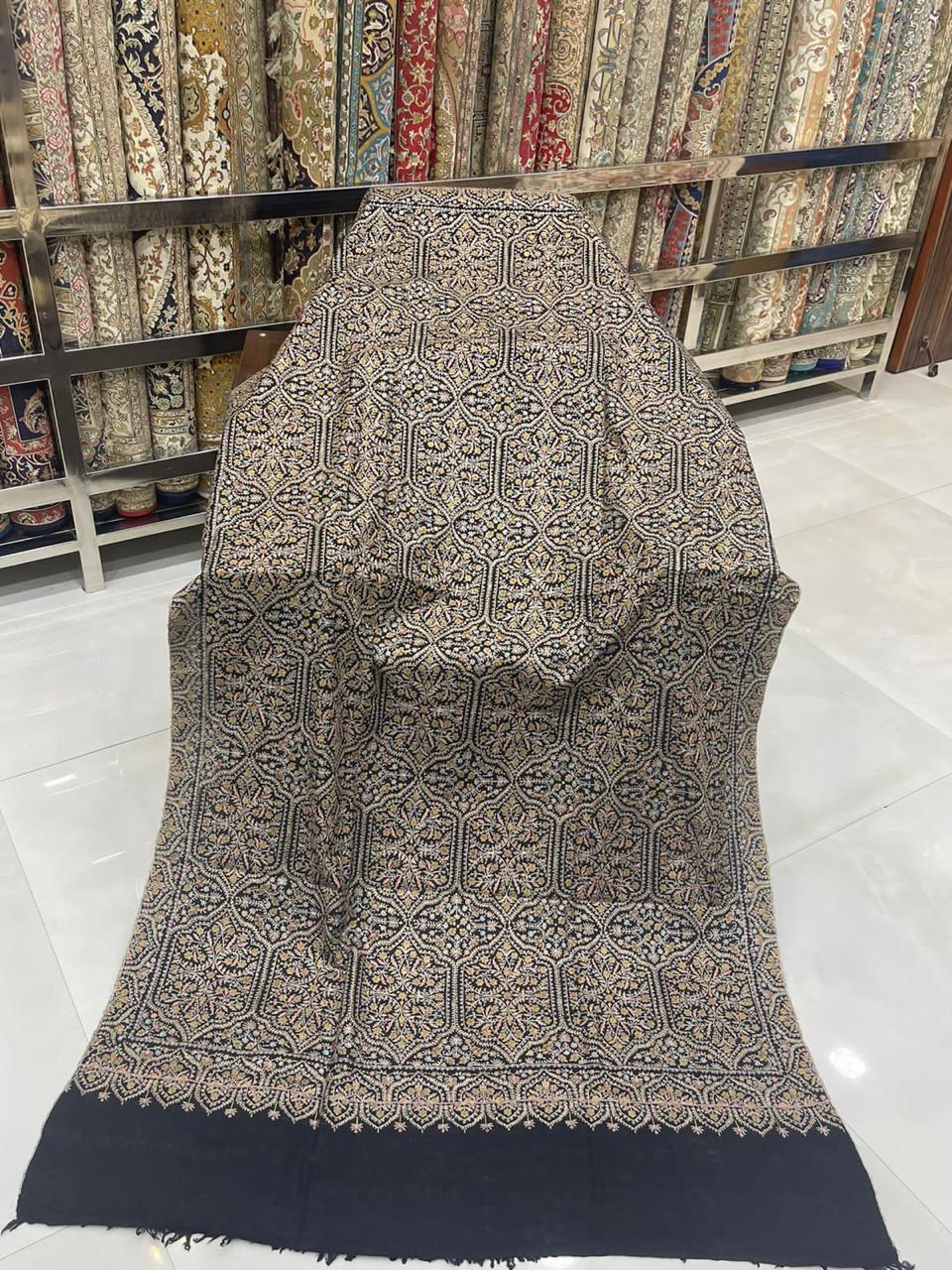
This is our ambition for authenticity at The Kashmir Knot: not a grand claim made once, but a relationship maintained. We want the customer's confidence to come from clarity before payment, a match between the reviewed and delivered piece, documentation that is careful about its claims, and a continued willingness to answer questions. The carpet's beauty begins the conversation. Its identity should remain after the conversation has moved into another home and another generation.

The Kashmir Knot note

For a confirmed handmade carpet, ask us what maker, workshop, material, certificate, and story-note details can be recorded for that exact serial code. Where a maker name is available and consented to, we will help it travel with the piece.
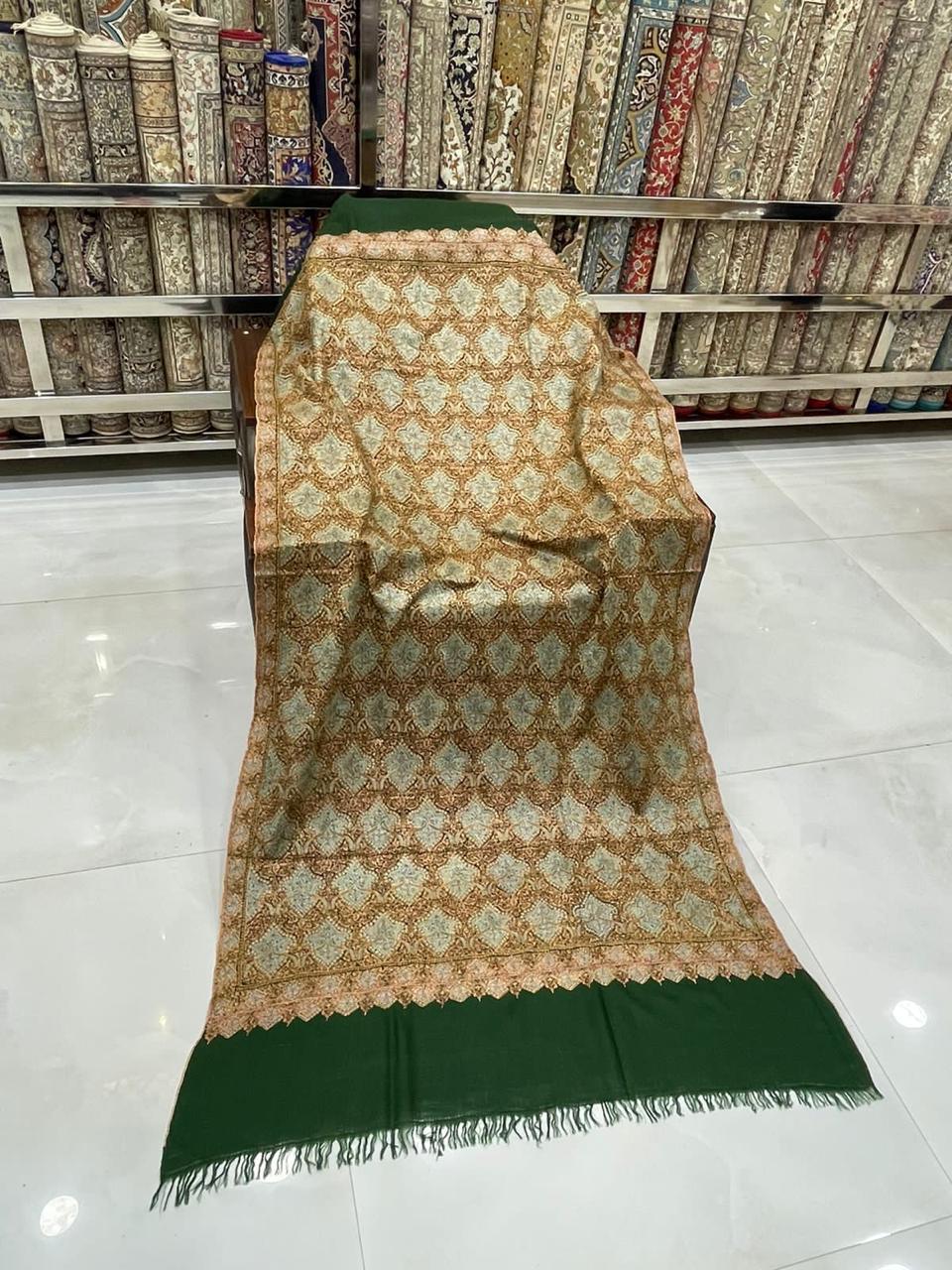
Return to journal index
Essay 06 · History

From Persia to Kashmir, and then unmistakably Kashmiri

The carpet tradition did not arrive as a finished object frozen in time. It travelled through people, patronage, design knowledge, and the trade routes that joined Kashmir to wider worlds.

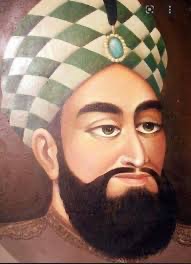
Portrait depiction of Sultan Zain-ul-Abidin, known as Bud Shah
Sultan Zain-ul-AbidinBud Shah · Fifteenth-century ruler of Kashmir · Patron of arts and crafts
Persia · Central Asia · Kashmir

Popular memory often describes a single Silk Route carrying carpet weaving from Persia into Kashmir. The historical reality is richer: a web of mountain passages, courts, merchants, scholars, Sufis, and skilled migrants carried ideas across regions. Under Sultan Zain-ul-Abidin, Kashmir gave those ideas institutional support and a new local life.

To say that an art “came from Persia to Kashmir through the Silk Route” is evocative, but it can sound simpler than the past truly was. The Silk Route was not one road with a single beginning and end. It was a shifting network of trade and cultural exchange linking regions across Asia. Kashmir's mountain geography did not isolate it from those movements. It placed the valley within conversations among South Asia, Central Asia, Tibet, Kashmir, and beyond. Along these routes travelled not only silk, wool, dyes, and finished goods, but also techniques, motifs, manuscripts, languages, and people whose knowledge could take root in new places.

A valley connected to wider worlds

Kashmir has long held an unusual geographical and imaginative position. Enclosed by mountains yet connected by passes and river valleys, it developed local traditions while receiving outside influences. Traders and travellers brought materials and objects that invited comparison and adaptation. Scholars and spiritual figures moved with texts and ideas. Artisans carried practical knowledge that could not be transported in a chest: how to prepare a material, organise a workshop, read a design, control a tool, or teach an apprentice.

Persianate culture became especially influential across many courts and artistic centres in the region. “Persianate” does not mean that every object was made in Persia or that local traditions simply disappeared. It describes a broad cultural sphere in which Persian language, literature, courtly taste, garden imagery, manuscript arts, and workshop practices travelled and were reinterpreted. In Kashmir, these currents encountered an existing visual world shaped by the valley's plants, seasons, architecture, beliefs, and skilled communities. The result was not a copy. It was translation.

Zain-ul-Abidin and the value of patronage

Sultan Zain-ul-Abidin, remembered with affection as Bud Shah, ruled Kashmir for much of the fifteenth century. He is widely associated with a period of cultural, economic, and civic development. Official Indian handicrafts accounts identify his reign with the introduction and encouragement of Kashmiri hand-knotted carpet weaving, and describe Persian and Central Asian influence in the craft. Historical traditions also remember him as a patron who brought or supported skilled artisans and helped organise craft production.

Patronage matters because a craft cannot flourish through inspiration alone. Skilled people need materials, time, apprentices, markets, and conditions stable enough for knowledge to pass between generations. A ruler who values craft can create workshops, invite specialists, encourage training, commission difficult work, and make space for local artisans to absorb and transform unfamiliar techniques. Zain-ul-Abidin's importance in the story is therefore not that he personally invented Kashmir's carpet tradition. It is that his reign is remembered as an enabling moment when knowledge could be welcomed, organised, and made productive.

The loom as a place of translation

Imagine a technique arriving in a new region. The loom may be recognisable, the knot structure teachable, and the design language connected to Persian precedents. Yet every practical choice changes as local life enters the work. Available fibres and dyes affect colour and handle. A designer responds to flowers, leaves, gardens, and architecture seen nearby. A patron requests something suited to a Kashmiri room or a new market. A weaver interprets the design through learned habits and personal skill. Over years, the borrowed technique becomes locally fluent.

Kashmiri carpets are known for detailed floral and geometric compositions, wool and silk, and a knotting tradition associated with the Persian Sehna or Sinneh knot. The talim system is central to the craft's intellectual character. It translates a visual design into coded instructions that communicate colour and knot placement to weavers. This is more than a practical aid. It shows how design can live simultaneously as image, language, memory, mathematics, and coordinated labour.

“A route can carry a technique into a valley. Only generations of local hands can make that technique belong.”

Motifs that changed their accent

Carpet motifs often cross borders more easily than their meanings can be fixed. Medallions, vines, cypress forms, blossoms, arabesques, and garden arrangements appear across broad artistic geographies. In Kashmir, such forms found companionship with the valley's own visual abundance. The chinar leaf, lotus, almond or paisley-like forms, flowering branches, and garden sensibilities became part of an evolving vocabulary. A motif might retain a distant family resemblance while gaining a Kashmiri accent through colour, scale, spacing, and execution.

This is why authenticity should not be confused with cultural purity. Great craft traditions are rarely untouched by contact. Their authenticity lies in an honest relationship to place, practice, and community, not in pretending that no idea ever travelled. Kashmiri carpet weaving is authentic precisely because Kashmir received, studied, transformed, and sustained the art. The tradition honours its Persian and Central Asian connections without surrendering its local authorship.

From courtly support to household labour

Over centuries, carpet weaving moved through changing systems of patronage, trade, and household production. Workshops connected designers, talim writers, dyers, yarn preparers, weavers, washers, clippers, finishers, merchants, and patrons. Some work was visible; much remained hidden. The finished carpet could enter a palace, shrine, drawing room, or international market while the names of those who built it were rarely recorded. This history helps explain why present-day conversations about fair recognition and maker identity matter.

International demand brought opportunity and pressure. Markets encouraged extraordinary refinement, but they could also separate craft from the people who practised it. Design names and commercial categories sometimes travelled farther than artisan names. Mechanisation and imitation later introduced another challenge: a traditional-looking surface could be produced without the traditional structure or labour. The survival of hand-knotting has therefore depended not only on skill, but on customers and institutions willing to understand why the method matters.

The history visible in a modern carpet

When we look at a contemporary Kashmiri hand-knotted carpet, the fifteenth century is not sitting inside it unchanged. History is visible as accumulated practice. The loom structure, knotting method, talim knowledge, motif families, and workshop relationships carry memory. So do the choices made by a present-day weaver who has learned from teachers and adapted to current materials and customers. Heritage is active. It survives by being repeated carefully enough to remain recognisable and flexibly enough to remain alive.

This active heritage also asks for precision in the way a carpet is described. Not every floral carpet is Kashmiri. Not every Kashmiri carpet has a direct, documentable line to a particular court workshop. Not every traditional motif has a single origin story. Responsible history makes the object more interesting because it replaces a neat legend with a human network. It allows us to honour named patrons such as Zain-ul-Abidin while also remembering generations of unnamed artisans whose teaching made continuity possible.

A portrait of patronage

The portrait depiction presented with this essay honours Sultan Zain-ul-Abidin's remembered role as a scholarly, humane patron. It is included not to turn history into royal spectacle, but to give a face-shaped pause within a story usually told through objects. The deeper portrait is found in the cultural memory of a reign associated with bridges, public works, learning, tolerance, and crafts given room to flourish.

His legacy offers a useful lesson for the present. Craft prospers when society treats it as knowledge rather than decoration alone. A carpet is beautiful, but its beauty rests on systems of teaching, fair work, material access, patient demand, and respect. Patronage today may come from a collector, a family furnishing a home, a designer, an institution, or a careful retailer. Every serious purchase can help decide whether the next generation sees weaving as a viable inheritance or an impossible sacrifice.

The route continues

The old trade networks changed, but the journey continues. A carpet now travels through photographs, video calls, digital catalogues, payment systems, aircraft, and couriers. Its movement is faster than the movement of ideas and artisans in the fifteenth century, yet the essential question remains: what travels with it? If only the object moves, history becomes decoration. If the technique, maker's name, care knowledge, and honest story move too, the carpet arrives with a fuller identity.

The Kashmir Knot stands within that continuing route. We do not claim to own the history, and we do not wish to flatten it into a sales line. Our role is to select carefully, describe responsibly, keep the exact piece identifiable, and help customers understand what kind of work they are welcoming into their homes. From Persia and Central Asia to Kashmir, from the loom to the room, the art has always depended on connection. Its future will depend on the quality of that connection.

The Kashmir Knot note

We acknowledge the Persian and Central Asian currents within Kashmiri carpet history while honouring the local designers, talim writers, dyers, weavers, and finishers who made the tradition unmistakably Kashmiri.

Return to journal index
Policies

International delivery, payment and returns

Every international order is confirmed against the exact piece, destination and payment route. We welcome retail and trade enquiries worldwide where the carrier, payment provider, customs route and applicable trade rules permit service.

Recent fulfilment experience

In the 24 months ending September 2026, The Kashmir Knot shipped to the United States, Canada, Russia including Moscow, and the UAE including Dubai. A wholesale stock order of approximately 20 shawls was supplied to the Philippines. These are past fulfilment examples, not overseas offices or guaranteed delivery routes.

Shipping Free international shipping

Standard international shipping is included at no separate charge in the confirmed quote. We use multiple carriers and confirm the available service after checking the complete address and postcode. Destination availability can change.

Delivery examples Recent transit experience

Past shipments have arrived in about 7 days in the UAE, 10 days in Canada, and 13 days in the United States and Australia. These are historical transit examples after dispatch, not guarantees; customs and carrier events can extend delivery.

Custom orders Production is planned separately

A custom handmade carpet takes substantially longer than an in-stock piece. As one planning example, a 4 × 11 ft carpet may require around six months of production plus approximately 14 days for international delivery. The signed MOU records the actual schedule.
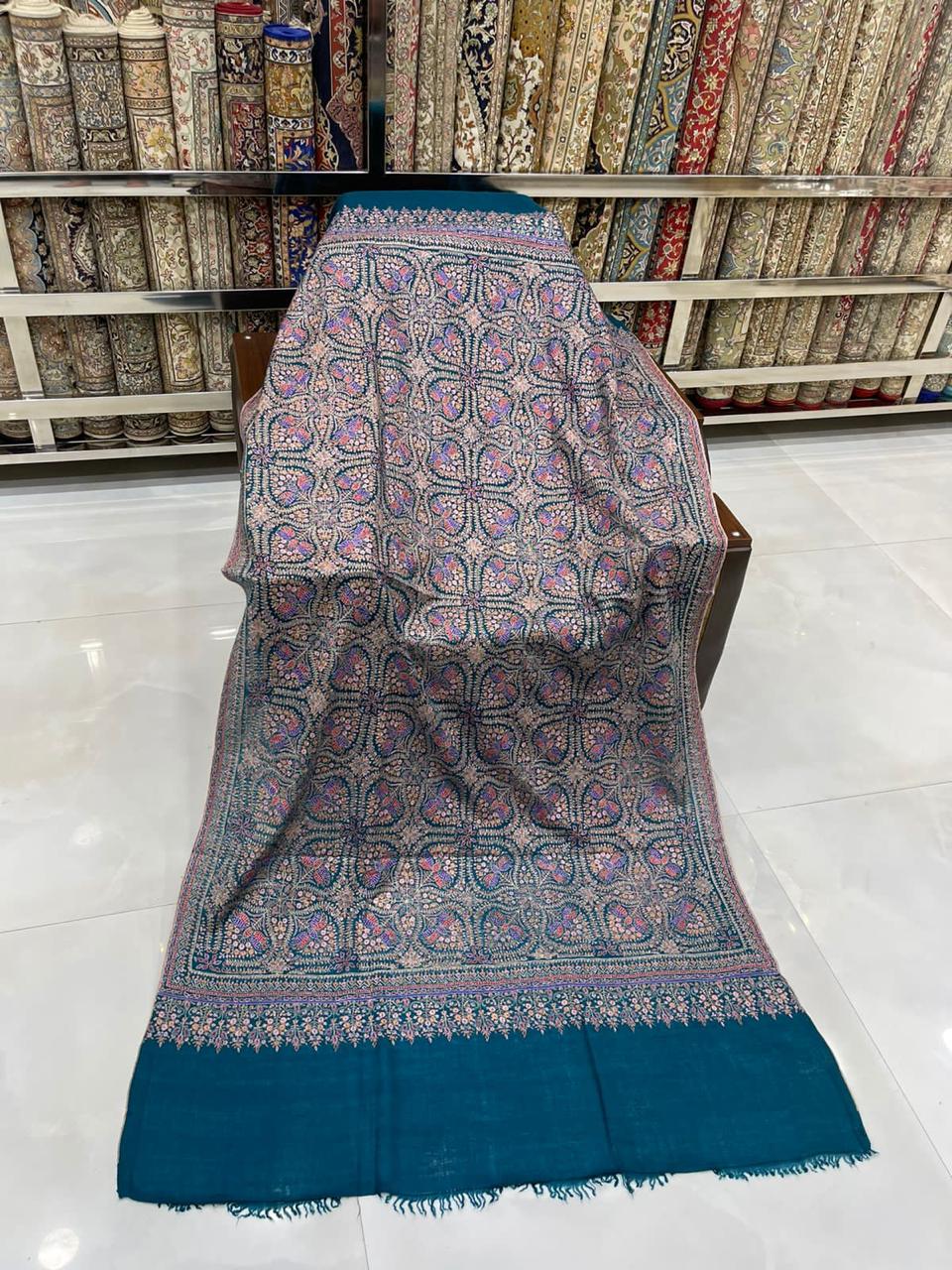
Payments & currencies Quote first, provider rate

Payment routes include PayPal, international cards through Razorpay, and bank transfer. Up to 22 payment currencies may be supported depending on the selected provider. PayPal, Razorpay, Wise or the receiving bank sets any conversion rate and charge shown to the buyer.

Taxes & customs Destination charges stay separate

Indian GST is not added to an international order. A destination authority or carrier may still assess import duty, VAT/GST, brokerage or another local charge. Those charges are not set by The Kashmir Knot and should be confirmed for the destination before payment.

Returns Returns, but no exchanges

Returns and refunds are available; exchanges are not offered. The customer pays return shipping and must contact us before sending the piece. Report transit damage, a wrong item or a material discrepancy within 48 hours with photographs and the original packaging.
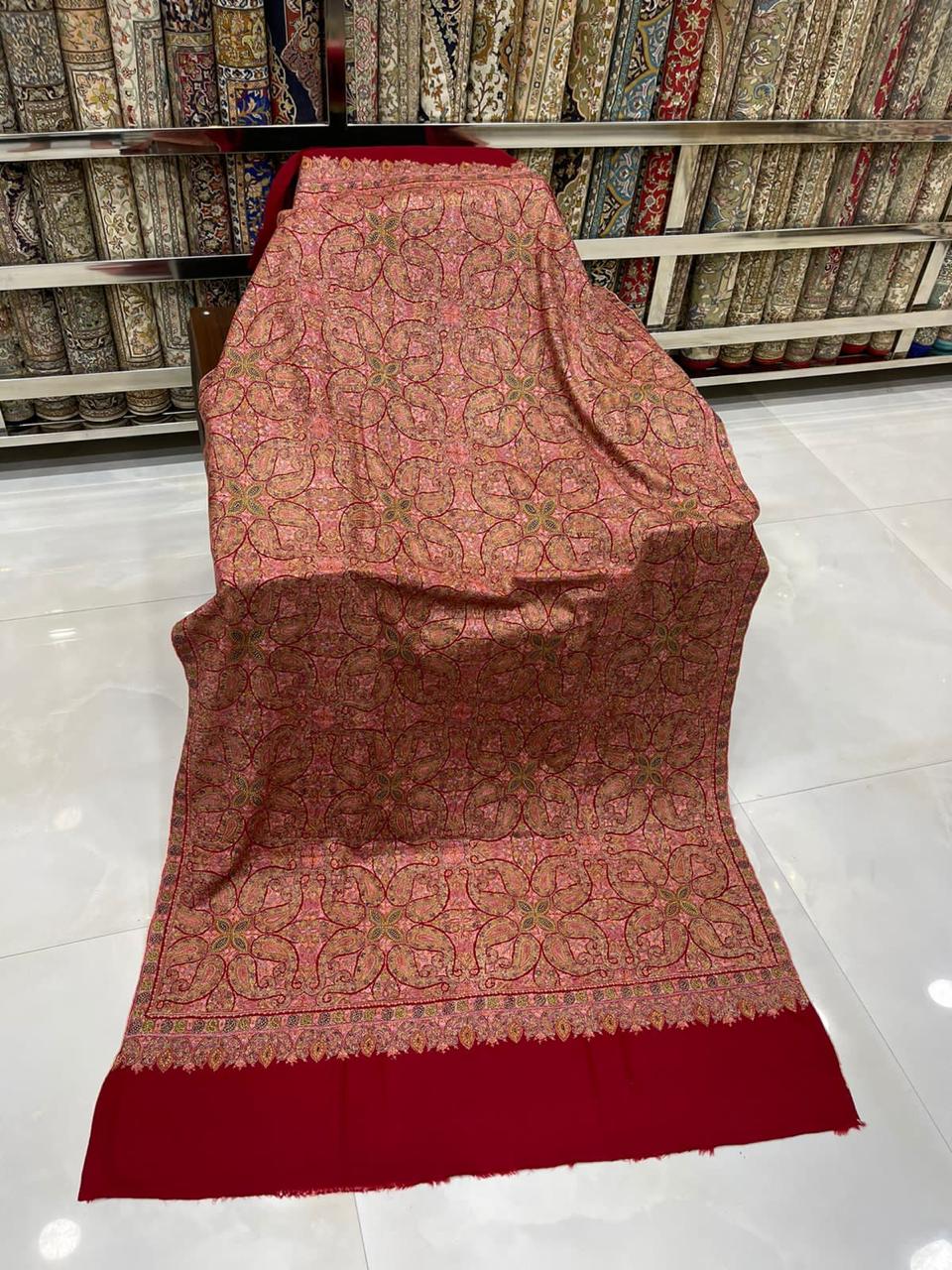
Documentation Matched to the exact piece

The Kashmir Knot certificate and QR-linked record can identify the product and its private sale record. Government GI tagging may accompany eligible silk rugs and selected high-end Pashmina shawls. Taleem applies to relevant handmade rugs, not hand-tufted rugs.

Privacy Only order details we need

We use your name, phone, email, address, destination, selected piece code, quote and payment reference to answer enquiries, match payments, arrange shipping and support aftercare. Buyer and destination details in our QR-linked sales record are not published as customer endorsements.
Custom-order terms MOU and staged payments

Custom work begins only after the specification, MOU and staged payment plan are agreed. Progress updates are shared by WhatsApp or email, including design and Taleem milestones where applicable. Cancellation terms follow the signed MOU.

Trade

Trade and project sourcing

Catalog paths

Shop by collection and design

Code
Size
Material
Viewing

Room Guidance Send us a room photo and we will check scale, palette and placement.
Close-ups available Care guidance included Certificate notes on request
Currency:
Enquire on WhatsApp
Custom Carpet Request
Design it your way
Custom carpet designs are quoted separately and can be more expensive than ready-made handmade carpets. This is because a custom piece may need new design planning, colour matching, dyeing and dedicated weaving time.
Payment Confirmed

Thank you for your
purchase

Your order for TKK-K-001 — Ivory Navy Medallion Carpet has been received.

Payment ID:
Order Journey
Confirmed
📦
Packing
🚚
Shipped
🏠
Delivered
We will update your order status via WhatsApp at each step.

We will reach out to you on WhatsApp within 24 hours to confirm your delivery address and arrange shipping. Please save our number:
+91 98201 29092

Message Us Now
Chat with Us
✦ Curator's Selection ✦

The Kashmir Knot Specials

Pieces so exceptional they transcend category — chosen in the spirit of Ghulam Mohammad Joo's lifelong eye for Kashmiri craft.

The Kashmir Knot Special
Royal Multicolour Kani
TKS-005

Royal Multicolour Kani

Pure Pashmina · Kani Weave
Price on Request
Free insured shipping worldwide · Certificate of authenticity included
Pure Pashmina Collection

Fine Shawls & Wraps

Each shawl is woven or embroidered by master craftspeople in the Kashmir Valley — a tradition spanning centuries.

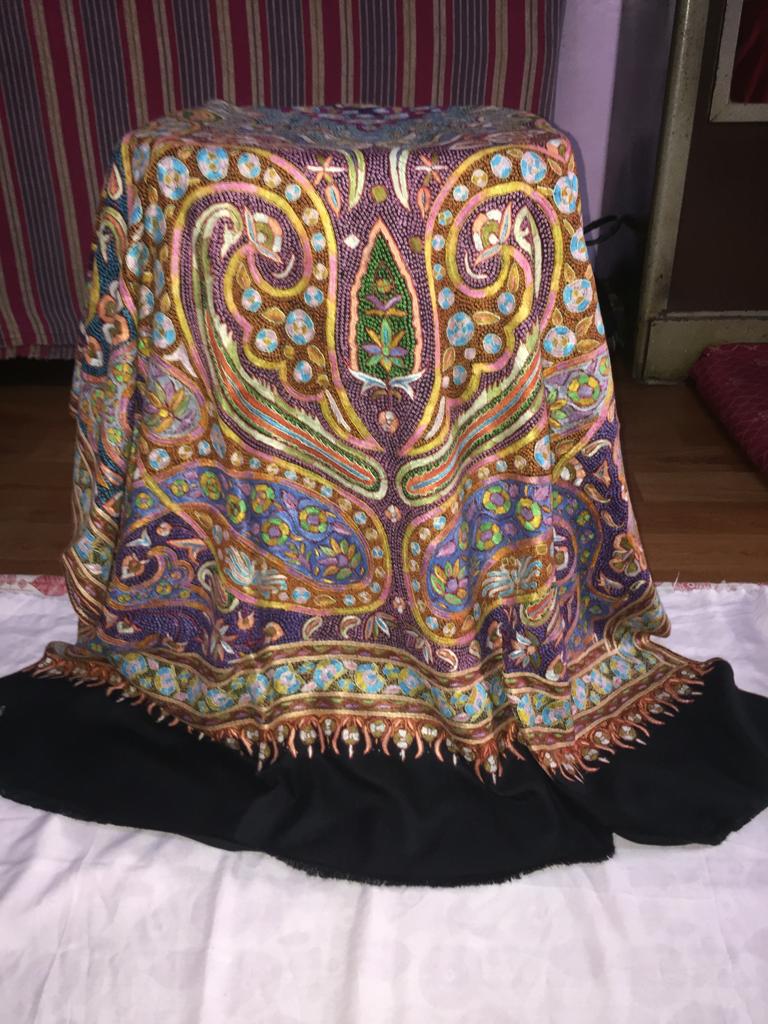
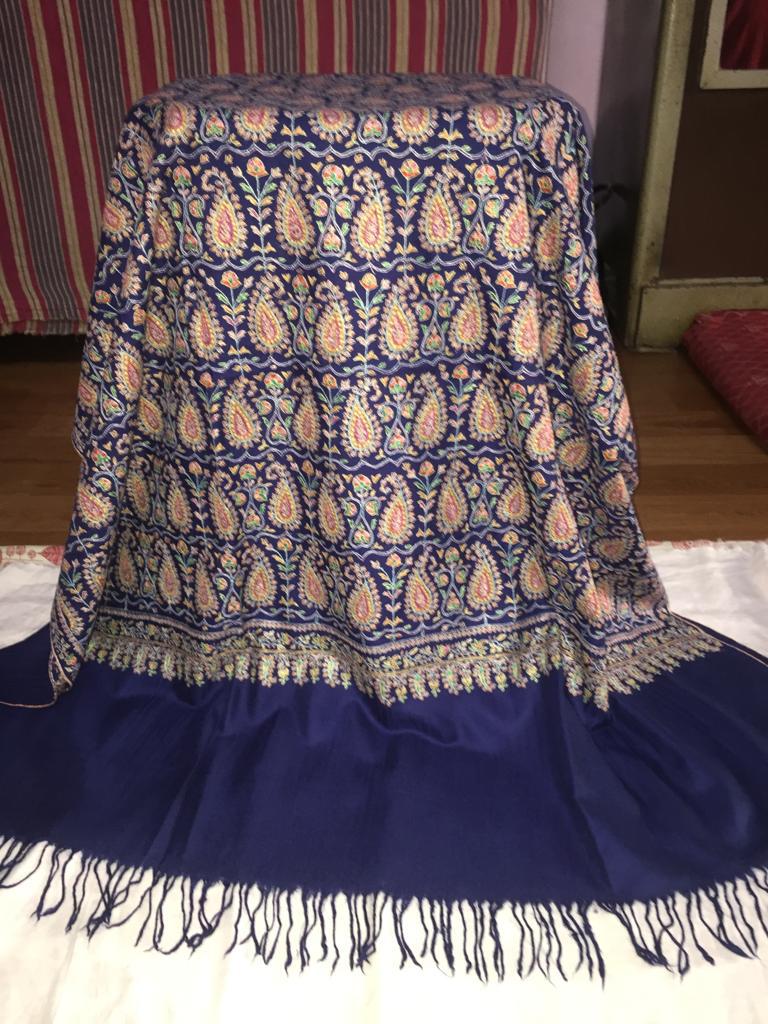
Golden Paisley Sozni
Pure Pashmina · Hand Embroidered
Golden Paisley Sozni
Price on Request
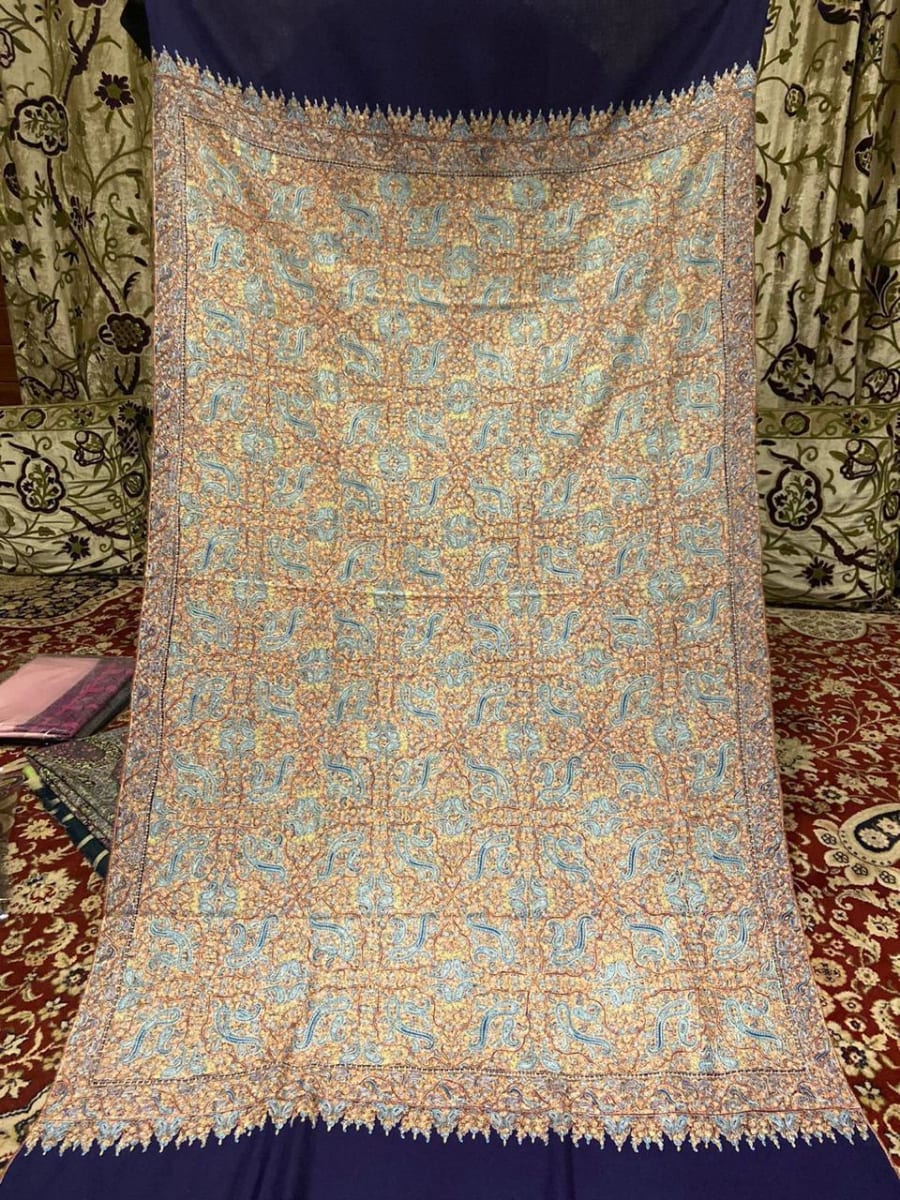
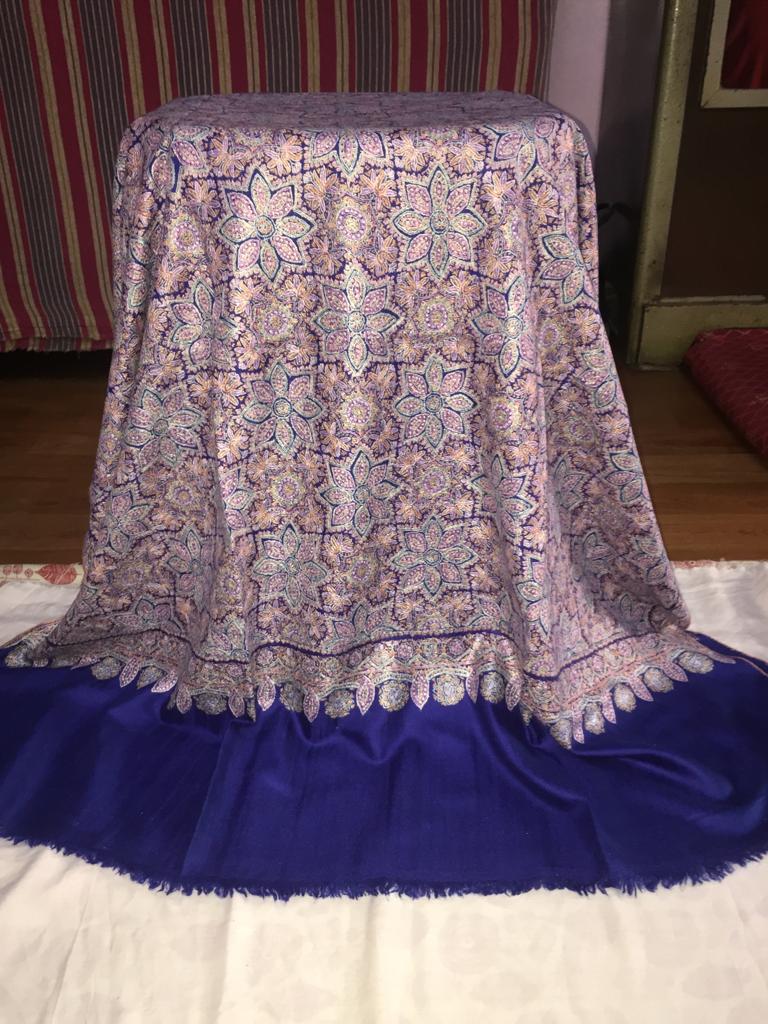
Indigo Bloom Jamawar
Pure Pashmina · Jamawar Weave
Indigo Bloom Jamawar
Price on Request
Navy Paisley Jamawar
Pure Pashmina · Jamawar Weave
Navy Paisley Jamawar
Price on Request
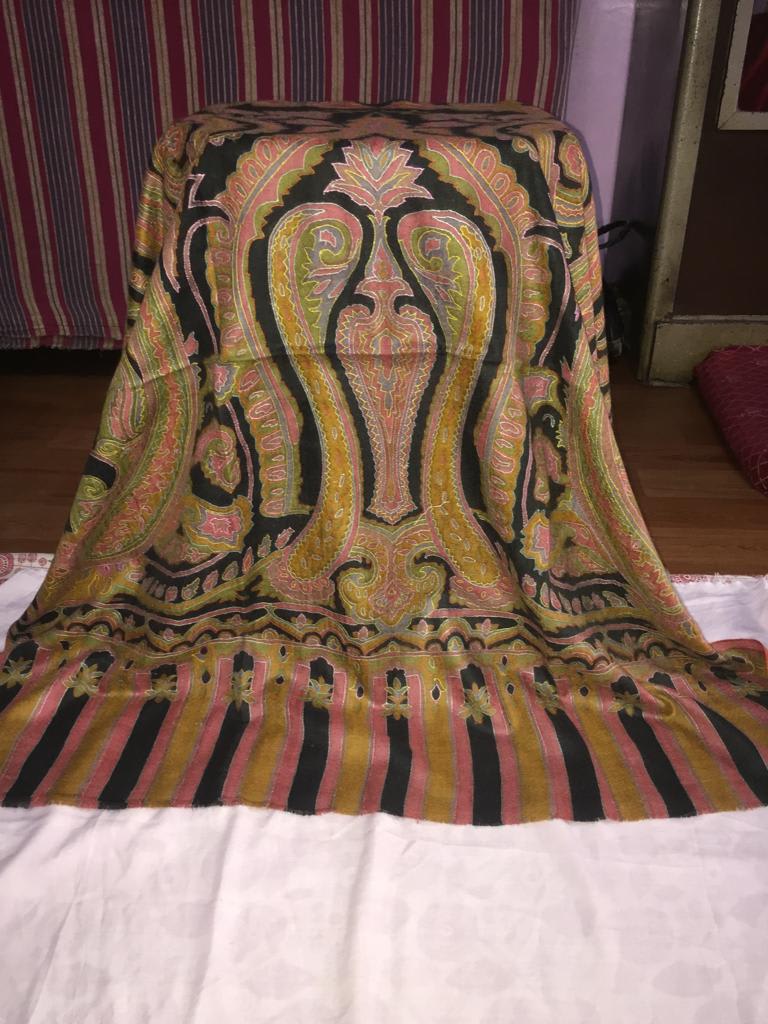
Black Grand Paisley
Pure Pashmina · Kani Weave
Black Grand Paisley
Price on Request
Royal Multicolour Kani
Pure Pashmina · Kani Weave
Royal Multicolour Kani
Price on Request
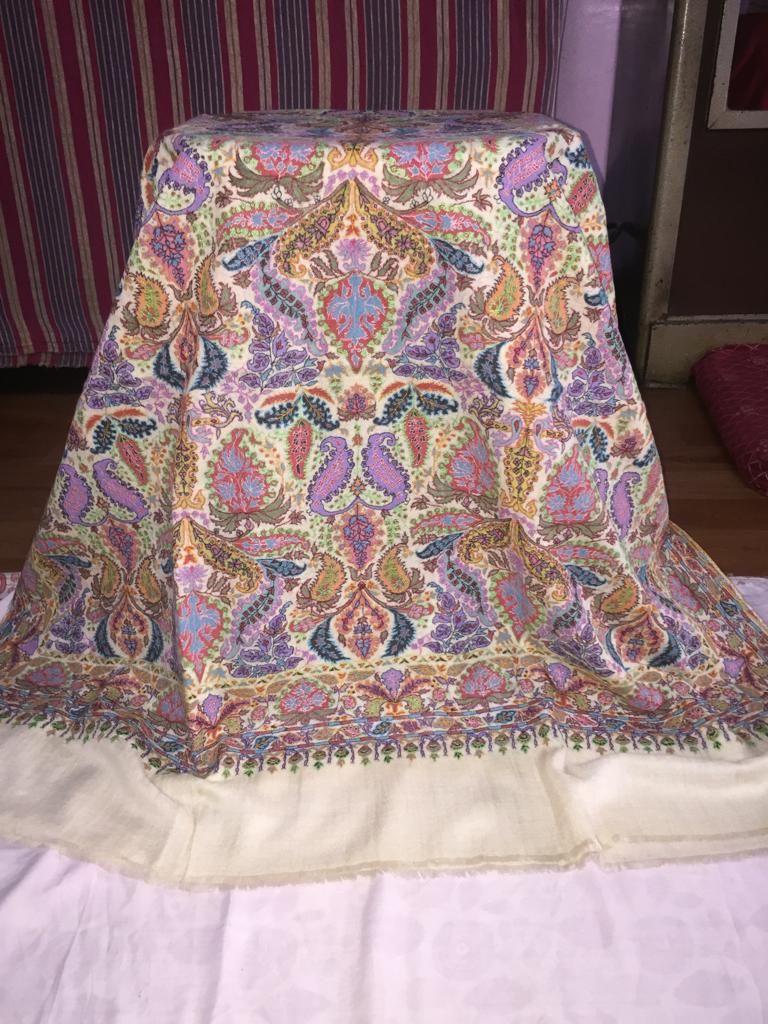
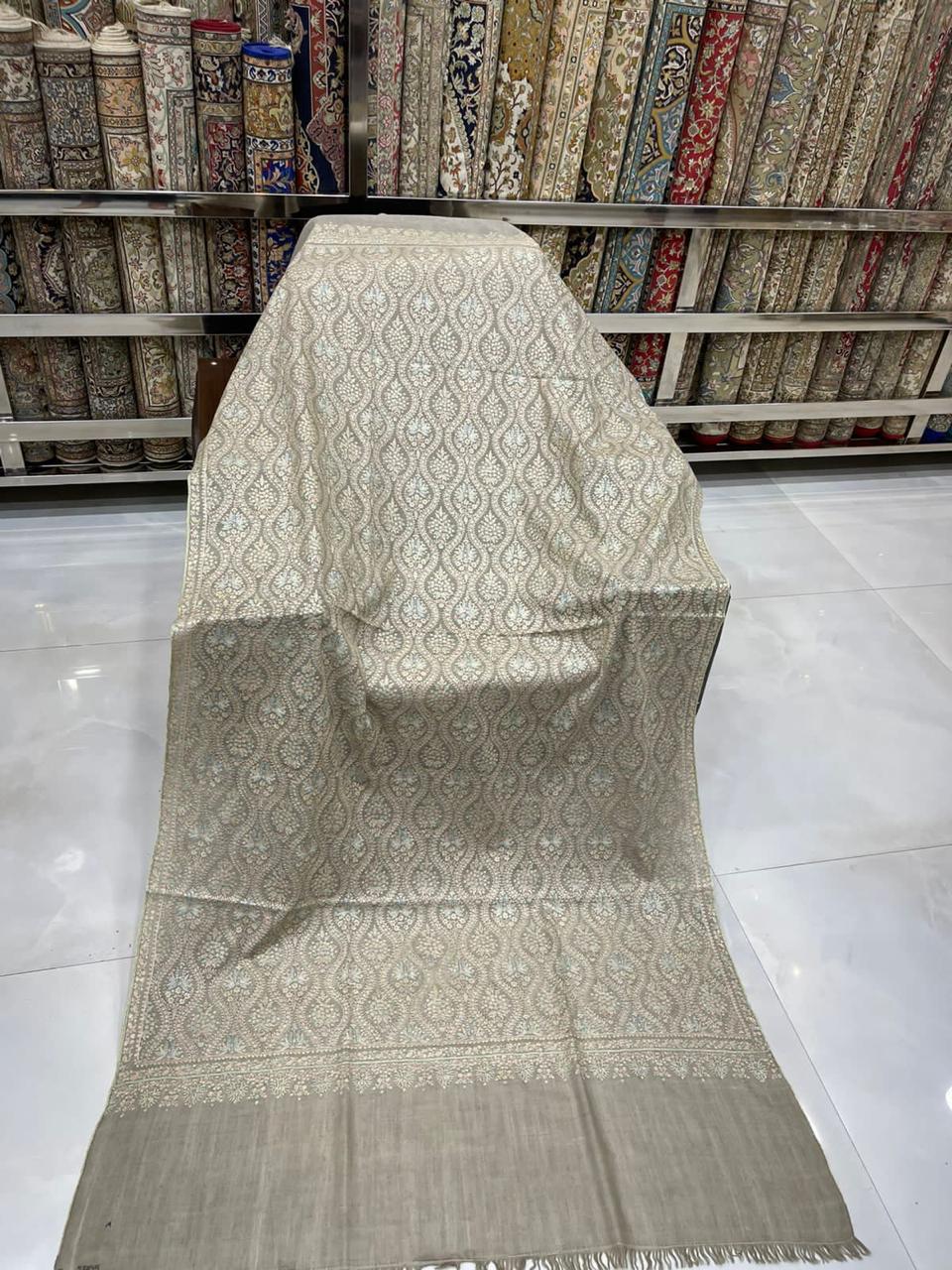
Ivory Garden Sozni
Pure Pashmina · Hand Embroidered
Ivory Garden Sozni
Price on Request
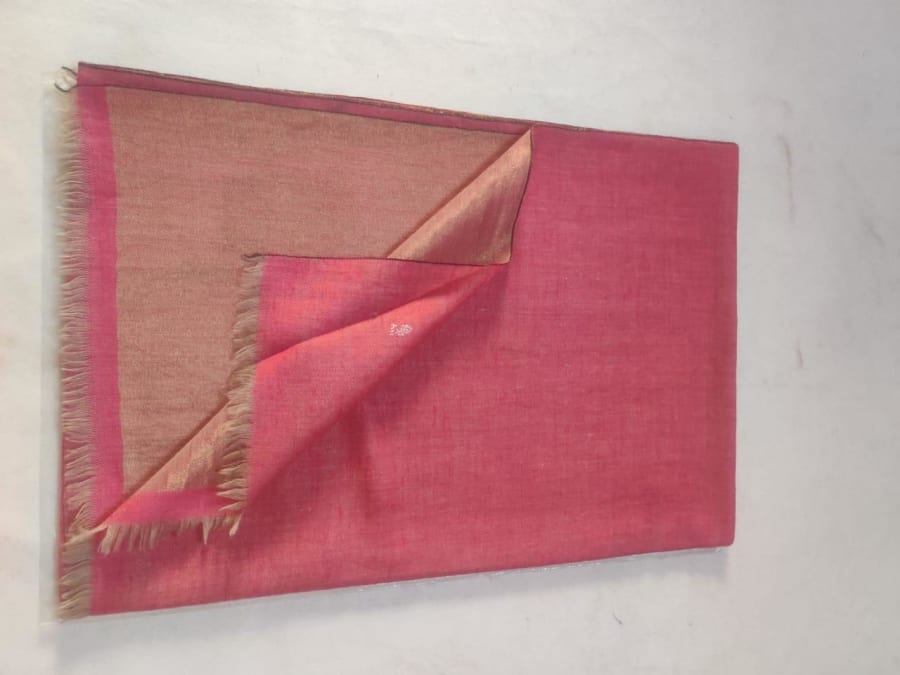
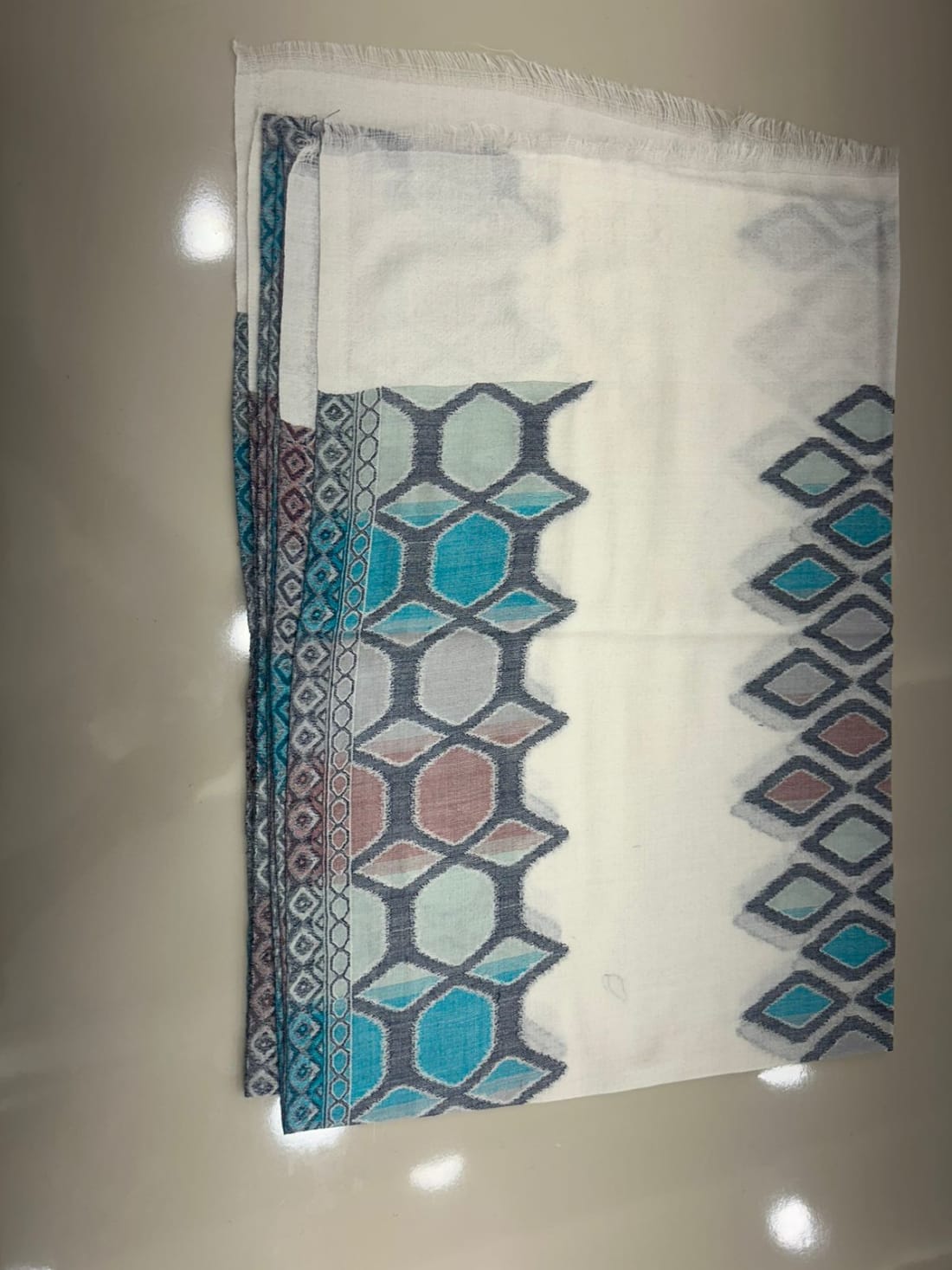
Rose Ikat Plain
Pure Pashmina · Plain Weave
Rose Ikat Plain
Price on Request
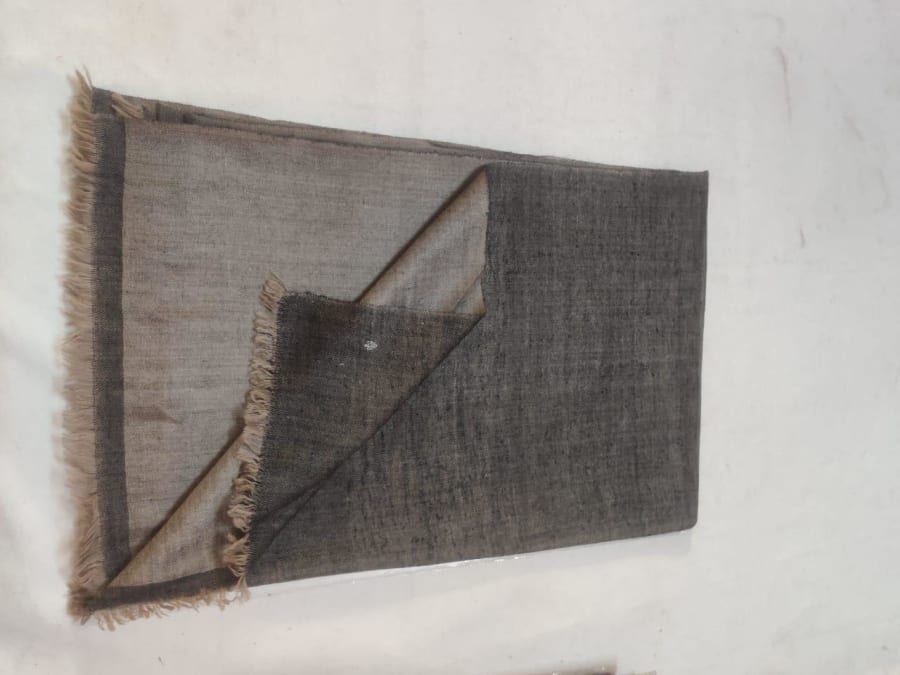
Charcoal Reversible
Pure Pashmina · Reversible
Charcoal Reversible
Price on Request
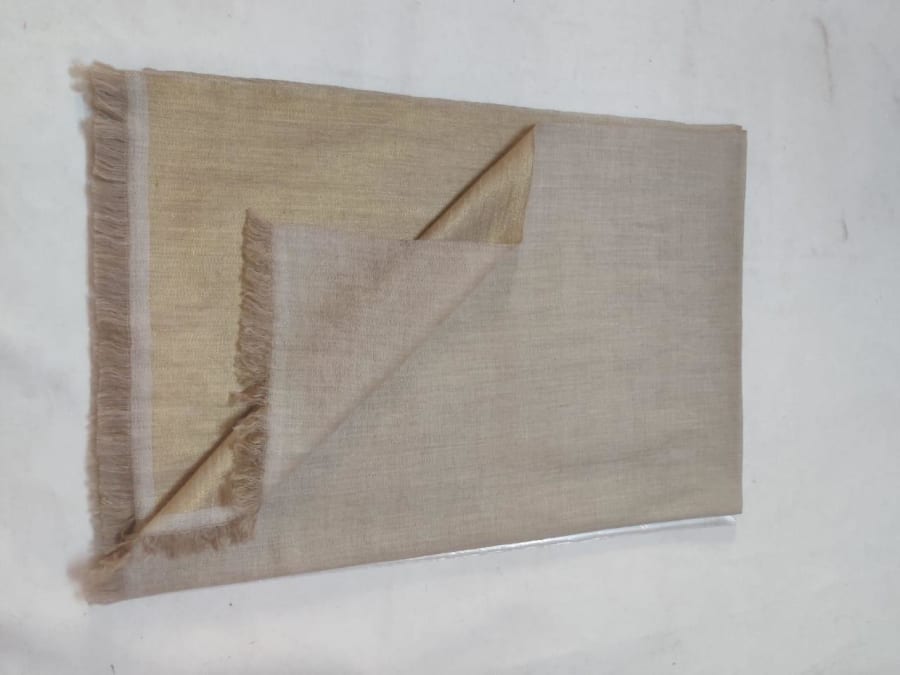
Natural Ivory Reversible
Pure Pashmina · Reversible
Natural Ivory Reversible
Price on Request
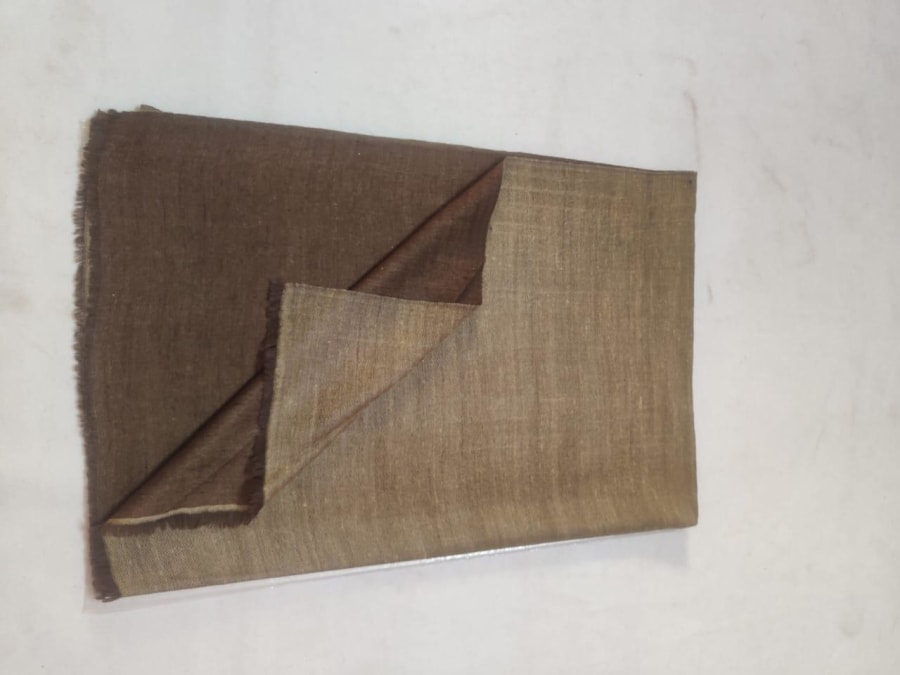
Walnut Brown Reversible
Pure Pashmina · Reversible
Walnut Brown Reversible
Price on Request
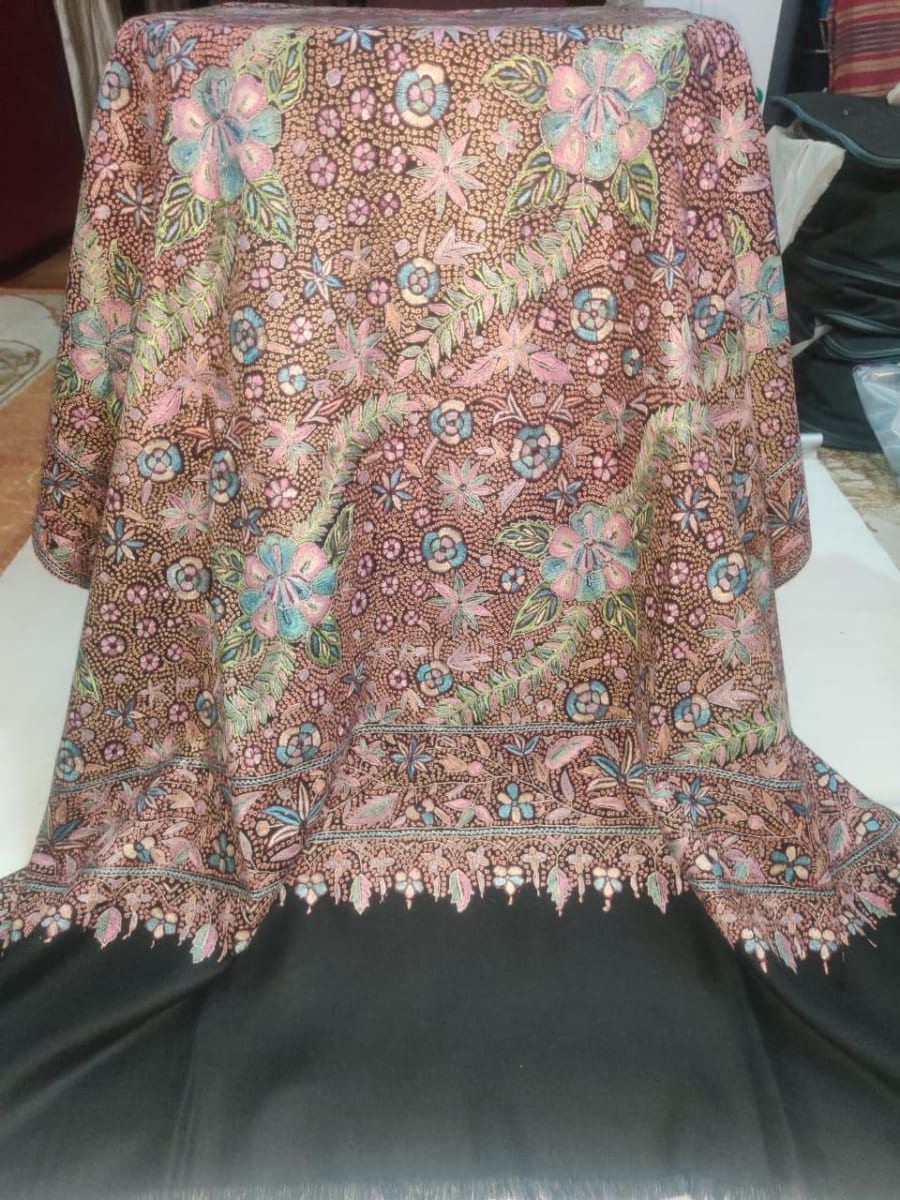
Chocolate Floral Sozni
Pure Pashmina · Hand Embroidered
Chocolate Floral Sozni
Price on Request
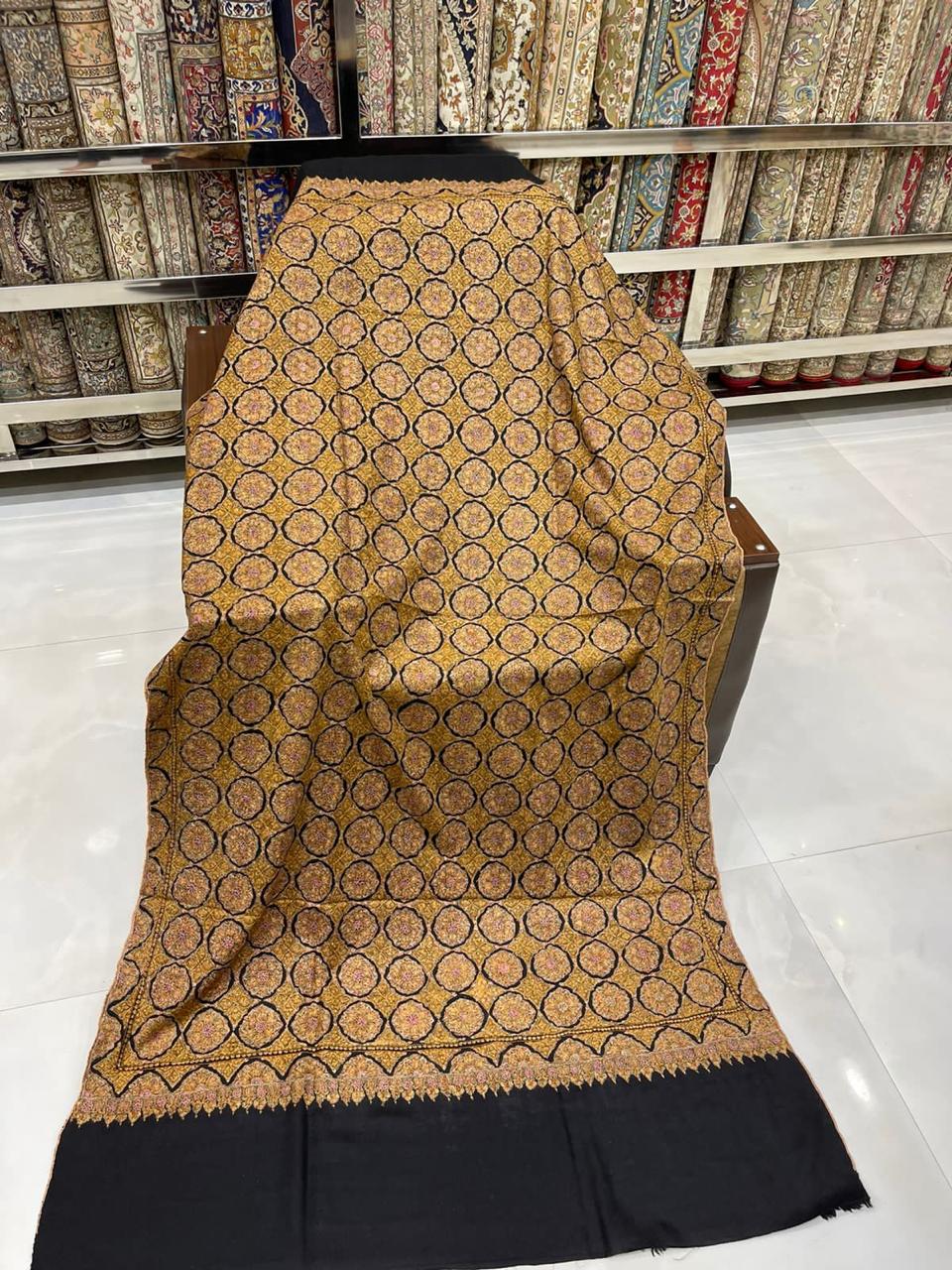
Black Leaf Border Sozni
Pure Pashmina · Hand Embroidered
Black Leaf Border Sozni
Price on Request
Charcoal Chain Stitch
Pure Pashmina · Chain Stitch
Charcoal Chain Stitch
Price on Request
Paisley Border Pashmina
Pure Pashmina · Private Selection
Paisley Border Pashmina
Price on Request
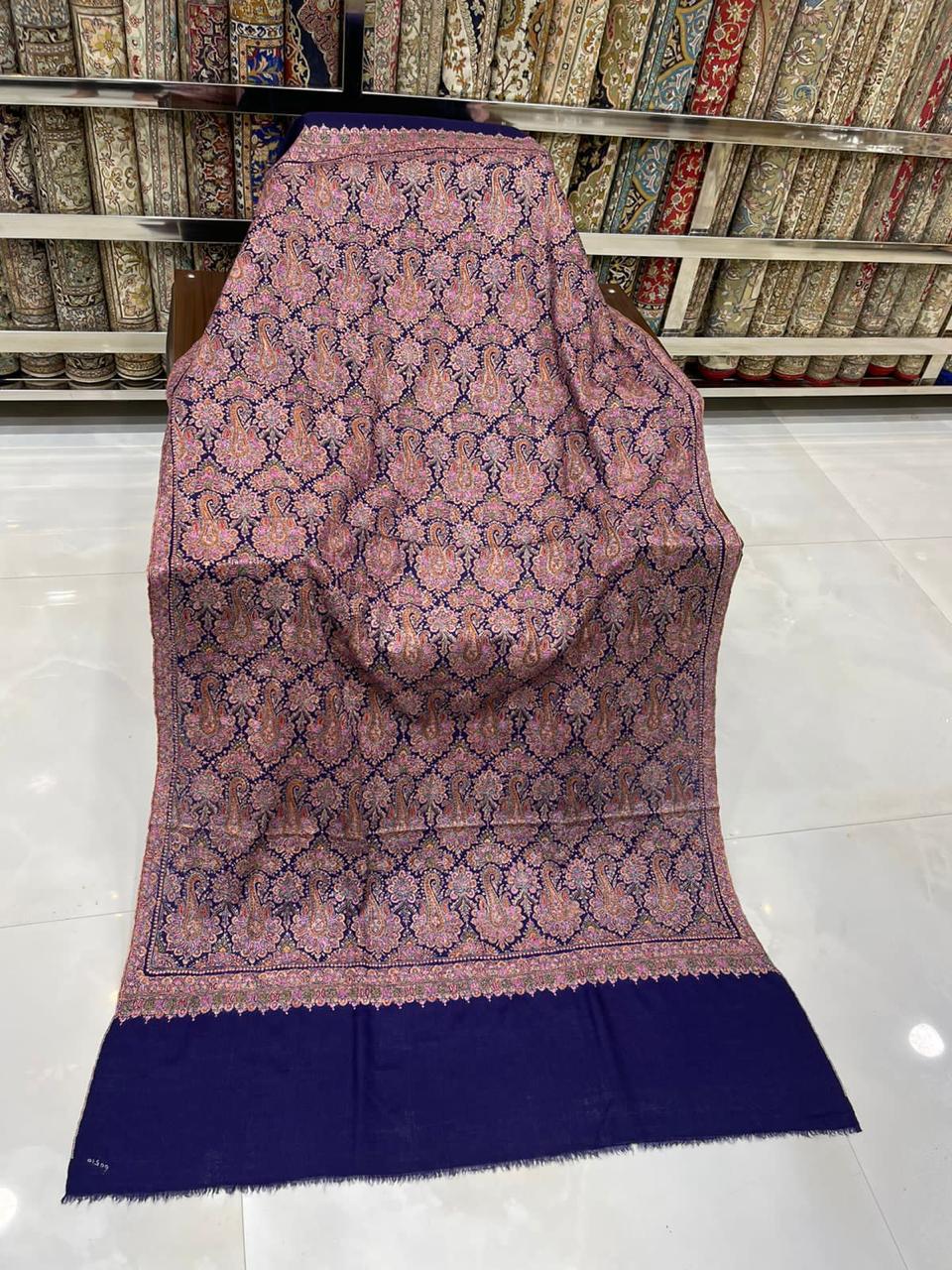
Navy Paisley Pashmina
Pure Pashmina · Private Selection
Navy Paisley Pashmina
Price on Request
Ivory Blue Reversible Pashmina
Pure Pashmina · Private Selection
Ivory Blue Reversible Pashmina
Price on Request
Crimson Paisley Border Pashmina
Pure Pashmina · Private Selection
Crimson Paisley Border Pashmina
Price on Request
Antique Paisley Pashmina
Pure Pashmina · Private Selection
Antique Paisley Pashmina
Price on Request
Navy Cream Paisley Pashmina
Pure Pashmina · Private Selection
Navy Cream Paisley Pashmina
Price on Request
Sky Blue Kani Border Pashmina
Pure Pashmina · Private Selection
Sky Blue Kani Border Pashmina
Price on Request
Grey Paisley Border Pashmina
Pure Pashmina · Private Selection
Grey Paisley Border Pashmina
Price on Request
Copper Grey Reversible Pashmina
Pure Pashmina · Private Selection
Copper Grey Reversible Pashmina
Price on Request
Teal Paisley Border Pashmina
Pure Pashmina · Private Selection
Teal Paisley Border Pashmina
Price on Request
Ivory Turquoise Border Pashmina
Pure Pashmina · Private Selection
Ivory Turquoise Border Pashmina
Price on Request
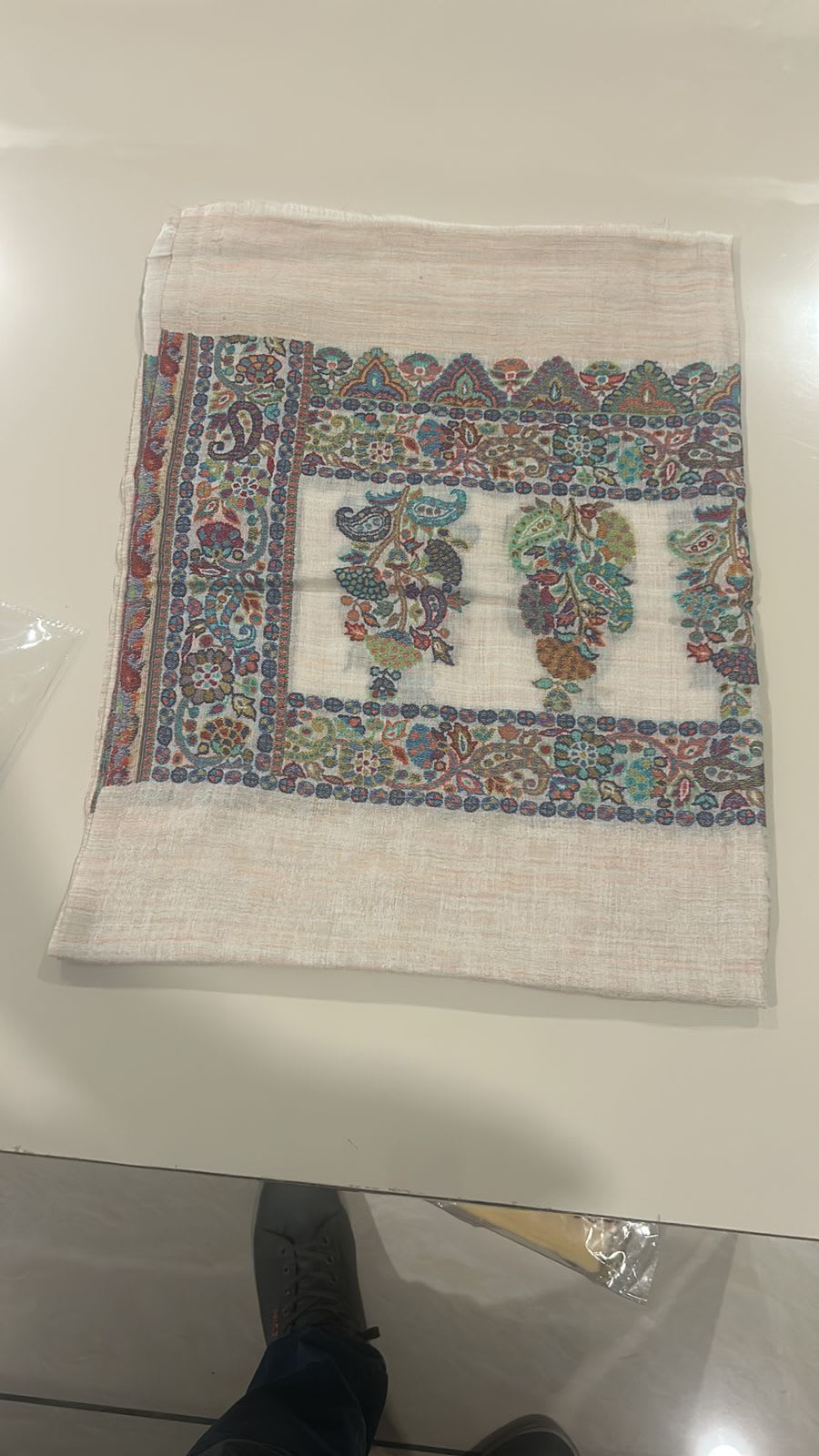
Ivory Floral Panel Pashmina
Pure Pashmina · Private Selection
Ivory Floral Panel Pashmina
Price on Request
Festival Plain Pashmina Set
Pure Pashmina · Private Selection
Festival Plain Pashmina Set
Price on Request
Charcoal Woven Pashmina
Pure Pashmina · Private Selection
Charcoal Woven Pashmina
Price on Request
Rose Navy Kani Pashmina
Pure Pashmina · Private Selection
Rose Navy Kani Pashmina
Price on Request
Olive Gold Kani Pashmina
Pure Pashmina · Private Selection
Olive Gold Kani Pashmina
Price on Request
Teal Grey Kani Pashmina
Pure Pashmina · Private Selection
Teal Grey Kani Pashmina
Price on Request
Coral Red Kani Pashmina
Pure Pashmina · Private Selection
Coral Red Kani Pashmina
Price on Request
Mustard Black Kani Pashmina
Pure Pashmina · Private Selection
Mustard Black Kani Pashmina
Price on Request
Ivory Needlework Pashmina
Pure Pashmina · Private Selection
Ivory Needlework Pashmina
Price on Request
White Sheer Pashmina
Pure Pashmina · Private Selection
White Sheer Pashmina
Price on Request
Gold Black Kani Pashmina
Pure Pashmina · Private Selection
Gold Black Kani Pashmina
Price on Request
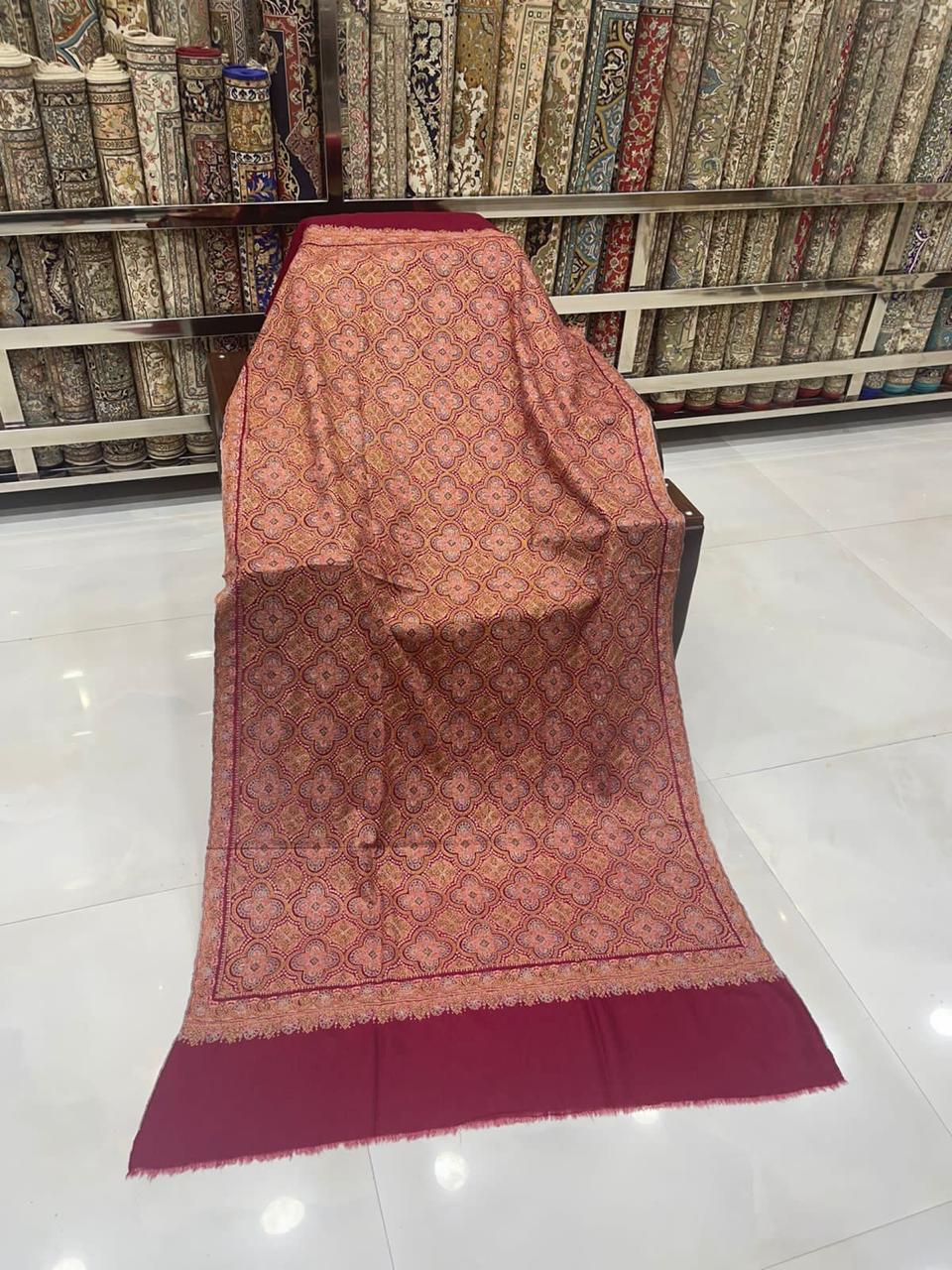
Rose Maroon Kani Pashmina
Pure Pashmina · Private Selection
Rose Maroon Kani Pashmina
Price on Request
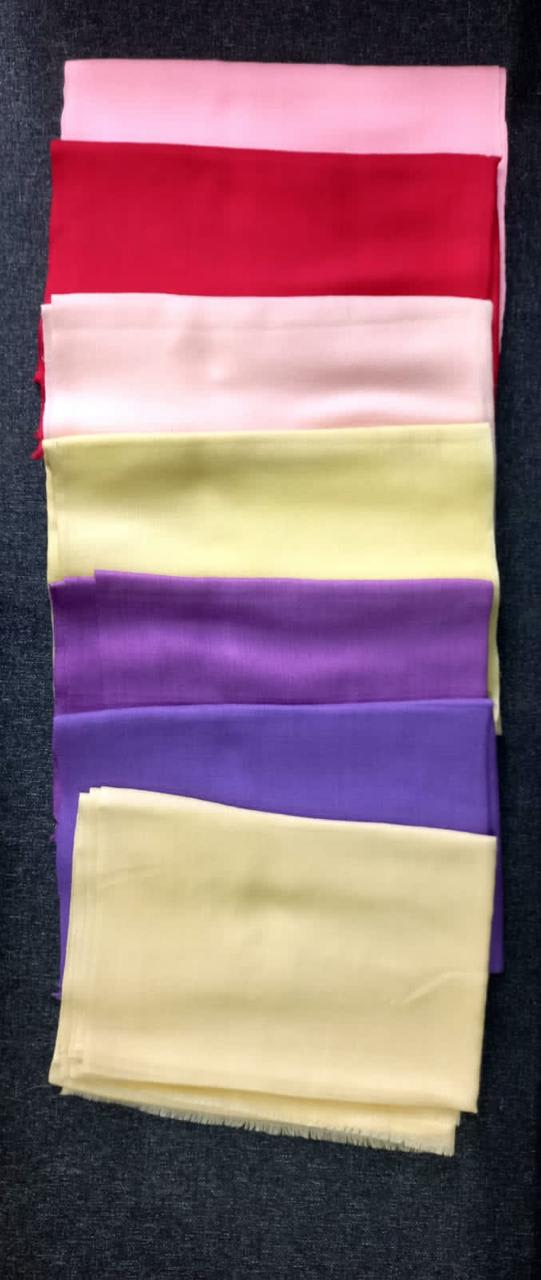
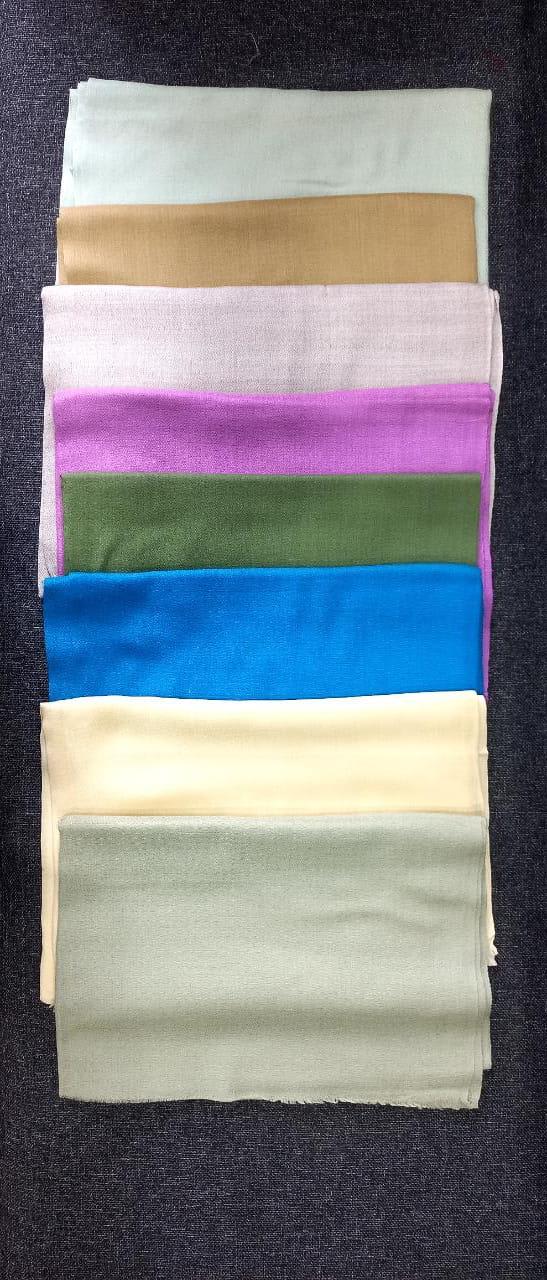
Warm Plain Pashmina Set
Pure Pashmina · Private Selection
Warm Plain Pashmina Set
Price on Request
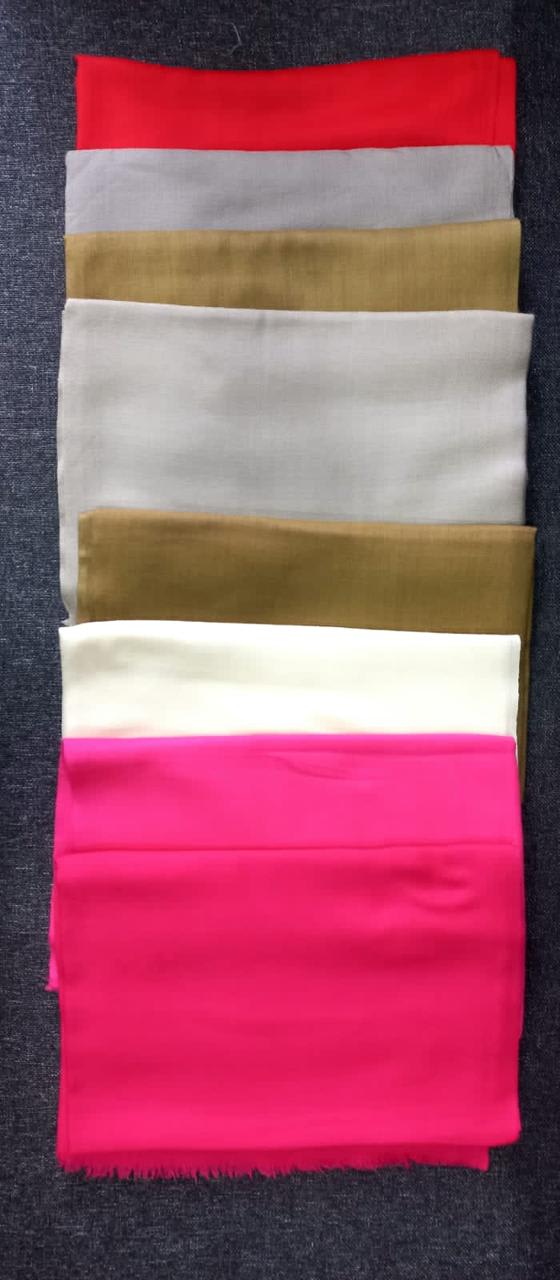
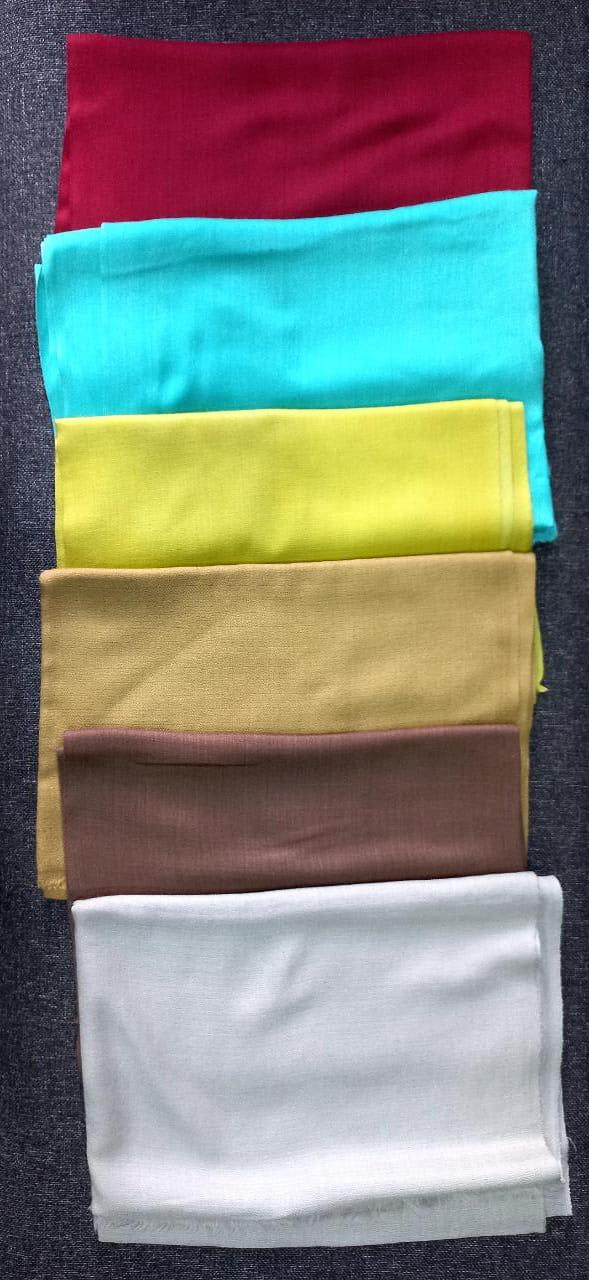
Bright Plain Pashmina Set
Pure Pashmina · Private Selection
Bright Plain Pashmina Set
Price on Request
Soft Plain Pashmina Set
Pure Pashmina · Private Selection
Soft Plain Pashmina Set
Price on Request
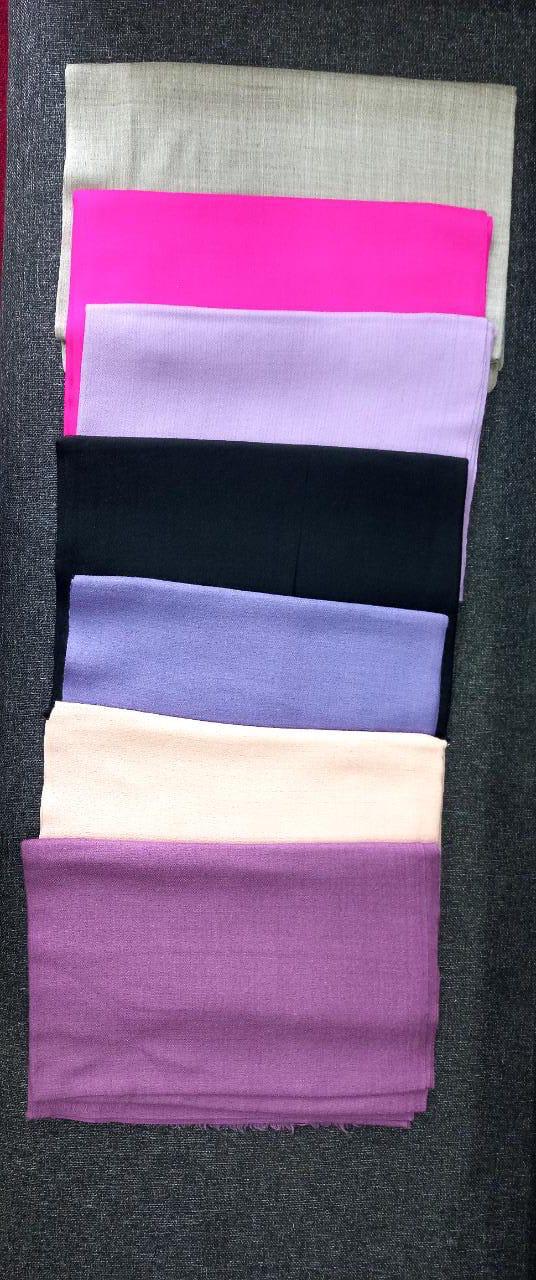
Pink Lavender Plain Pashmina Set
Pure Pashmina · Private Selection
Pink Lavender Plain Pashmina Set
Price on Request
Your Selection
Enquiry Basket

Saved on this browser only. Send the full list on WhatsApp when you are ready.